
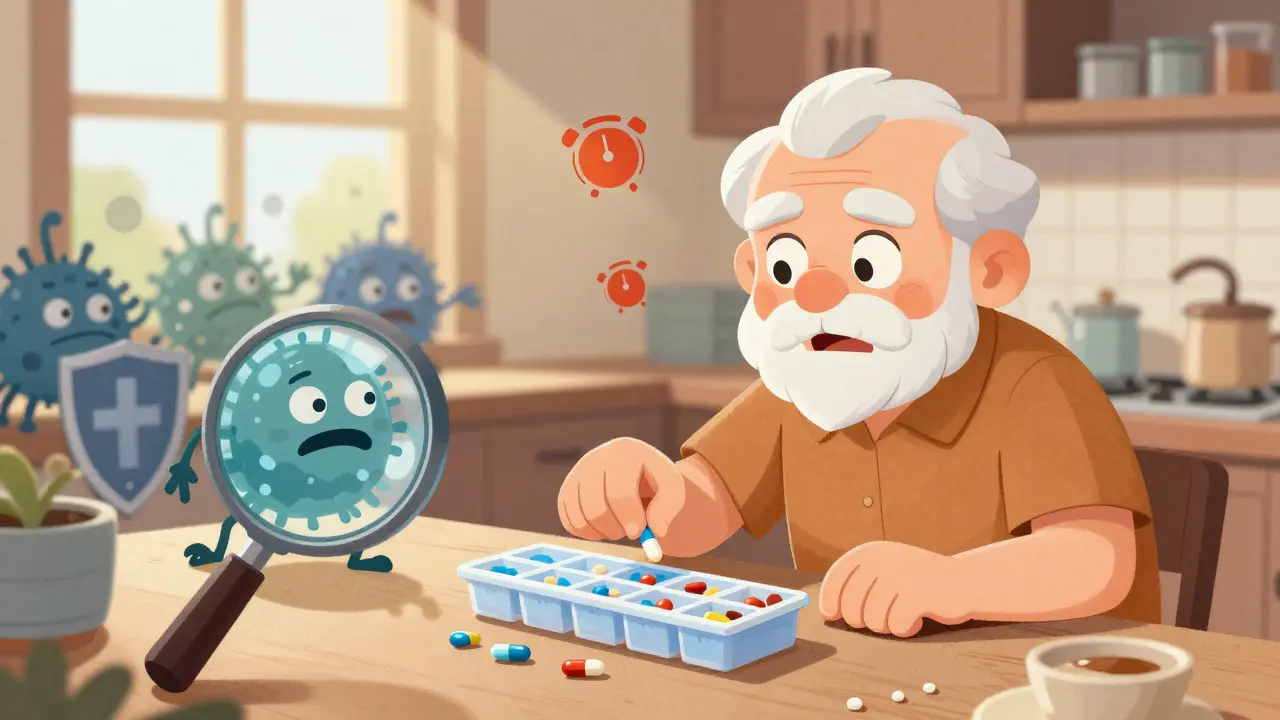
Every year, millions of people in the UK and the US finish their antibiotic course early-because they feel better. That’s understandable. But it’s also one of the biggest reasons superbugs are getting stronger. When you stop taking antibiotics too soon, the toughest bacteria survive. They multiply. And next time, they don’t respond to the same medicine. This isn’t just a hospital problem. It’s happening in your kitchen, your bedroom, your bathroom cabinet.
Why Finishing the Full Course Matters More Than You Think
You take your antibiotics. Day one: you feel awful. Day three: you’re up and about. Day five: you’re back to normal. So you toss the rest. It’s tempting. But here’s what you’re not seeing: the infection isn’t gone. It’s just hiding. The strongest bacteria-those that survived the first few doses-are now ready to fight back. Studies show that stopping antibiotics early increases the chance of resistance by 23% to 37%. That’s not a small risk. That’s a public health emergency in your medicine cabinet.
The CDC and the Infectious Diseases Society of America agree: always finish the full course, even if you feel fine. Why? Because antibiotics don’t work like painkillers. They don’t just mask symptoms. They kill bacteria. And killing all of them takes time. If your prescription says “take every 8 hours for 10 days,” that’s not a suggestion. It’s a science-backed schedule designed to keep drug levels in your blood high enough to wipe out every last bug.
For seniors, who make up nearly one-third of home antibiotic users, this is even more critical. Many are on multiple medications. A pill organizer with alarms isn’t a luxury-it’s a lifeline. Apps like Medisafe, used by over 14,000 people with a 4.7/5 rating, send reminders at exact times. Some devices, like Hero, even dispense pills automatically. They cost around $300 upfront, but they prevent hospital readmissions. And those readmissions? They’re 22% more likely when courses aren’t completed.
What Happens When You Don’t Finish?
Imagine a bacterial army. Antibiotics are your soldiers. You send them in. After a few days, most of the enemy is dead. The survivors? The ones with thick armor. The ones that survived the first attack. They’re the ones you didn’t kill. Now they’re breeding. And when you get sick again, your old antibiotic won’t work. You’ll need something stronger. Maybe even an IV antibiotic in a hospital.
This isn’t hypothetical. In the U.S. alone, antibiotic-resistant infections cause 35,000 deaths every year. In the UK, the NHS reports rising cases of MRSA and resistant E. coli in community settings-many linked to incomplete courses. It’s not just about you. It’s about your family, your neighbours, the nurse who treats you next time. Every unfinished course adds to the problem.
And it’s not just about resistance. Incomplete courses also mean treatment failure. One study of 14 clinical trials found that stopping early increased the chance of the infection coming back by nearly 19%. That means more doctor visits. More missed work. More stress. All because you felt better after three days.
How to Make Sure You Don’t Miss a Dose
Life gets busy. You forget. You’re tired. You’re caring for someone else. Here’s how to win this battle:
- Set alarms on your phone for every dose. Label them: “Amoxicillin - 8 AM,” “Cipro - 8 PM.”
- Use a pill box with compartments for each day and time. Buy one with a built-in alarm-some cost under £15.
- Keep the antibiotics in plain sight. Not tucked away in a drawer. On the kitchen counter next to the coffee maker.
- Ask a family member to check in. A quick text: “Did you take your pill?” makes a difference.
- Download Medisafe or similar apps. They track doses, send alerts, and even notify your pharmacist if you miss one.
For caregivers of elderly relatives, the key is routine. Make antibiotic time part of your daily rhythm-like brushing teeth or making tea. Don’t rely on memory. Use tools. The CDC says 42% of caregivers who use pill organizers successfully complete courses. Those who don’t? They’re twice as likely to stop early.
What to Do With Leftover Antibiotics
You’ve finished your course. There are pills left. What now?
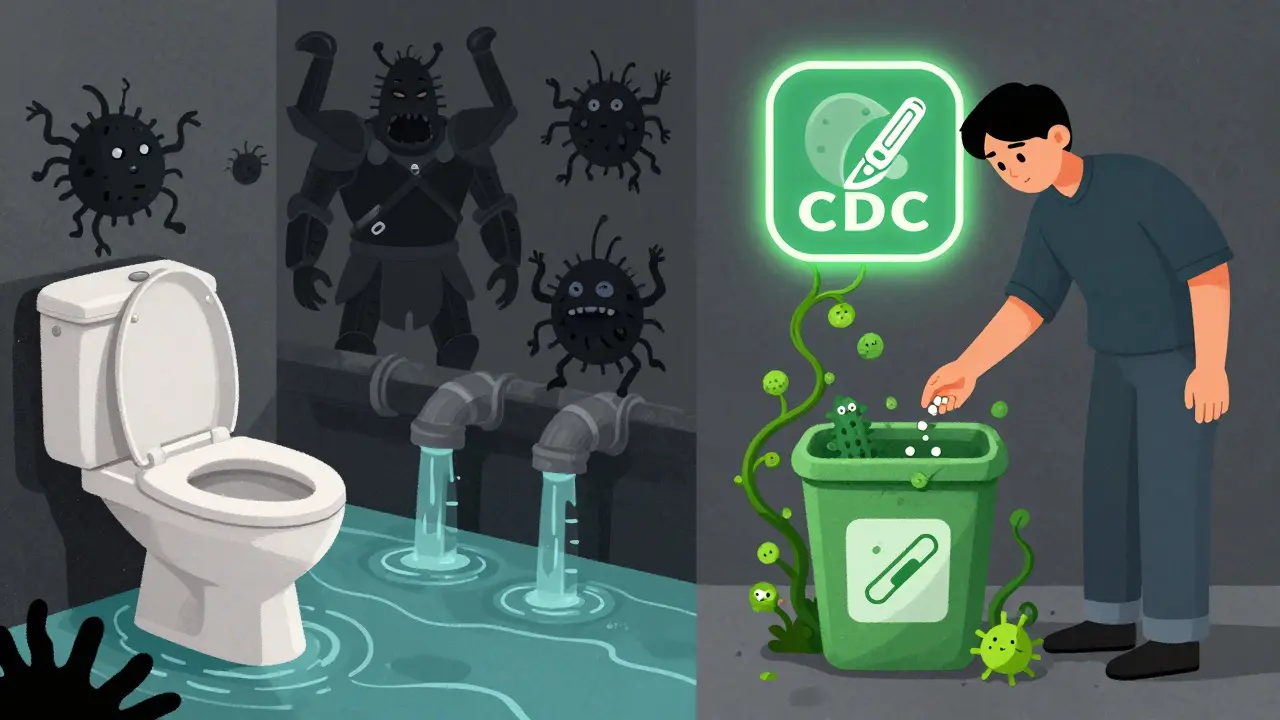
Don’t keep them. Don’t give them to someone else. Don’t flush them down the toilet. None of these are safe.
Flushing antibiotics pollutes rivers and lakes. A 2022 study found antibiotic residues in 63% of U.S. waterways near cities. In the UK, trace amounts have been detected in drinking water supplies. These aren’t just chemicals-they’re breeding grounds for resistant bacteria in the environment.
Keeping leftovers is even riskier. People often take old antibiotics without a prescription. They think, “This worked last time.” But infections change. Bacteria change. A pill meant for a sinus infection won’t help a UTI. And it might make the next one harder to treat.
Here’s what to do instead:
- Take unused antibiotics to your local pharmacy. Most UK pharmacies have take-back bins for expired or unwanted meds.
- If your pharmacy doesn’t have one, check with your local council. Many run household waste collection days for medicines.
- If you can’t get to a drop-off point, mix the pills with something unappetizing-coffee grounds, cat litter, dirt. Put them in a sealed bag, then throw them in the trash. This stops kids or pets from eating them and makes them less appealing to people who might try to misuse them.
The FDA and CDC both recommend this trash method as a last resort. But it’s better than flushing or hoarding.
When to Call Your Doctor
You don’t have to guess whether antibiotics are still needed. You can-and should-ask.
Many infections, especially in older adults, don’t need antibiotics at all. Viral infections like colds or flu won’t respond to them. But doctors sometimes prescribe them out of caution. That’s why an “antibiotic timeout” matters.
After 48 to 72 hours of taking antibiotics, ask yourself:
- Am I feeling better? Really better?
- Do I still have a fever, chills, or pus?
- Is the pain or swelling going down?
If yes, great. Keep going. If no-if you’re worse, or no better after three days-call your doctor. You might need a different antibiotic. Or you might not need one at all.
Studies show that when caregivers are trained to ask this question, unnecessary antibiotic use drops by up to 29%. That’s huge. It means fewer side effects, less resistance, and lower healthcare costs.

What’s Changing in 2025
Things are shifting. The CDC is preparing to release its first-ever Home Antibiotic Stewardship Core Elements in late 2025. That means clear guidelines for families, not just hospitals.
The UK’s NHS is also expanding its “Be Antibiotics Aware” campaign. Pharmacies are being encouraged to offer free disposal bins. The government has set a target to reduce inappropriate antibiotic use by 15% by 2027.
And telehealth is helping. Some home care services now offer video check-ins after 48 hours to review symptoms. One pilot by Johns Hopkins cut unnecessary antibiotic days by 28%. That’s the future.
But until then, it’s up to you. You’re the frontline. You’re the one holding the pills. You’re the one who decides whether to finish the course-or toss the rest.
What You Can Do Today
Here’s your action list:
- Check your medicine cabinet. Find any old antibiotics. Dispose of them properly-don’t keep them.
- Set up reminders for your next antibiotic prescription. Use your phone, a pill box, or an app.
- Ask your pharmacist for a free medicine disposal bag or bin location.
- Teach a family member how to recognize signs of antibiotic resistance: fever that comes back, no improvement after 3 days, new rashes or diarrhea.
- When you get a prescription, ask: “Is this really needed? Can we wait 48 hours to see if it gets better?”
Antibiotic stewardship isn’t about being perfect. It’s about being smart. One completed course. One properly disposed pill. One question asked. Those small actions add up. And they save lives-not just yours, but everyone’s.
15 Comments

Brittany Fuhs
December 27 2025
You people just don’t get it. Antibiotics are not candy. If you don’t finish them, you’re basically helping the bacteria win the war. And we’re losing. Because of people like you.

Sophia Daniels
December 28 2025
Let me just say this: your medicine cabinet is a biohazard zone if you’re hoarding antibiotics like they’re collectible Pokémon cards. 🧪💀 I once saw a guy give his kid leftover cipro for a sore throat. Kid ended up in the ER with a C. diff infection. That’s not a story. That’s a horror movie.

Nikki Brown
December 28 2025
I can’t believe people still think they’re ‘feeling better’ means it’s gone. 🤦♀️ Antibiotics aren’t a Netflix binge-you don’t skip to the end because the plot got interesting. This is science. Not vibes.

Peter sullen
December 30 2025
The empirical evidence is unequivocal: non-adherence to antimicrobial regimens significantly elevates the risk of selective pressure-driven phenotypic resistance, thereby compromising both individual and population-level therapeutic outcomes. Please consult your pharmacist.

Steven Destiny
December 31 2025
Stop being lazy. If you can’t take your damn pills on time, get a pill organizer. Or a reminder app. Or a dog that barks when it’s time. This isn’t rocket science. It’s basic responsibility.

Fabio Raphael
January 1 2026
I’ve been caring for my mom for 5 years, and I can tell you-she forgets everything. We started using Medisafe last year. Now she takes everything on time. No more ‘I thought I already took it.’ It’s small, but it changes everything.

Amy Lesleighter (Wales)
January 3 2026
just take the pills. dont overthink it. your body knows what it needs. the bacteria dont care if you’re ‘responsible’. they just wanna live. so do you. finish the damn course.

Becky Baker
January 3 2026
I threw my old antibiotics in the toilet because I didn’t want them lying around. Now I’m supposed to mix them with cat litter? What is this, a DIY science fair?

Rajni Jain
January 4 2026
I’m from India, and here, people share antibiotics like snacks. But after my uncle got a superbug infection, we started using pill boxes. It’s not about being perfect. It’s about being safe. Small steps.

Natasha Sandra
January 5 2026
I just got my first antibiotic prescription and I’m already using the app 😊❤️ I even set a reminder for my cat to remind me 🐱 (just kidding... unless?)

Erwin Asilom
January 6 2026
The data is clear. Disposal via trash with inert binding agents reduces environmental contamination by 89% compared to flushing. Pharmacies with take-back programs report 73% higher compliance rates. Consistency matters.

Sumler Luu
January 6 2026
I used to think finishing the course was overkill. Then I got a UTI that came back worse. Now I use a pill organizer. And I don’t judge people who forget. I just help them set alarms.

sakshi nagpal
January 7 2026
I appreciate how this post balances urgency with compassion. Not everyone has the luxury of perfect routines. But small changes-like a pill box or a text reminder-can be life-changing. Thank you for not shaming.

Sandeep Jain
January 7 2026
i had a friend who saved antibiotics for next time. he got sick again and took them. got worse. went to doc. doc said he had a new infection. now he knows. dumb move. dont be like him.

roger dalomba
December 25 2025
Oh wow. A PSA from the CDC that somehow turned into a TED Talk. I’ll just throw my leftover amoxicillin in the trash next to my expired energy drinks. 🙃