
Every time you pick up a prescription, there’s a hidden guide tucked inside the bottle - one that could save your life. But most people never read it. They glance at the name, check the dosage, and move on. That’s a mistake. The safety and warnings section on your prescription label isn’t just paperwork. It’s your first line of defense against serious side effects, dangerous interactions, and avoidable hospital visits.
What You’re Looking At: The Structure of a Prescription Label
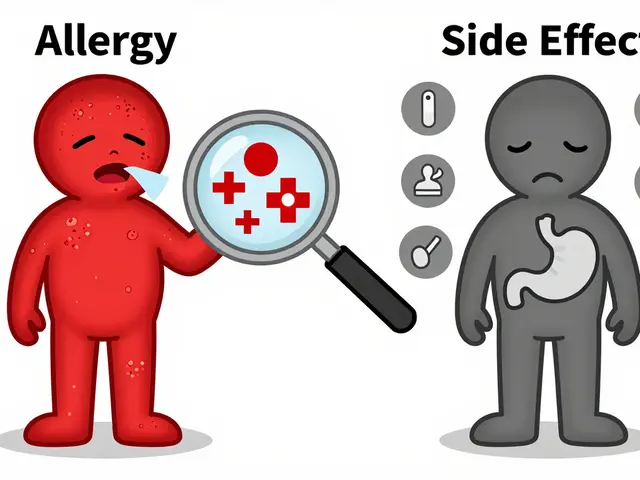
The label you get from the pharmacy has two main parts: the manufacturer’s original packaging information and the pharmacy’s applied label. The most critical safety details come from both. The manufacturer’s label includes the Boxed Warning - also called a black box warning. This is the FDA’s strongest alert. It’s printed in a thick black border and appears at the top of the prescribing information. You won’t always see it on the bottle itself, but if your drug has one, it’s listed in the patient information sheet that comes with the prescription. Drugs like clozapine, warfarin, and some antidepressants carry these warnings because they can cause life-threatening reactions - like bone marrow failure, severe bleeding, or suicidal thoughts. Below that, the Warnings and Precautions section lists all the known risks. These aren’t just random side effects. These are the ones that happen often enough, or are serious enough, that your doctor needs to know before prescribing. Look for phrases like “may cause,” “has been associated with,” or “requires monitoring.” These aren’t scare tactics - they’re clinical facts based on real patient data. Then there’s the Drug Interactions section. This tells you what other medications, supplements, or even foods can dangerously mix with your drug. For example, some statins can spike in your blood if you take them with grapefruit juice. Others, like certain antibiotics, can make birth control useless. The label doesn’t just say “avoid alcohol.” It says exactly how much and why - like “CYP3A4 inhibitors may increase plasma concentrations by up to 400%.” That’s the science behind the warning.What the Pharmacy Label Tells You (And What You Might Be Missing)
The sticker on your bottle is just as important. Pharmacists add warnings in large print (at least 10-point font) to highlight what matters most for daily use. These aren’t optional. They’re required by law. Look for stickers like:- “May cause drowsiness - do not operate heavy machinery”
- “Take on an empty stomach”
- “Do not take with NSAIDs”
- “May increase sun sensitivity”
How to Actually Understand the Warnings
Reading the words isn’t enough. You need to understand what they mean for you. Start with the black box warning. If your drug has one, ask: “What’s the worst thing that could happen? And how do I stop it?” For example, if you’re on clozapine, the warning says you need monthly blood tests. That’s not a suggestion. That’s your safety net. Skip it, and you could develop a deadly drop in white blood cells without knowing. For drug interactions, make a list of everything you take - including over-the-counter meds, vitamins, and herbal supplements. Bring it to your pharmacist. They can check for hidden conflicts. One common mistake? Taking St. John’s Wort with antidepressants. It can trigger serotonin syndrome - a condition that causes fever, confusion, and rapid heartbeat. The label might say “avoid concurrent use,” but without context, you won’t know what “concurrent” means. And pay attention to timing. “Take two hours before meals” isn’t the same as “take with food.” One can make the drug useless. The other can cause stomach damage. If you’re unsure, ask: “What happens if I get this wrong?”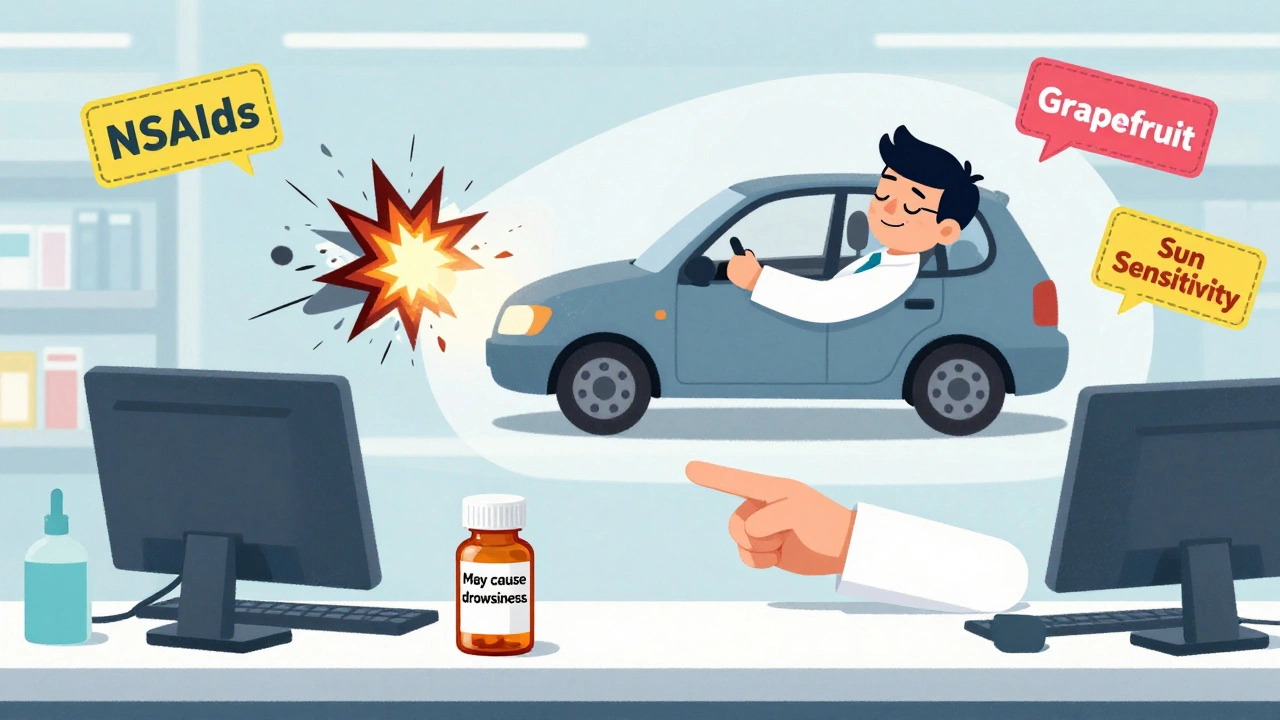
Why Most People Miss the Danger
Studies show that only 42% of patients even notice the warnings on their pill bottles. Why? Three big reasons:- They don’t know what “black box” means. It’s not a code - it’s a red flag. If you see it, treat it like a stop sign.
- They assume warnings don’t apply to them. “I’m healthy. This won’t happen to me.” But risk doesn’t care about how you feel. It’s about your body’s chemistry.
- They’re overwhelmed. If you’re taking five or more meds, the warnings pile up. That’s why 73% of patients on Reddit say they get lost in the details.
Tools That Actually Help
You don’t have to figure this out alone. Many pharmacies now use color-coded warning systems. CVS, for example, uses red for critical risks, yellow for important ones, and blue for general advice. That makes it easier to scan. Apps like Medisafe let you scan your pills and get instant alerts about interactions. It works 89% of the time when used consistently. And if you’re tech-savvy, some pharmacies now offer NFC tags on bottles - tap your phone, and a video explains the warning in plain language. But if you don’t use apps or smartphones? That’s okay. Just ask your pharmacist for a printed warning log. Write down each drug, its main warning, and what you need to do. Keep it in your wallet. Review it every week.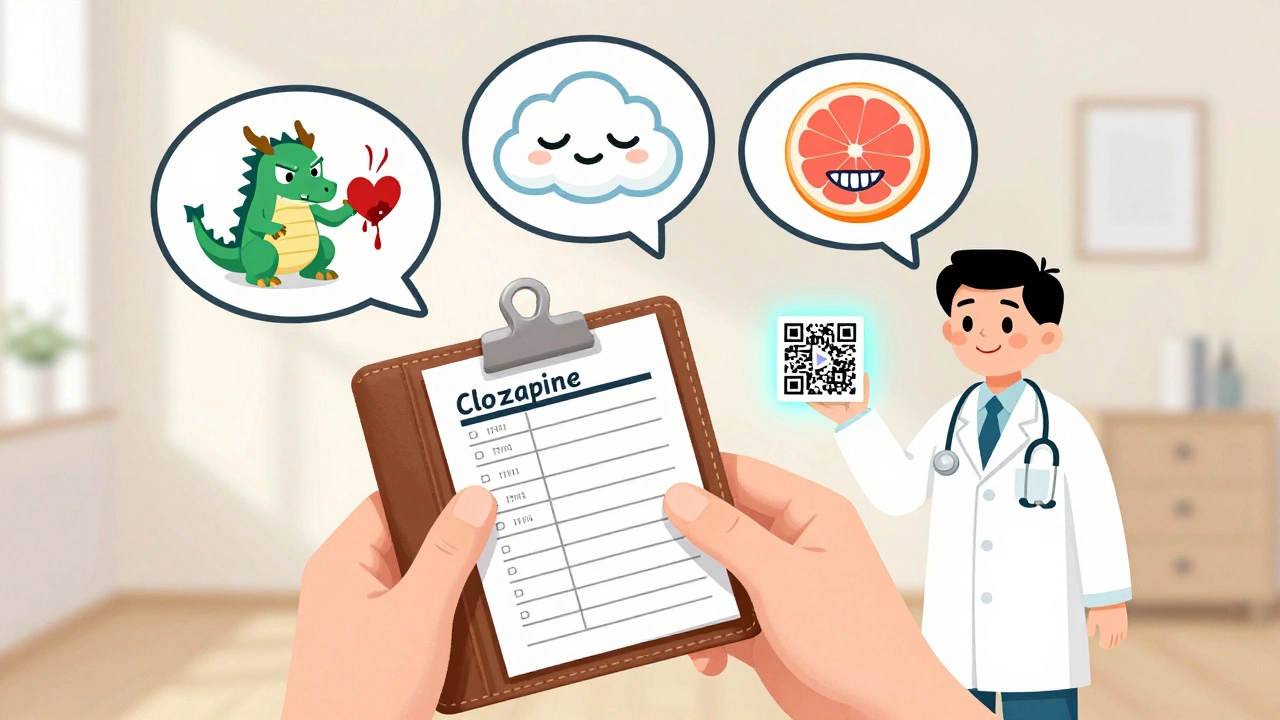
What to Do If You’re Confused
If a warning makes you nervous - or just confused - don’t guess. Don’t ignore it. Don’t assume your doctor already knows. Call your pharmacist. They’re trained to explain these things. Ask:- “What’s the biggest risk with this drug?”
- “What should I watch for in the first week?”
- “What should I do if I miss a dose?”
- “Is there a safer alternative if I’m worried about this warning?”
Final Tip: Make It Part of Your Routine
Reading your prescription label isn’t a one-time task. It’s part of managing your health. Every time you get a new prescription, pause. Read the label. Ask one question. Write down one thing you learned. Do that for a month, and you’ll start noticing patterns. You’ll know which drugs make you sleepy. Which ones need empty stomachs. Which ones clash with your supplements. You won’t just be following instructions. You’ll be protecting yourself.Medication errors cause over 1.3 million emergency room visits in the U.S. every year. Most of them are preventable. The information is there. You just have to look for it.
What is a black box warning on a prescription label?
A black box warning is the strongest safety alert the FDA requires on a prescription drug. It’s printed in a thick black border and highlights life-threatening risks - like organ failure, severe allergic reactions, or increased risk of suicide. Drugs like clozapine, warfarin, and some antidepressants carry these warnings. If your medication has one, it means the risk is serious enough that skipping monitoring or ignoring instructions could be deadly.
Why do some warnings say "may cause" instead of "will cause"?
The FDA requires manufacturers to use precise language. "May cause" means the side effect has been observed in clinical trials or post-market reports, but it doesn’t happen to everyone. "Will cause" would be inaccurate - because not everyone reacts the same way. It’s about probability, not certainty. A drug might "may cause" dizziness in 1 in 10 people, but that’s still important enough to warn you.
Can I ignore a warning if I’ve taken the drug before without problems?
No. Your body changes over time. Age, other medications, liver function, or even diet can make a warning suddenly relevant. A drug you took safely at 30 might become dangerous at 55. Or adding a new supplement could trigger an interaction you never had before. Warnings aren’t about past experience - they’re about current risk.
What should I do if I miss a warning and have a bad reaction?
Stop taking the drug immediately and call your doctor or go to urgent care. Don’t wait to see if it gets better. Some reactions - like swelling, trouble breathing, chest pain, or sudden confusion - need emergency care. Bring the pill bottle with you so the provider can check the warning label. Even if you think you "knew" the risk, reporting it helps improve safety for others.
Are there easier ways to understand warnings if I have low health literacy?
Yes. Ask your pharmacist for a Medication Guide - these are written in plain language with visuals. Many pharmacies now offer QR codes on labels that link to short videos explaining the risks. You can also ask for a "teach-back" - where the pharmacist asks you to repeat the warning in your own words to make sure you understood. Studies show this reduces errors by nearly 30%.
If you’re managing multiple medications, create a simple warning log: write down each drug, its main risk, and what you need to do. Keep it in your wallet or phone. Review it weekly. You don’t need to be a doctor to stay safe - just curious enough to ask.
12 Comments

sagar bhute
December 4 2025
This post is just corporate propaganda dressed up as health advice. Pharmacies don’t care if you live or die-they care about liability. The black box warning exists because lawyers made them write it, not because they give a damn about you. Read the label? Sure. But don’t expect anyone to actually help you understand it.

Cindy Lopez
December 5 2025
There is a grammatical error in the third paragraph: "The manufacturer’s label includes the Boxed Warning - also called a black box warning. This is the FDA’s strongest alert. It’s printed in a thick black border and appears at the top of the prescribing information." The hyphen after "Warning" should be an em dash, not an en dash. Also, "prescribing information" is not capitalized consistently. Minor, but it matters.

shalini vaishnav
December 5 2025
Why are Americans so dependent on labels? In India, we trust our doctors. We don’t need colorful stickers or NFC tags to tell us what to do. You people overcomplicate everything. A pill is a pill. If you don’t understand, ask your physician-not some pharmacist who thinks he’s a medical scholar because he memorized the drug interaction chart.

bobby chandra
December 6 2025
Let me tell you something wild-reading your prescription label is like reading the manual for your own body. And guess what? Most people treat their bodies like a toaster they bought on sale. No manual? No problem. Then they wonder why it explodes. Don’t be that person. Grab that sheet. Read it. Highlight it. Tape it to your mirror. Your future self will high-five you.

Archie singh
December 8 2025
Everyone’s so obsessed with reading labels but nobody reads the actual clinical trial data. The warnings are watered down for consumers. The real risks are buried in the 400-page FDA filing nobody ever sees. You think a sticker saying "may cause drowsiness" tells you the whole story? Please. You’re being manipulated by marketing departments with legal teams.

Albert Essel
December 10 2025
I appreciate the effort to make this info accessible. But let’s be real-most people don’t have the time, energy, or literacy to parse this stuff. The system should do more to meet people where they are. Not everyone can call a pharmacist or use an app. We need simpler, more universal tools-not just better labels.

Charles Moore
December 10 2025
My grandma doesn’t use smartphones, doesn’t read English well, and takes six meds. So I print out a one-page cheat sheet for her every time she gets a new prescription. Big font. Simple words. One warning per line. She keeps it in her purse. She doesn’t need an app. She just needs someone who cares enough to translate it for her.

Gavin Boyne
December 10 2025
Oh wow, another post telling people to read the fine print. Because clearly, the problem isn’t that the pharmaceutical industry makes drugs so complex even doctors get confused, or that insurance forces people to take 12 pills at 5 different times, or that the warnings are written by lawyers who think "CYP3A4 inhibitors" is a reasonable phrase for a 72-year-old with arthritis. Let’s just blame the patient for not being a pharmacology PhD. Genius.

Rashi Taliyan
December 11 2025
I almost cried when I realized I’d been taking my thyroid med with coffee for three years because I didn’t read "take on empty stomach." My TSH levels were all over the place. I thought I was fine. Turns out I was just… surviving. Now I keep a little alarm on my phone: "9 AM: meds only, no coffee, no food, no lying down." It’s my new ritual. Small change. Huge difference.

Rashmin Patel
December 11 2025
OMG YES. I just started using Medisafe last month and it literally changed my life. I was taking metformin and ibuprofen together and didn’t know it was wrecking my kidneys. The app flagged it immediately and sent me a video from my pharmacist explaining it in Hindi and English. I cried. I felt so stupid but also so grateful. And now I show my mom how to use it too-she’s 68 and doesn’t trust apps, but she loves the little bell sound when it reminds her. We’re both safer now. 🙏

Kara Bysterbusch
December 13 2025
It’s not enough to simply read the label. One must internalize the context. The phrase "may cause" is not an invitation to dismiss-it is a probabilistic notification grounded in epidemiological data. The variance in individual metabolic pathways, genetic polymorphisms in cytochrome P450 enzymes, and polypharmacy dynamics render each patient’s risk profile uniquely contingent. To treat warnings as generic advice is to misunderstand the very foundation of clinical pharmacology. Vigilance is not optional-it is the ethical imperative of self-advocacy in an increasingly complex therapeutic landscape.

James Kerr
December 2 2025
Just read my new blood pressure med label last week and nearly jumped out of my skin. That tiny sticker saying "avoid grapefruit"? I was eating half a grapefruit every morning. Turned out my pharmacist had flagged it when I picked it up, but I didn’t read it. Lesson learned. Now I check every bottle like it’s a bomb squad checklist.