
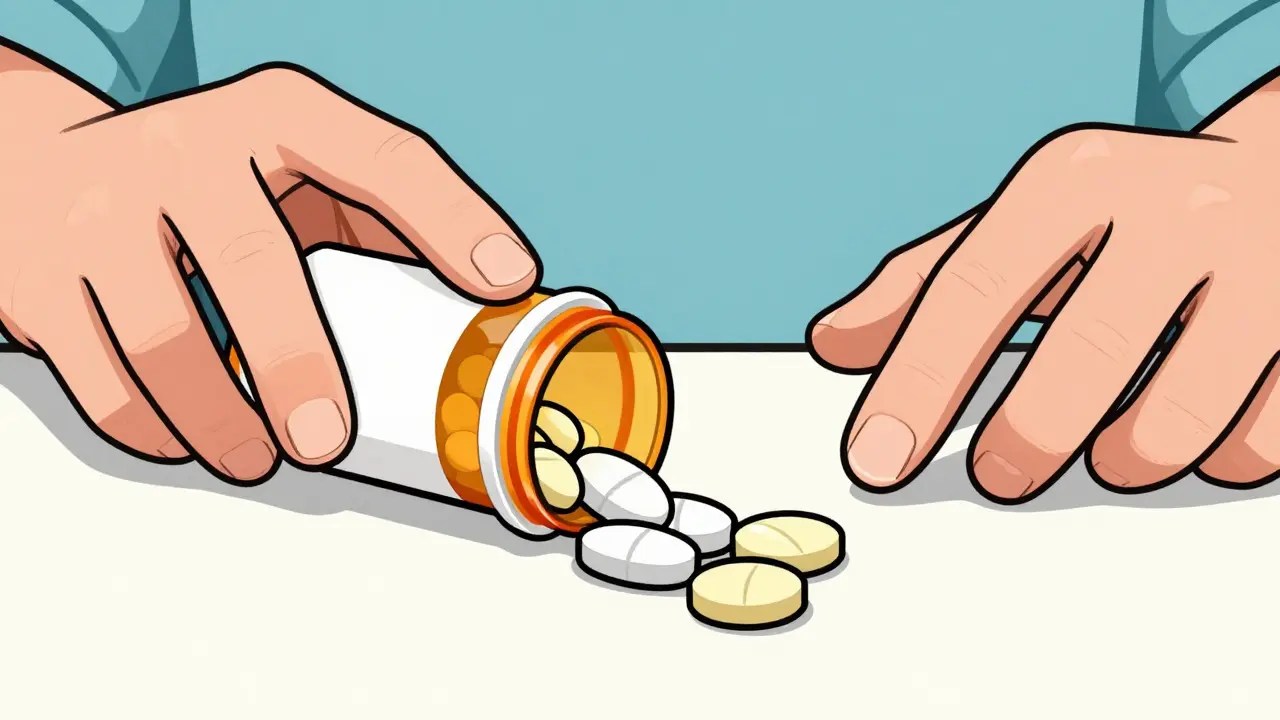
While it feels unsettling, these changes usually have nothing to do with the quality of the medicine. In the U.S., generic drug appearance variations are actually a byproduct of legal requirements. In fact, generic drugs now make up about 90% of all dispensed prescriptions, meaning the vast majority of us will encounter this "pill swap" at some point. The good news is that a change in color doesn't mean a change in how the medicine works, but the mental stress it causes is a real hurdle for many patients.
The Legal Reason Your Pills Look Different
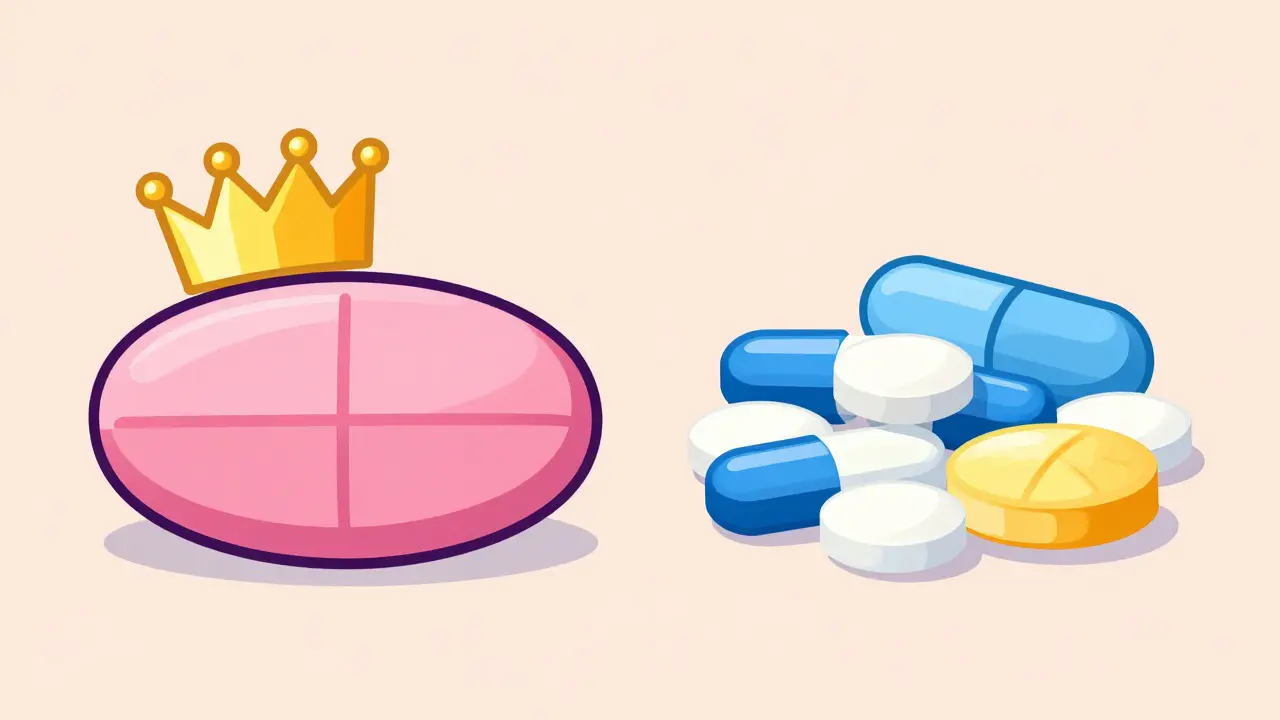
Why can't a generic company just copy the brand-name pill exactly? It comes down to trademark law. Under the Hatch-Waxman Act a 1984 law that created a pathway for generic drugs to enter the market via abbreviated applications, generic manufacturers are prohibited from making their drugs look identical to the brand-name version. If a brand-name drug is a pink oval, the generic cannot be a pink oval. This protects the brand's intellectual property and prevents trademark infringement.
Because of this, different companies creating the same generic version of a drug will choose different colors, shapes, and markings. This is why your medication might change not just when you switch from brand to generic, but even when your pharmacy switches which generic manufacturer they are buying from. For example, if you take Atorvastatin a medication used to lower cholesterol, formerly marketed under the brand name Lipitor, you might see one generic version as a white round tablet and another as a yellow oblong pill. Both contain the exact same active ingredient, but their "outfits" are different.
How the FDA Ensures Your Generic is Safe
The U.S. Food and Drug Administration the federal agency responsible for protecting public health by ensuring the safety and efficacy of drugs (FDA) has very strict rules about what a generic must be. While they allow the colors and shapes to vary, they require pharmaceutical equivalence. This means the generic must have the same active ingredient, the same strength, the same dosage form (like a tablet or capsule), and the same route of administration.
To prove this, manufacturers must show that the drug is bioequivalent. This includes dissolution profiles-basically how fast the pill breaks down in your body-which must fall within 80% to 125% of the brand-name drug's performance. The differences you see are usually just inactive ingredients, such as dyes or fillers, which don't change how the medicine treats your condition. The FDA’s position is clear: differences in taste or appearance do not affect the drug's safety or effectiveness.
| Feature | Brand-Name Drug | Generic Equivalent | Requirement |
|---|---|---|---|
| Active Ingredient | Same | Same | Must be identical |
| Strength/Dosage | Same | Same | Must be identical |
| Color & Shape | Specific | Varies | Must be different (Trademark) |
| Inactive Ingredients | Specific | Varies | Must not interfere with drug action |
| Bioequivalence | Reference | Matching | 80-125% of reference performance |
The Danger of the "Visual Disconnect"
Even though the chemistry is the same, the psychology of seeing a different pill is a serious issue. When a pill changes appearance, it creates a "cognitive load"-essentially, your brain has to work harder to confirm you're taking the right thing. For someone taking ten different medications a day, this can lead to dangerous mistakes. If your blood pressure med suddenly turns from a white oval to a blue circle, you might worry it's the wrong dose or a different drug entirely.
The risks aren't just in your head; they are documented in clinical data. Research from Harvard Medical School and Brigham and Women's Hospital found that when the appearance of cardiovascular medications changed, the odds of patients stopping their medicine increased by 34%. This is a major concern for chronic conditions where skipping doses can lead to heart attacks or strokes. Similarly, AARP reported that 37% of adults over 65 struggle to recognize their medications after an appearance change, compared to only 22% of younger adults.
Practical Tips to Manage Appearance Changes
Since you can't always control which manufacturer your pharmacy uses, you need a system to keep yourself safe. Relying on color and shape is a risky strategy. Instead, try these concrete steps to ensure you're taking the correct dose:
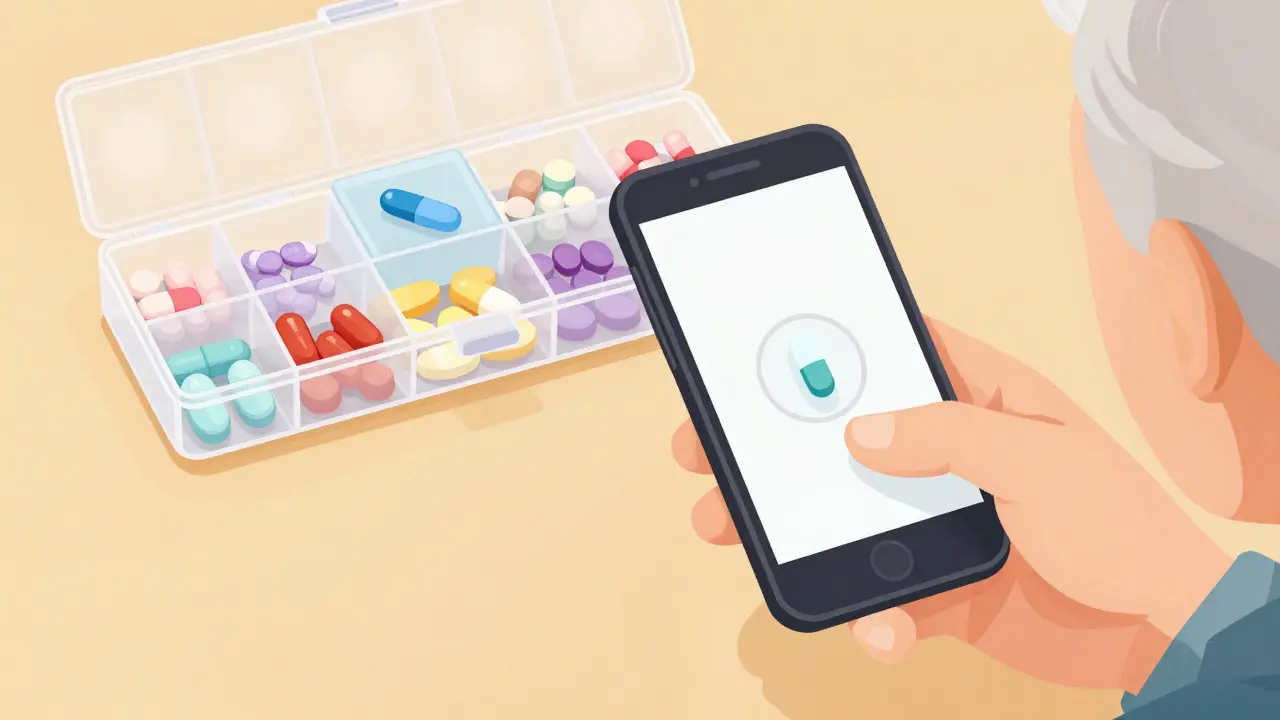
- Take a photo: Use your smartphone to take a clear picture of your pill and the prescription label every time you get a new refill. A Johns Hopkins study showed that maintaining personal photo records can reduce medication errors by 27% in elderly patients.
- Use a pill organizer: Get a weekly or monthly pill box. Filling this once a week allows you to spot an appearance change immediately, rather than noticing it mid-dose when you're already tired or rushed.
- Ask your pharmacist for "Pill Identification Counseling": When you pick up a script, ask the pharmacist to confirm if the appearance has changed. They can often provide a printed identification card or show you a digital image of the drug via networks like Surescripts.
- Request a specific manufacturer: While most insurance companies and Pharmacy Benefit Managers (PBMs) won't guarantee a specific brand of generic, it doesn't hurt to ask. Some pharmacists can put a note in your file to try and keep the manufacturer consistent.
Where the Industry is Heading
Regulators are starting to realize that "chemically the same" isn't enough if the patient is too scared to take the pill. The FDA has begun focusing more on the physical attributes of drugs during the development process. They've even issued Warning Letters to manufacturers who ignored the impact of size and shape on patient compliance.
We are seeing a shift toward standardization. In Europe, the European Medicines Agency already encourages generics for chronic conditions to look similar to the brand name when possible, which led to an 18.3% drop in appearance-related errors. In the U.S., the FDA is working on "Visual Medication Equivalence Standards" to help bridge this gap. Experts predict that by 2028, the majority of new generic approvals for high-risk medications will include voluntary appearance standardization.
Does a change in pill color mean the drug is less effective?
No. The color is created by inactive dyes and fillers. As long as the drug is FDA-approved, it must meet strict bioequivalence standards, meaning it delivers the same amount of active medicine to your bloodstream as the brand-name version, regardless of what it looks like.
Why can't the pharmacy just give me the same generic every time?
Pharmacies buy from various wholesalers to get the best price and ensure supply. If one manufacturer runs out of stock, the pharmacy will source the same generic drug from a different company. Because each company uses different colors and shapes to avoid trademark issues, your pills may change with each refill.
What should I do if I'm afraid my pill is the wrong one?
Do not take the medication if you are unsure. Call your pharmacist immediately or take the bottle back to the pharmacy. They can use a professional pill identifier to confirm the drug's identity and explain why the appearance changed.
Are generic drugs just as safe as brand-name drugs?
Yes. The FDA requires generics to be pharmaceutically equivalent to the Reference Listed Drug (RLD). They must contain the same active ingredient and perform the same way in the body. The only major differences are the inactive ingredients and the physical appearance.
Can I ask my doctor to prescribe "Dispense as Written" (DAW)?
Yes, a doctor can mark a prescription as "Dispense as Written," which tells the pharmacy to provide the brand-name version only. However, be aware that your insurance may not cover the cost of the brand-name drug, and you may have to pay a significantly higher copay.
13 Comments

Danielle Kelley
April 5 2026
Sure, the FDA says it's fine, but why the secrecy with the manufacturers? It's just too convenient that they can swap dyes and fillers whenever they want and we're just supposed to trust the system blindly. Something smells fishy about these "inactive ingredients" and how they actually affect our brains!

Brady Davis
April 7 2026
Oh great, so my heart meds can just play musical chairs with colors every month. Absolutely thrilling.

Daniel Trezub
April 8 2026
Actually, the bioequivalence range of 80-125% is wider than most people realize. While it's technically "equivalent," some people definitely feel a difference in efficacy between generic brands. It's not just in your head, though the science says it's negligible for the average person.

Srikanth Makineni
April 10 2026
Just check the imprint code on the pill. That's the only way to be sure

Christopher Cooper
April 11 2026
I really appreciate the tip about taking photos of the prescription! It's such a simple habit that could prevent a massive mistake, especially for elderly parents who might get confused. Does anyone know if there are specific apps that track this, or is a simple gallery folder the best way to go?

Rauf Ronald
April 12 2026
A simple folder works great, but you can also use a health tracking app! I'm a big believer in being proactive with your health. Just keep a running log and you'll never have to stress about a color change again. You've got this!

Timothy Burroughs
April 13 2026
imagine being so weak you need a photo to take a pill... this is why our country is falling apart people have no common sense anymore just use your eyes and stop whining about a yellow circle

Dhriti Chhabra
April 14 2026
It is quite understandable that patients feel distressed by such changes. We must strive for a healthcare system that prioritizes patient peace of mind alongside chemical efficacy. I believe a more standardized approach, as seen in Europe, would be highly beneficial for all parties involved.

GOPESH KUMAR
April 15 2026
The obsession with trademarks over patient safety is a classic example of corporate greed masquerading as law. We treat medicine like a branded sneaker. It is a superficial system that ignores the deeper psychological impact of medical instability. Truly a tragedy of modern capitalism.

Vivek Hattangadi
April 15 2026
I totally agree with the idea of using a pill organizer! I started using one a few years ago and it honestly changed my morning routine for the better. It takes the guesswork out of the equation and gives you that extra layer of confidence that you're on the right track. Keep pushing for those better systems!

Michael Flückiger
April 17 2026
This is so helpful!!! I never knew about the Hatch-Waxman Act... it makes so much sense now!!! Always trust your pharmacist, they are the real heroes here!!!

Rupert McKelvie
April 19 2026
It's heartening to see the FDA moving toward standardization. It'll be a great relief for millions of people once those Visual Medication Equivalence Standards are in place. A small change in policy can lead to a huge improvement in quality of life for many.
Write a comment
Popular Posts

How Exercise Improves ADHD Symptoms
1 Oct 2025


Del Bourne
April 5 2026
It is so important to double-check your medication when it looks different. I always recommend using a pill identifier app or website if you're feeling unsure about a refill. Most pharmacies are happy to help you verify the drug if you just ask at the counter!