QT Prolongation: What It Is, Which Drugs Cause It, and How to Stay Safe
When your heart’s electrical cycle takes too long to reset between beats, it’s called QT prolongation, a delay in the heart’s repolarization phase that can trigger dangerous irregular heart rhythms. Also known as long QT syndrome, it’s not always genetic—often, it’s caused by everyday medications you didn’t realize could mess with your heart’s rhythm. This isn’t rare. Every year, hundreds of people end up in the ER because a common antibiotic, antidepressant, or even an antinausea pill pushed their QT interval past the danger line.
The real danger isn’t the prolongation itself—it’s what comes after: torsades de pointes, a wild, chaotic heart rhythm that can lead to sudden cardiac arrest. It doesn’t always come with warning signs like dizziness or palpitations. Sometimes, it just happens—especially if you’re on more than one drug that affects the heart’s electrical system. That’s why knowing which meds to watch out for matters. Drugs like certain antibiotics (clarithromycin, moxifloxacin), antifungals (voriconazole), antidepressants (citalopram, escitalopram), and even some anti-nausea pills (ondansetron) are known culprits. And it’s not just the drug itself—mixing two or more of these? That’s when risk spikes.
Some people are more vulnerable. Women, older adults, and those with low potassium or magnesium levels are at higher risk. If you’re on a heart medication like amiodarone or a diuretic that drains electrolytes, you’re already playing with fire. Even something as simple as skipping a meal or getting dehydrated can tip the balance. The good news? You don’t need a fancy monitor to stay safe. Just know your meds. Check labels. Ask your pharmacist if anything you’re taking could affect your QT interval. That’s not paranoia—that’s basic medication safety.
And it’s not just about avoiding bad combos. Sometimes, switching from one generic version of a drug to another can change your risk—especially with narrow-therapeutic-index meds like those used for heart rhythm or depression. Real-world data shows some generics trigger QT prolongation more than others, even if they’re labeled the same. That’s why keeping a simple medication journal, tracking how you feel after a switch, and knowing when to get an ECG can be lifesaving.
Below, you’ll find real-world guides on exactly this: how to read drug labels for hidden cardiac risks, how common medications like SSRIs and antibiotics can interact to cause dangerous rhythms, and what to do if you’re on multiple prescriptions that might be quietly stressing your heart. No fluff. No theory. Just what you need to know to keep your heart beating steady.
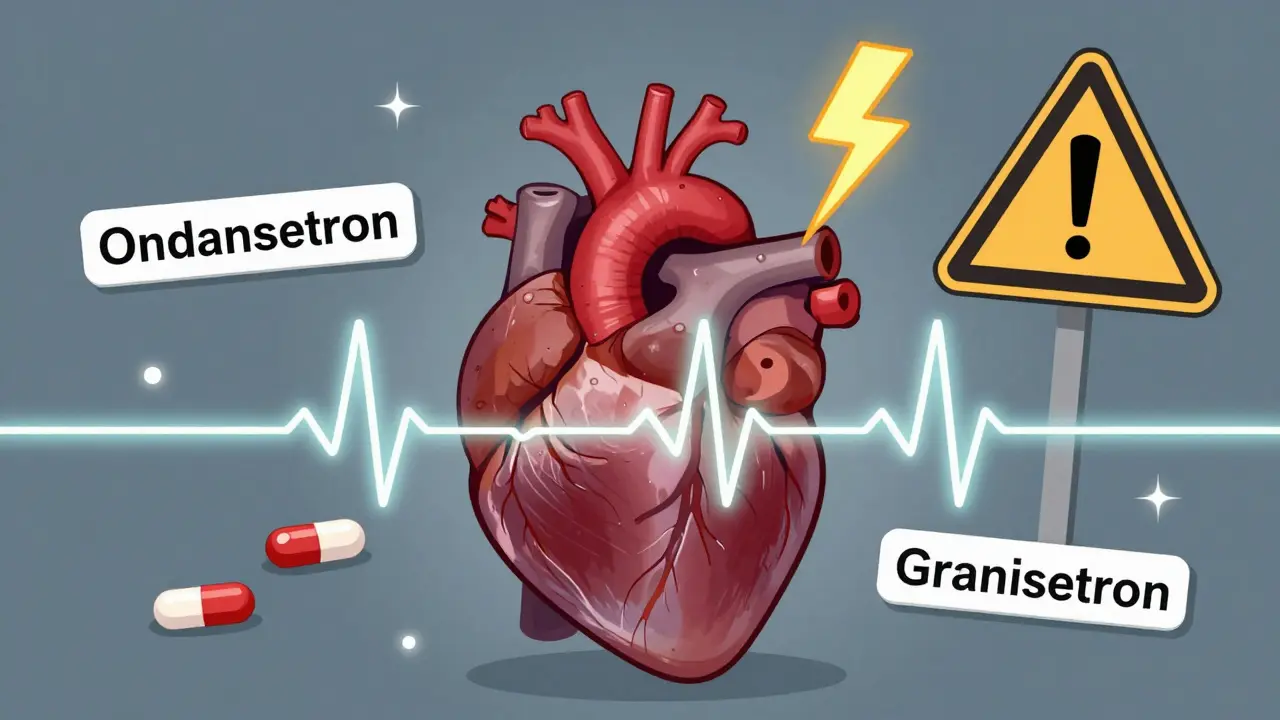
Antiemetics and Cardiac Risks: QT Prolongation and Drowsiness Explained
Not all antiemetics are safe for everyone. Some can dangerously prolong the QT interval or cause extreme drowsiness. Learn which drugs carry the highest risks and what safer alternatives exist.
View More
Macrolides and QT-Prolonging Drugs: Understanding the Arrhythmia Risk
Macrolide antibiotics like azithromycin and clarithromycin can prolong the QT interval, increasing the risk of life-threatening arrhythmias. Learn who's most at risk, how to spot danger signs, and safer alternatives.
View More