Cochlear Damage: Causes, Signs, and How to Protect Your Hearing
When your cochlear damage, injury to the inner ear’s hair cells that turn sound into nerve signals. Also known as sensorineural hearing loss, it often starts quietly—maybe you miss parts of conversations, or music sounds muffled. But once those tiny hair cells are gone, they don’t grow back. This isn’t just about getting older. It’s about what you’re exposed to every day.
Noise-induced hearing loss, hearing damage from loud sounds over time is the most common cause. Think construction sites, concerts, headphones turned up too high. It doesn’t have to be a single explosion—just 85 decibels for eight hours a day can do it. And it’s sneaky. You won’t feel pain. You’ll just start asking people to repeat themselves.
Ototoxicity, hearing damage caused by certain medications is another silent threat. Some antibiotics, chemotherapy drugs, and even high-dose aspirin can attack the cochlea. If you’re on long-term meds, especially for infections or cancer, ask your doctor: "Could this hurt my hearing?" It’s not always listed as a side effect, but it’s real. And tinnitus, ringing or buzzing in the ears often shows up first—a warning sign you can’t ignore.
People think hearing loss is just part of aging. It’s not. It’s often preventable. You don’t need fancy gear—just awareness. Lower the volume. Take breaks from noise. Use earplugs at concerts or when using power tools. If you notice your ears ringing after a party, that’s your body saying: "Enough."
There’s no magic cure for cochlear damage once it happens. Hearing aids help, but they don’t fix the damage—they just make sounds louder. The real win is stopping it before it starts. That’s why the posts below cover everything from how certain drugs affect your ears, to how to recognize early signs of hearing loss, to what you can do right now to protect what you’ve got. No fluff. Just what matters: your hearing, your health, and how to keep it.
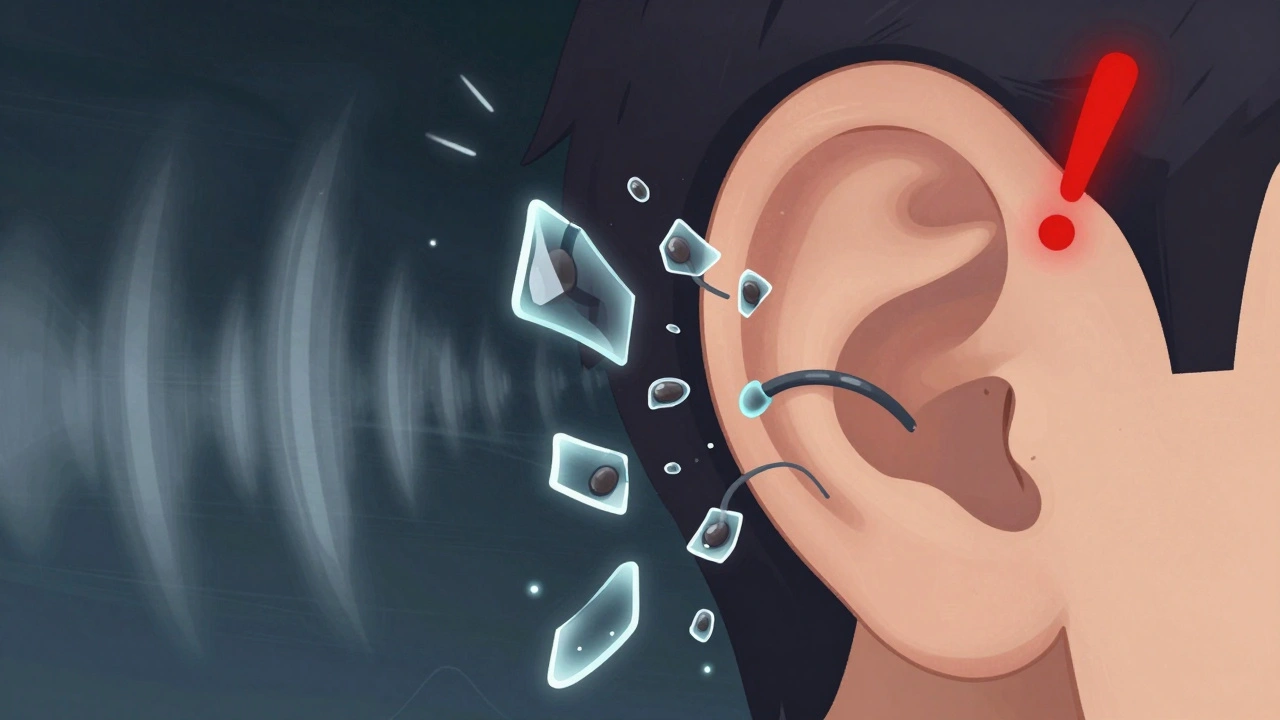
Sensorineural Hearing Loss: Causes, Symptoms, and Permanent Hearing Damage
Sensorineural hearing loss is permanent inner ear damage caused by aging, noise, or disease. Learn the causes, symptoms, and real-world solutions like hearing aids and cochlear implants - and why early action matters.
View MorePopular Posts