
When patients walk into a clinic, they don’t just need a diagnosis. They need to understand what’s wrong, what to do next, and feel heard while they’re there. But too often, that doesn’t happen. In fact, healthcare communication failures are linked to 80% of serious medical errors, according to The Joint Commission. That’s not a small number. It’s a system-wide problem-and it’s being fixed, one training program at a time.
Why Communication Training Isn’t Optional Anymore
It’s easy to think good communication is just being nice. But it’s not. Poor communication leads to missed diagnoses, wrong medications, patients not following treatment plans, and even lawsuits. The Agency for Healthcare Research and Quality found that 15-20% of adverse patient outcomes stem directly from communication breakdowns. And it’s not just patients who suffer. Nurses and doctors burn out faster when they’re constantly misunderstood, interrupted, or stuck in chaotic handoffs. The solution? Structured, evidence-based education programs. These aren’t one-hour webinars. They’re real training-designed around what actually works in clinical settings. Programs like the Program for Excellence in Patient-Centered Communication (PEP) at the University of Maryland don’t just teach “be empathetic.” They teach specific skills: how to elicit a patient’s full story, how to respond to emotion without rushing, how to check for understanding without sounding robotic.What These Programs Actually Teach
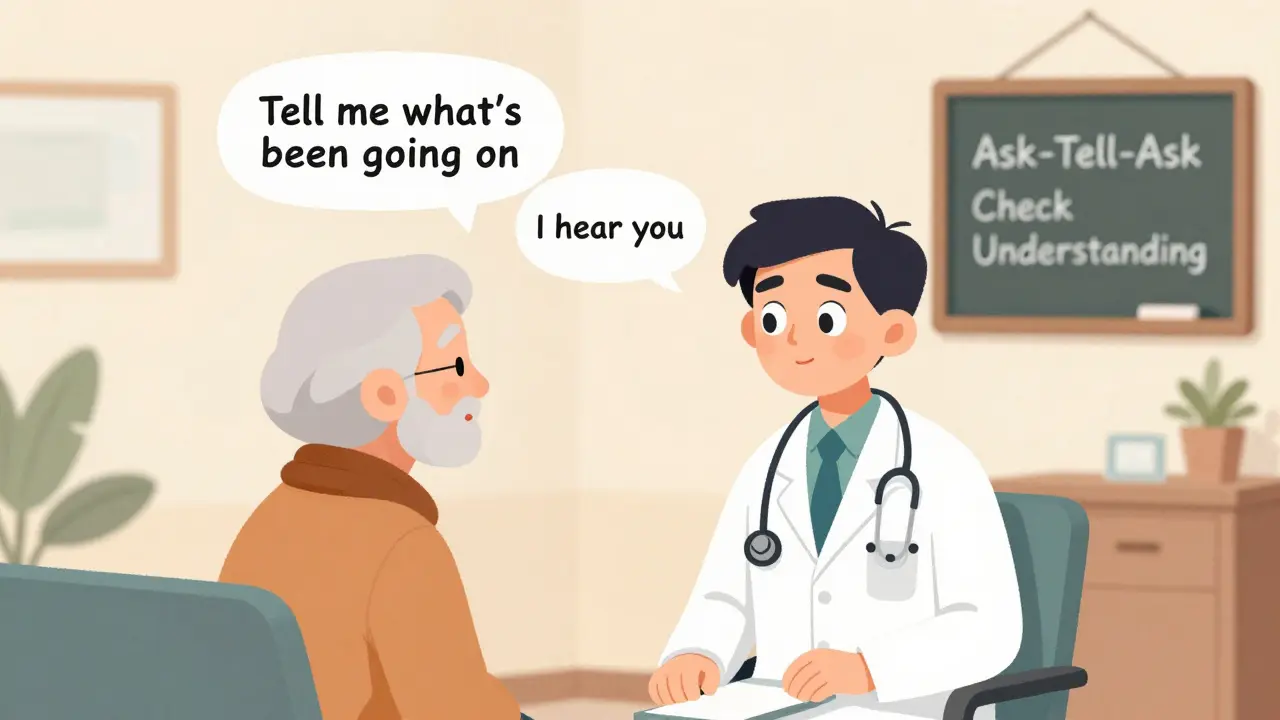
Not all communication training is the same. Some focus on patients. Others on teams. Some target public health crises. Here’s what’s out there-and who it’s for.- PEP (University of Maryland): Focuses on patient-provider interactions. Trains clinicians to use phrases like “Tell me what’s been going on” instead of “What’s your problem?” A 2018 study showed patients rated satisfaction 23% higher after staff completed this program.
- Mayo Clinic’s Online CNE Course: Built around 12 real patient videos. Teaches boundary setting, non-verbal cues, and how to handle angry or confused patients. Nurses who took it reported a 40% drop in burnout after three months.
- SHEA’s Online Modules: Made for infection control teams. Covers how to talk to the media, use social media to fight misinformation, and explain complex policies to non-experts. One reviewer said it helped her correct vaccine myths reaching 50,000 people monthly.
- Northwestern’s Mastery Learning Program: Medical students do 4-6 simulated patient encounters until they hit 85% proficiency. Results? 37% better skill retention after six months compared to lecture-only training.
- HCTS (UT Austin): Free public health training. Launched during the pandemic, it teaches hospitals how to communicate during outbreaks. It’s now expanded to cover health equity-because 28% of minority patients report worse communication experiences than white patients.
What’s missing from most programs? Long-term tracking. Only 12% of programs check if skills are still being used six months later. That’s a problem. Learning a skill is one thing. Using it daily under pressure is another.
The Hidden Barriers to Real Change
Even the best training fails if it doesn’t fit into real life. Doctors get 13.3 seconds before they interrupt patients-even after communication training, according to Dr. Robert Wachter at UCSF. Why? Time pressure. Staffing shortages. EHRs that eat up half the appointment. Then there’s resistance. About 15-20% of clinicians think communication can’t be taught. “I’m just not good with people,” they say. But research shows that’s a myth. Skills like active listening and empathy can be learned-just like suturing or reading an X-ray. The trick? Practice. Feedback. Repetition. Northwestern’s program found that 35% of residents felt anxious during simulations at first. But after a few rounds, their confidence jumped. The key? Peer modeling. When senior doctors lead sessions, junior staff take it seriously. At Mayo Clinic, 60% of training is led by experienced clinicians-not outside consultants.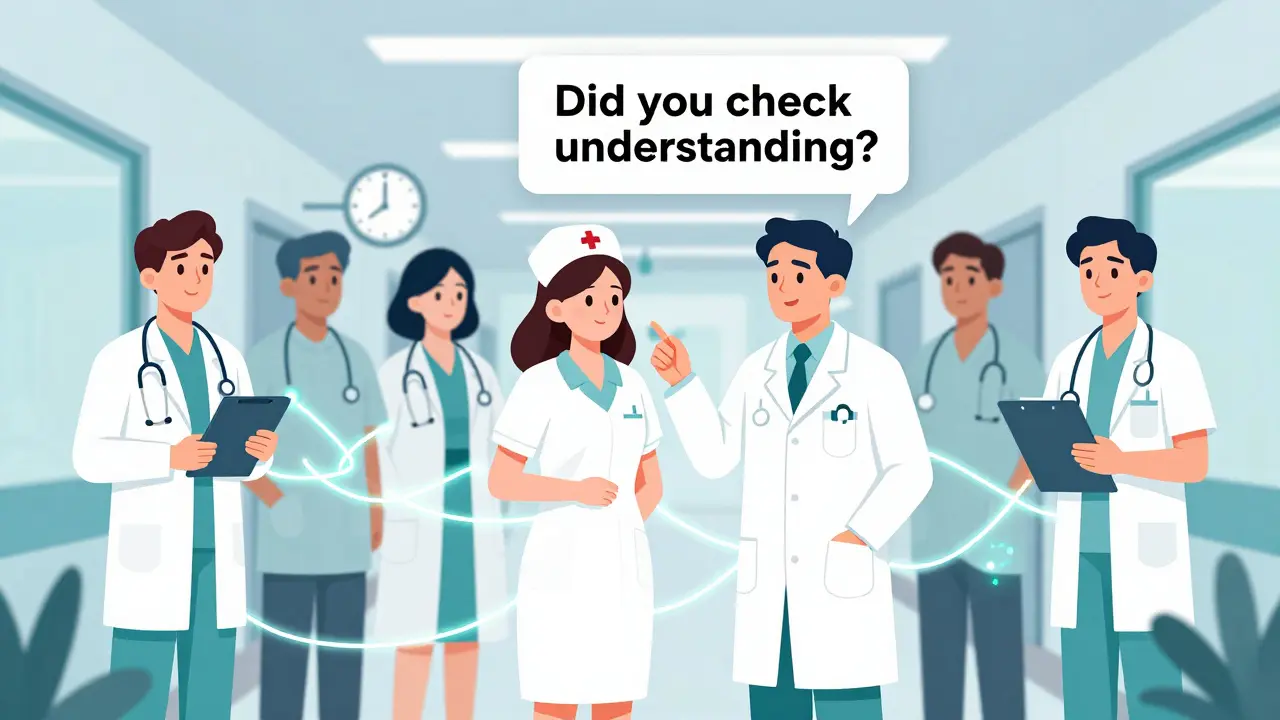
How Hospitals Actually Make It Work
Successful programs don’t just hand out certificates. They build communication into daily workflow. Here’s how:- Start with data: Survey patients. Find out where communication breaks down. Is it discharge instructions? Explaining test results? Use that to shape training.
- Pick 3-5 high-impact skills: Don’t try to fix everything. Focus on what matters most. For example: asking open-ended questions, checking understanding, acknowledging emotion.
- Use real scenarios: Role-play with actual patient stories from your clinic. Generic examples don’t stick.
- Embed prompts in the EHR: Add a pop-up that says, “Did you ask the patient to explain their understanding?” after a diagnosis is entered.
Northwestern’s team found that when each unit had a “communication champion”-a nurse or doctor trained to coach others-adoption jumped to 73%. These champions aren’t just teachers. They’re reminders, troubleshooters, and proof that change is possible.
What’s Next for Healthcare Communication
The field is evolving fast. In 2024, the Academy of Communication in Healthcare started piloting AI tools that give instant feedback on clinician speech patterns during simulated visits. Early results show 22% faster learning. Telehealth is also changing the game. Now, training includes how to read body language on a screen, manage tech glitches, and build trust without being in the same room. More programs are also tackling health equity. The AAMC found that 60% of existing curricula ignored cultural humility. That’s changing. New modules now teach how language barriers, mistrust in the system, and implicit bias affect communication-and how to fix it. And the pressure is growing. Medicare now ties 30% of hospital payments to patient satisfaction scores, especially communication. Hospitals with 300+ beds? 68% have formal training now. But in rural clinics? Only 22% do. That gap isn’t just unfair. It’s dangerous.
What You Can Do-Even Without a Formal Program
You don’t need a big budget to start improving communication. Here’s how:- Start meetings with: “What’s the one thing we need to communicate better this week?”
- Use the “ask-tell-ask” method: Ask what the patient knows, tell them in plain language, then ask them to repeat it back.
- Train one person on your team. Let them lead a 10-minute huddle on communication tips.
- Ask patients: “Was there anything I didn’t explain well?” Write it down. Do it again next week.
Change doesn’t come from big speeches. It comes from small, consistent actions. One doctor learning to pause. One nurse checking for understanding. One team deciding to stop rushing.
Final Thought: Communication Is a Skill, Not a Personality Trait
You don’t have to be charismatic to be a good communicator. You just need to know how to listen, how to speak clearly, and how to care enough to try again when you mess up. The best training programs don’t make you a better talker. They make you a better listener. And that’s what patients really need.What are institutional generic education programs in healthcare communication?
These are structured, evidence-based training programs designed to improve how healthcare workers communicate with patients, families, and each other. They’re called “generic” because they’re not tied to one specialty-they apply across departments, from emergency rooms to outpatient clinics. Examples include PEP at the University of Maryland and Mayo Clinic’s communication courses, which teach skills like active listening, empathy, and managing difficult conversations.
Do these programs actually improve patient outcomes?
Yes. Studies show that clinicians who complete communication training have 30% fewer malpractice claims, 23% higher patient satisfaction scores, and 37% better skill retention over time. Programs that use simulations and real-world practice, like Northwestern’s Mastery Learning model, show the strongest results. Poor communication is linked to 80% of serious medical errors-so fixing it directly improves safety.
Are these programs only for doctors?
No. While many programs target physicians, others are designed for nurses, pharmacists, infection control specialists, and even administrative staff. SHEA’s program, for example, trains infection preventionists on how to talk to the media. HCTS teaches public health workers how to respond during outbreaks. Communication is a team sport-and everyone needs training.
Why do some healthcare workers resist communication training?
Some believe communication is an innate trait, not a skill you can learn. Others say they don’t have time. A 2023 AAMC survey found 58% of professionals knew the skills but felt they couldn’t apply them in 15-minute appointments. Resistance also comes from fear-simulations can feel uncomfortable. But programs that use peer modeling, like Mayo Clinic’s, reduce this by having respected senior staff lead sessions.
How can small clinics start communication training without a big budget?
Start small. Use free resources like UT Austin’s HCTS courses. Pick one skill-like asking patients to repeat instructions back-and practice it for a week. Hold 10-minute team huddles to share what worked. Ask patients for feedback. You don’t need fancy simulations. You just need consistency. One nurse in a rural clinic improved patient understanding by simply adding, “Can you tell me what you’ll do when you get home?” to every visit.
Is communication training required by law?
Not directly-but it’s indirectly required. The Joint Commission mandates effective communication processes in hospitals (Standard RI.01.01.01). Medicare ties 30% of hospital payments to HCAHPS scores, which include communication. CMS also requires communication training under Conditions of Participation §482.22(c). So while you won’t get fined for not offering a course, you’ll lose money if patients rate your communication poorly.
9 Comments

Jay Ara
December 29 2025
in india we dont even have time to talk to patients let alone do training. my doc speaks 3 words and hands me a script. no one cares if i understand or not. but still i saw a nurse at goa hospital use ask tell ask and the old man cried. she made him feel seen. so its possible even here. just need someone to care enough to try.

Michael Bond
December 31 2025
Training works. But only if you’re not scheduled for 12 back-to-back patients.

Kuldipsinh Rathod
January 1 2026
My aunt went to a rural clinic last month. The doctor didn’t even look up from the screen. Asked her if she was in pain. She said yes. He wrote ‘pain’ and left. No follow-up. No explanation. No ‘tell me what’s been going on.’
This isn’t just about training. It’s about respect. And we’ve forgotten how to give it.

SHAKTI BHARDWAJ
January 2 2026
oh please. another corporate wellness fantasy. you think telling nurses to ‘acknowledge emotion’ fixes staffing shortages? you think ‘ask tell ask’ makes up for 300 patients a day? this is what happens when rich hospitals buy shiny programs while rural clinics use fax machines. the real problem? we treat people like broken machines. not humans. and no amount of roleplay will fix that. also your ‘evidence-based’ programs? funded by pharma. just saying.

Jody Kennedy
January 3 2026
YES. YES. YES. This is the most important thing in healthcare and NO ONE talks about it like this. I work in pediatrics. One mom cried because her kid’s doctor said ‘he’s fine’ and didn’t explain what ‘fine’ meant. That’s not negligence. That’s systemic laziness.
My team started doing 5-minute huddles before rounds. We share one thing we learned from a patient that day. It’s stupid simple. But now? We remember names. We remember fears. We stop rushing. And guess what? Our HCAHPS scores jumped 27 points.
It’s not magic. It’s just not being an asshole.

christian ebongue
January 4 2026
Fun fact: The ‘communication champion’ thing? We tried it. One nurse got assigned. She got 3 extra charting tasks. No time. No pay. No backup. By week 3? She quit. So yeah, let’s keep pretending training fixes everything while we ignore the real issue: we’re understaffed, overworked, and treated like disposable robots.
Also, ‘AI feedback on speech patterns’? Cool. Now tell me how it works when the patient is crying and the EHR is frozen.

jesse chen
January 6 2026
I’ve been in this game for 18 years. I’ve seen every trend come and go. ‘Patient-centered care.’ ‘Cultural competence.’ ‘Shared decision-making.’
This one? It’s different. Why? Because it’s not about theory. It’s about muscle memory. Like learning CPR. You don’t memorize it-you practice it until your body does it without thinking.
Northwestern’s mastery model? That’s the blueprint. We’ve started doing it in our ER. Residents used to hate the sims. Now they beg for more. One of them told me: ‘I thought I was good until I heard myself on tape.’
That’s the moment change happens.

Joanne Smith
January 6 2026
Let’s be real: the only reason this is getting attention now is because Medicare’s putting money on the line. Not because anyone suddenly cares about patients. It’s always been about the bottom line.
And don’t get me started on ‘health equity’ modules. They’re great. Until you realize half the staff thinks ‘implicit bias’ means ‘I’m a bad person.’
Meanwhile, the woman who cleans the ER at 3 a.m. has more emotional intelligence than half the doctors-and zero training. We’re training the wrong people.
Also, ‘colorful vocabulary’? I just called it ‘performative empathy.’ But hey, at least the PowerPoint looks nice.

Ryan Cheng
December 28 2025
Man, I’ve seen this play out in my hospital. We rolled out PEP last year, and honestly? It’s been a game-changer. Patients actually stay for the whole explanation now instead of nodding and walking out confused. The ‘ask-tell-ask’ trick? Pure gold. I used to rush through discharge instructions. Now I pause. Let them talk back. It’s not about being nice-it’s about not killing someone by accident.
And yeah, EHR pop-ups help. We added one that says ‘Did you check understanding?’ after every med change. At first, people rolled their eyes. Now? They ask for it to be turned on in other units.
Communication isn’t fluff. It’s the damn glue holding this whole broken system together.