
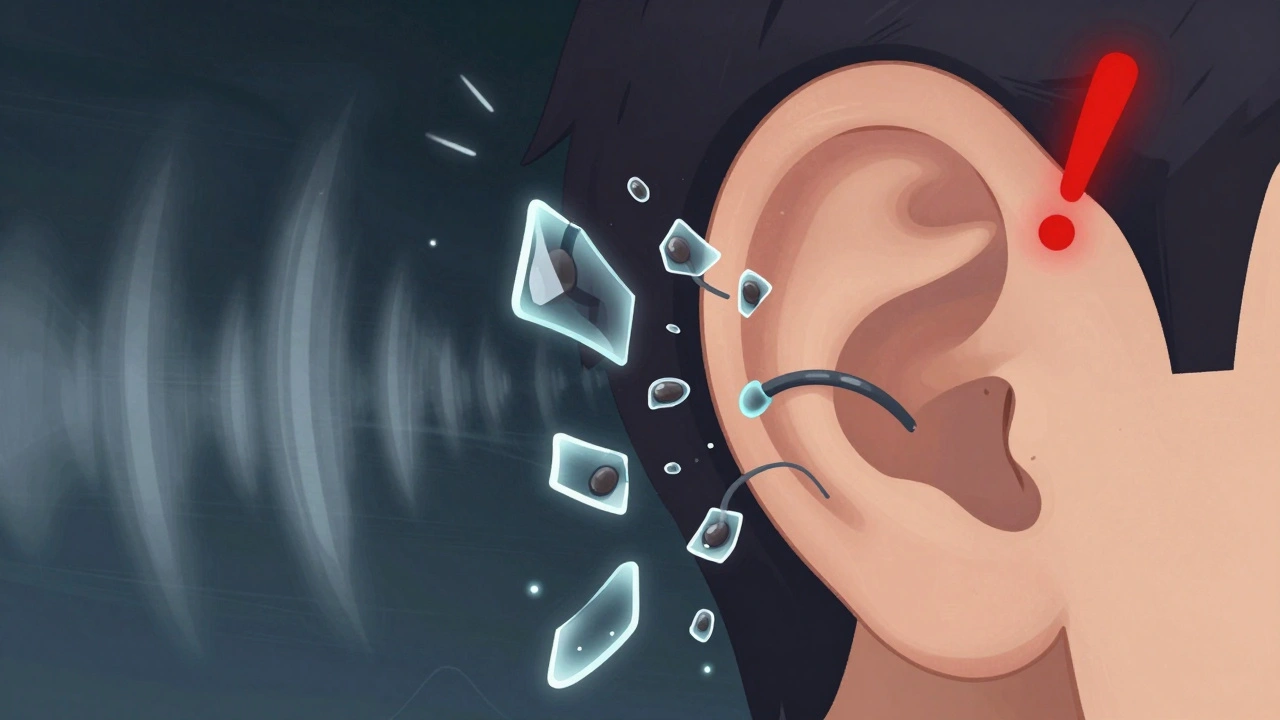
When you can’t hear your grandkid laugh over dinner, or you keep asking people to repeat themselves in crowded rooms, it’s not just aging - it could be sensorineural hearing loss. This isn’t a simple case of earwax blocking sound. It’s damage deep inside your inner ear, where tiny hair cells that turn sound into electrical signals are dead or broken. And once they’re gone, they don’t come back.
What Exactly Is Sensorineural Hearing Loss?
Sensorineural hearing loss (SNHL) happens when the cochlea - the spiral-shaped part of your inner ear - or the auditory nerve that sends signals to your brain gets damaged. The cochlea has thousands of microscopic hair cells called stereocilia. These cells bend when sound waves hit them, triggering electrical impulses that your brain interprets as sound. When these cells are damaged by noise, aging, or disease, they stop working. No repair. No regeneration. That’s why SNHL is usually permanent.
It’s different from conductive hearing loss, where something blocks sound from reaching the inner ear - like an ear infection or wax buildup. Those issues can often be fixed with medicine or surgery. SNHL? Not so much. About 90% of all hearing loss cases that need hearing aids are sensorineural.
What Causes It?
The biggest cause? Aging. Known as presbycusis, age-related hearing loss affects 25% of Americans between 65 and 74, and half of those over 75. It’s not just about getting older - it’s about decades of exposure to everyday noise, from lawnmowers to headphones.
Noise exposure is another major factor. Sound above 85 decibels - like traffic, power tools, or concerts - can start damaging hair cells after just 8 hours of continuous exposure. One loud concert or years of working in construction can lead to permanent damage. You won’t feel it happening. The damage builds silently.
Other causes include:
- Genetics - some people inherit a higher risk
- Medications - certain antibiotics, chemotherapy drugs, and high-dose aspirin can be ototoxic
- Illnesses - meningitis, mumps, measles, and autoimmune disorders can attack the inner ear
- Head trauma - a blow to the head can fracture the cochlea
- Sudden sensorineural hearing loss (SSHL) - a rapid drop in hearing, often in one ear, that can sometimes be reversed if treated within 72 hours
SSHL is rare - affecting only 5 to 20 people per 100,000 each year - but it’s an emergency. If you wake up one morning unable to hear out of one ear, see a doctor immediately. Steroid treatment within that 72-hour window can restore hearing in 32% to 65% of cases. Wait longer, and the chance of recovery drops sharply.
How Do You Know You Have It?
SNHL doesn’t always feel like "hearing less." It feels like hearing wrong.
- You understand words in quiet rooms but struggle in restaurants, meetings, or family gatherings - even when people are speaking clearly.
- People seem to mumble, but you don’t have trouble with TV volume.
- You hear ringing, buzzing, or hissing in your ears (tinnitus), which affects about 80% of people with SNHL.
- Sounds suddenly feel too loud or painful - a condition called recruitment.
- You feel off-balance or dizzy, especially if the damage affects the vestibular system near the cochlea.
These symptoms don’t show up on a mirror or a thermometer. You need an audiogram - a hearing test that measures how well you hear different pitches at different volumes. In SNHL, bone conduction and air conduction thresholds are both poor, but they’re close together. No air-bone gap. That’s the key difference from conductive loss.
Can It Be Cured?
Not really. Not yet.
There’s no pill, no eye drop, no laser treatment that brings back dead hair cells. Researchers at Stanford and other labs are working on stem cell therapies and gene editing to regenerate these cells, but those are still years away from being available to the public.
For sudden hearing loss, steroids - taken orally or injected behind the ear - can sometimes reverse the damage if given fast enough. But for chronic SNHL, the answer is compensation, not cure.
What Are the Treatment Options?
If your hearing is permanently damaged, the goal is to make life easier - not to fix what’s broken.
Hearing Aids
Most people with mild to moderate SNHL use hearing aids. Modern digital devices don’t just make everything louder. They’re programmed to boost only the frequencies you’ve lost - usually the high pitches where consonants like "s," "th," and "f" live. That’s why speech sounds clearer, even if background noise still overwhelms you.
Brands like Widex Moment and Phonak Paradise get top ratings for natural sound. Costco’s Kirkland Signature models are popular for affordability, costing about $1,500 per pair without insurance. But even the best hearing aids only improve speech understanding in noise by 30% to 50%. They don’t restore normal hearing.
Adapting takes time. Most people need 4 to 8 weeks to get used to the way sounds feel. Some report the "occlusion effect" - their own voice sounds hollow or boomy. Others get feedback whistling. These usually get fixed with adjustments by your audiologist.
Cochlear Implants
If you have severe to profound SNHL - meaning you can’t hear sounds below 90 decibels - hearing aids won’t help enough. That’s when cochlear implants come in.
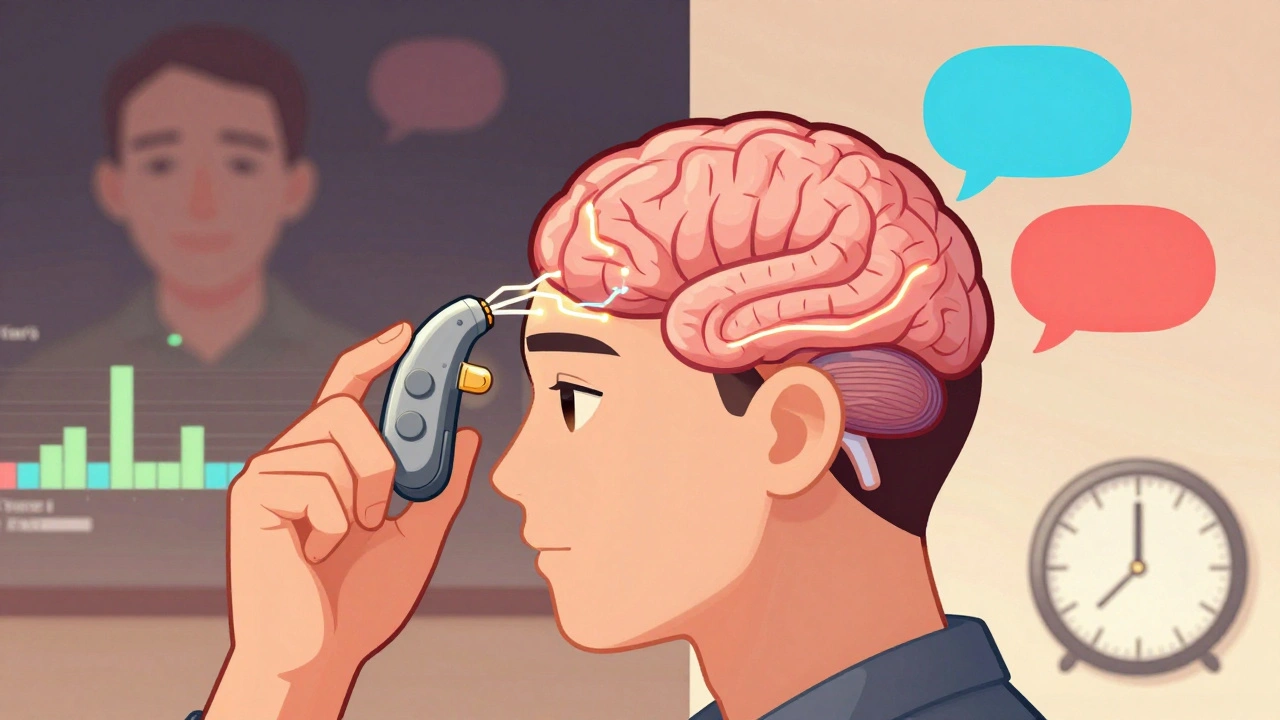
A cochlear implant is a surgically implanted device that bypasses the damaged hair cells and sends electrical signals directly to the auditory nerve. It’s not a magic fix. You need surgery, then weeks of healing, followed by 6 to 12 months of auditory therapy to retrain your brain to interpret the new signals.
But the results? About 82% of recipients can understand speech without lip reading. For people who were completely cut off from conversation, it’s life-changing. Still, it’s invasive. And some users report that everyday sounds - like running water or rustling leaves - feel painfully loud at first. Your brain has to learn to filter them out.
What About Cost and Access?
Hearing aids cost between $2,500 and $7,000 per pair in the U.S. Most insurance plans don’t cover them. Medicare doesn’t either. That’s why only 16% to 20% of adults who need hearing aids actually use them.
The 2017 Over-the-Counter Hearing Aid Act changed things. Now, you can buy basic hearing aids at pharmacies or online without a doctor’s visit. Brands like Eargo and Lively target mild to moderate SNHL with prices under $1,000. They’re not as customizable as audiologist-fitted devices, but they’re better than nothing.
Still, the cost barrier remains huge. So does the stigma. Many people delay getting help because they think hearing aids mean they’re old or weak. That’s changing - slowly.
Living With It
People with SNHL don’t just need devices. They need strategies.
- Face people when they talk. Visual cues help your brain fill in the gaps.
- Use captioning on TV and videos.
- Ask for quieter seating in restaurants.
- Use hearing aid apps that turn your smartphone into a remote mic - great for one-on-one conversations.
- Join a support group. The Hearing Loss Association of America has over 300 local chapters and free workshops.
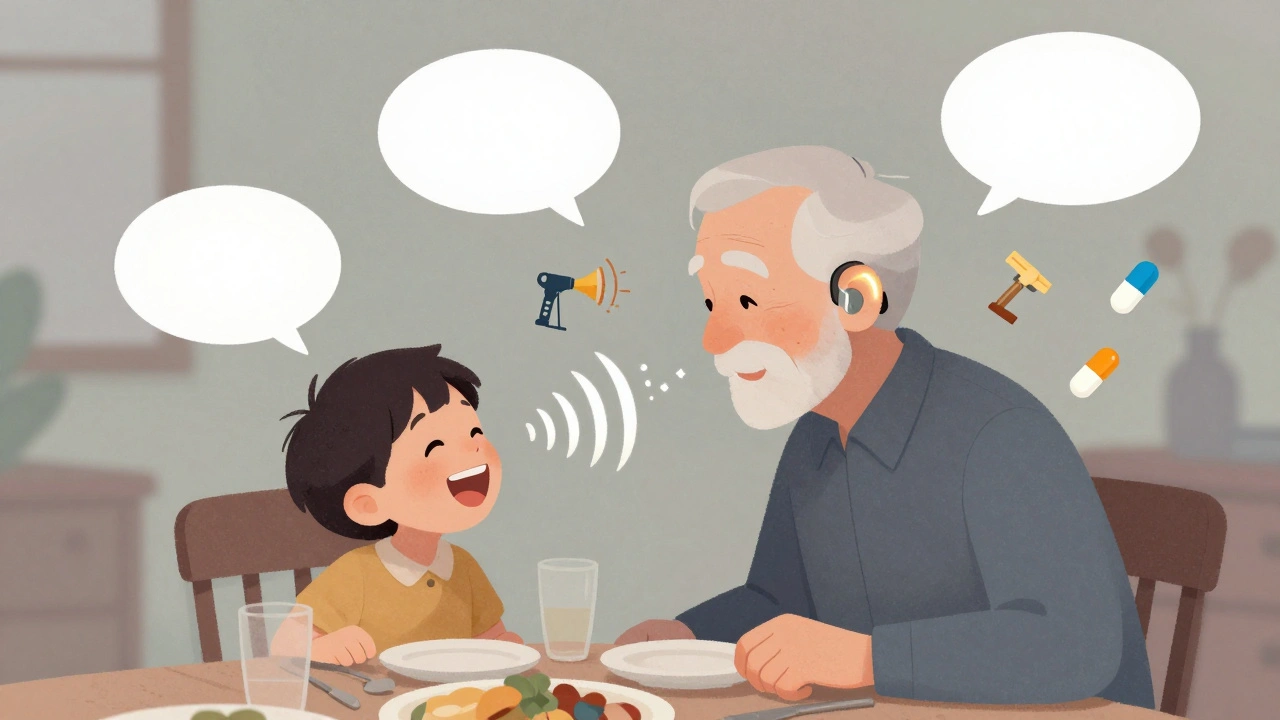
One user on a hearing forum wrote: "My hearing aids helped me hear my grandkids’ voices again - but I still miss half of what’s said at family dinners." That’s the reality. Technology helps, but it doesn’t erase the struggle.
What’s Next?
By 2035, experts predict 95% of people with SNHL will have access to tools that significantly improve their hearing - through smarter hearing aids, AI-powered noise filtering, and better implant tech. Cochlear implants are already getting smaller and more powerful. The latest model from Cochlear Limited is 30% smaller than its predecessor.
But the biggest threat isn’t technology. It’s time. The World Health Organization estimates 430 million people worldwide need help for hearing loss. By 2050, that number could rise by 50% as populations age and noise exposure increases.
Until a cure is found, the best thing you can do is protect what you’ve got. Turn down the volume. Use earplugs at concerts. Get your hearing checked every few years after 50. Catching problems early means you can adapt sooner - and keep connecting with the people who matter most.
Is sensorineural hearing loss always permanent?
Most of the time, yes. Damage to the inner ear’s hair cells or auditory nerve is irreversible. The only exception is sudden sensorineural hearing loss (SSHL), which can sometimes be reversed if treated with steroids within 72 hours of onset. For all other cases - whether from aging, noise, or disease - the damage is permanent.
Can hearing aids restore normal hearing?
No. Hearing aids amplify sound and can make speech clearer, especially in quiet settings, but they don’t restore hearing to normal levels. In noisy environments, most users still struggle to follow conversations. They compensate for the loss - they don’t fix it.
What’s the difference between sensorineural and conductive hearing loss?
Conductive hearing loss happens when sound can’t travel through the outer or middle ear - due to wax, infection, or a perforated eardrum. It’s often treatable with medicine or surgery. Sensorineural hearing loss is caused by damage to the inner ear or nerve, and it’s usually permanent. Audiograms show a key difference: conductive loss has an air-bone gap, while sensorineural does not.
Can cochlear implants help if I have mild hearing loss?
No. Cochlear implants are only recommended for people with severe to profound sensorineural hearing loss - typically when hearing aids provide little to no benefit. For mild or moderate loss, hearing aids are the standard and far less invasive option.
How do I know if I have sensorineural hearing loss?
If you struggle to hear speech in noisy places, find people mumbling, experience ringing in your ears, or notice sounds suddenly feeling too loud, you may have it. The only way to know for sure is to get a hearing test from an audiologist. They’ll use an audiogram to measure your hearing thresholds and check for the absence of an air-bone gap, which confirms sensorineural loss.
Are over-the-counter hearing aids effective for SNHL?
Yes - for mild to moderate sensorineural hearing loss. OTC hearing aids are FDA-approved and can help with speech clarity and volume. But they’re not customizable like those fitted by an audiologist. If your hearing loss is moderate to severe, or you have tinnitus or balance issues, see a professional first.
Can noise exposure cause sensorineural hearing loss?
Absolutely. Exposure to sounds above 85 decibels for prolonged periods - like power tools, concerts, or headphones at high volume - can permanently damage the hair cells in your cochlea. This is one of the most common causes of SNHL in younger adults. Protecting your ears early can prevent future loss.
Why don’t more people use hearing aids?
Cost is the biggest barrier - hearing aids can cost $2,500 to $7,000 per pair, and most insurance doesn’t cover them. Stigma also plays a role. Many people delay getting help because they associate hearing aids with aging or weakness. But with newer, discreet designs and OTC options, that’s slowly changing.
What to Do Next
If you suspect you have sensorineural hearing loss, don’t wait. Make an appointment with an audiologist. Get tested. Even if the damage is permanent, knowing the extent helps you plan. You might qualify for a hearing aid trial, insurance reimbursement, or access to support programs.
And if you’re young - protect your ears. Turn down the volume. Walk away from loud speakers. Use earplugs. Your future self will thank you.
9 Comments

zac grant
December 5 2025
Important context: SNHL is primarily a neurosensory deficit, not just a mechanical one. The hair cell apoptosis is irreversible due to lack of mitotic potential in mammalian cochlear epithelium - unlike birds or amphibians, we don’t regenerate them. That’s why regenerative medicine (e.g., Atoh1 gene therapy in murine models) is the holy grail. Current amplification tech like beamforming hearing aids and cochlear implants with directional microphones are the best we’ve got until we crack cellular reprogramming. Bottom line: prevention > compensation.

Carolyn Ford
December 6 2025
Oh, so now we’re pretending that hearing aids are ‘helpful’? Please. They’re expensive Band-Aids on a bullet wound. And don’t get me started on those OTC ones - you’re just buying plastic that amplifies everything, including your own saliva and the neighbor’s dog barking. You think your ‘discreet’ hearing aid makes you look cool? No. It makes you look like someone who gave up. And you’re paying $3,000 to hear your own voice echo like you’re in a cave. Pathetic.

Libby Rees
December 8 2025
Thank you for this clear, well-researched explanation. I appreciate how you distinguished between conductive and sensorineural loss, especially the audiogram detail. Many people don’t realize that hearing loss isn’t always about volume - it’s about clarity. I’ve seen elderly relatives struggle silently for years before getting tested. Early screening should be standard after age 50, like blood pressure checks. Simple, effective, and compassionate care.

Dematteo Lasonya
December 10 2025
I’ve had SNHL since my 30s from years of live music. The tinnitus never left, but my hearing aids finally let me hear my daughter say ‘I love you’ without asking her to repeat it. It’s not perfect - background noise still wrecks me - but it’s given me back conversations I thought were gone forever. No magic cure, but this? This is enough.

Gillian Watson
December 11 2025
Interesting how the UK NHS offers free hearing aids but people still delay getting them. I think it’s the shame more than the cost. My mum waited 7 years before finally getting hers - said she didn’t want to be ‘that old lady with the ear thing’. Now she’s the loudest person in the room with her new ones. Funny how that works.

Jordan Wall
December 12 2025
Bro, I just got a cochlear implant last year. The tech is wild. Like, my brain still thinks rain sounds like a fax machine. But I can finally hear my cat purr. And no, I don’t use emojis, but 🤯 if you’ve ever been deaf to your own kid’s laugh, you’d get it. Also, the implant’s 30% smaller? That’s not a feature, that’s a flex. #CochlearLife #HearingIsSexy

Gareth Storer
December 14 2025
So let me get this straight - you’re telling me the entire hearing industry is built on selling expensive plastic to people who can’t hear their own desperation? Genius. Next they’ll sell us ‘vision patches’ for bad eyesight. At least glasses make you look smart. Hearing aids? They make you look like you lost a bet with a hearing aid salesman.

Pavan Kankala
December 14 2025
They don’t want you to hear properly. That’s why they won’t fund stem cell research. Why? Because if you could hear perfectly, you’d realize how much they’re lying to you. The government, the pharma companies, the audiologists - they’re all in on it. You think SNHL is just noise and aging? No. It’s the frequency suppression. They’ve been lowering the ambient frequencies in public spaces for decades. You’re not going deaf - you’re being silenced. Wake up.




Benjamin Sedler
December 4 2025
Yeah sure, let’s just blame all hearing loss on ‘noise’ and ‘aging’ - what about the 5G towers and EMF radiation? Nobody talks about that. My cousin lost his hearing after a Wi-Fi router was installed next to his bed. Coincidence? I think not. The FDA’s just covering for the telecom giants. You think they want you hearing clearly? Nah. They want you distracted, buying more gadgets, and not noticing the silence they’re selling you.