
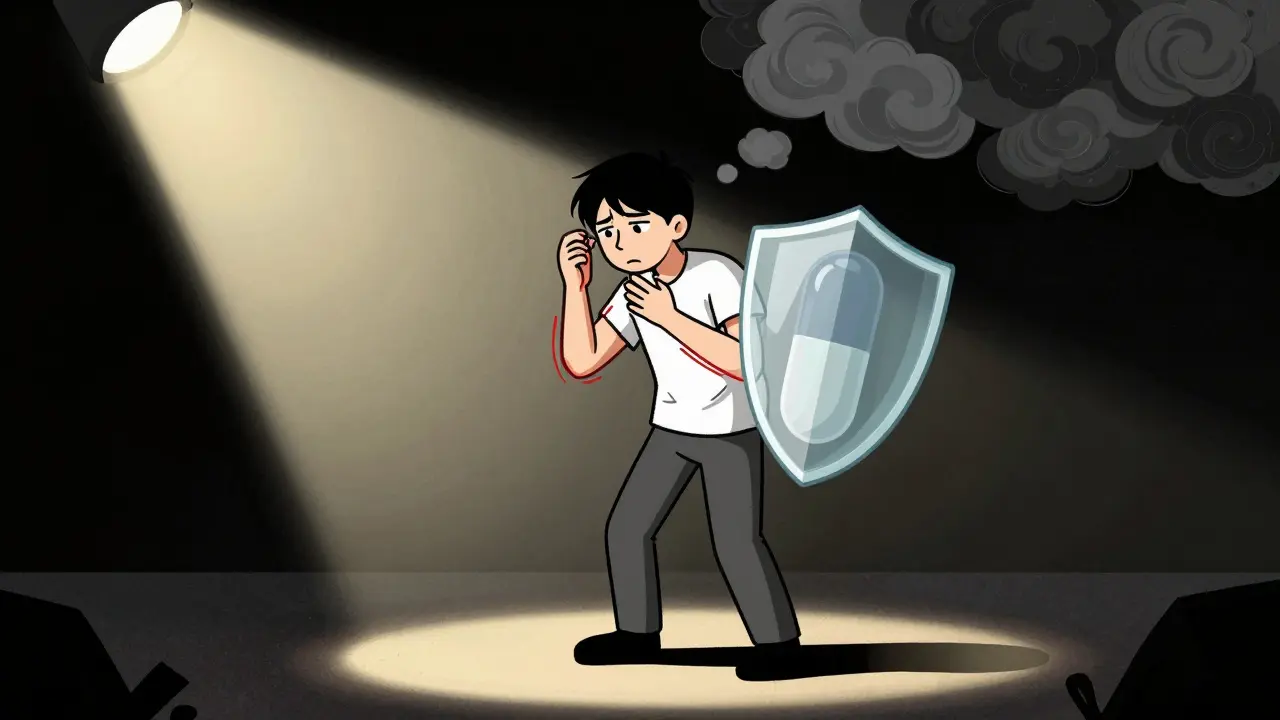
When you’re standing in front of a room full of people, your heart pounds so hard you can feel it in your throat. Your hands shake. Your voice wavers. You’re not nervous-you’re terrified. This isn’t just stage fright. For over 12% of U.S. adults, this is social anxiety disorder-a real, diagnosable condition where the fear of being judged turns everyday interactions into emotional minefields.
Many people try pills to quiet the physical storm inside: racing heart, trembling hands, sweaty palms. Beta-blockers like propranolol are one of the most common choices. But here’s the truth most don’t tell you: these drugs don’t fix your fear. They only mute the symptoms. And if you think they’re a cure, you’re setting yourself up for disappointment.
What Beta-Blockers Actually Do
Beta-blockers like propranolol were never designed for anxiety. They were created for high blood pressure and heart conditions. But in the 1970s, researchers noticed something strange: musicians who took propranolol before performances didn’t just play better-they felt calmer. Why? Because the drug blocks adrenaline from flooding the body. No adrenaline surge means no racing pulse. No trembling fingers. No shaky voice.
It works fast. Take a 20-40 mg dose about 90 minutes before your event, and within an hour, your heart rate drops by 15-25 beats per minute. Hand tremors shrink by 30-40%. Sweating lessens. It’s like hitting a mute button on your body’s panic response.
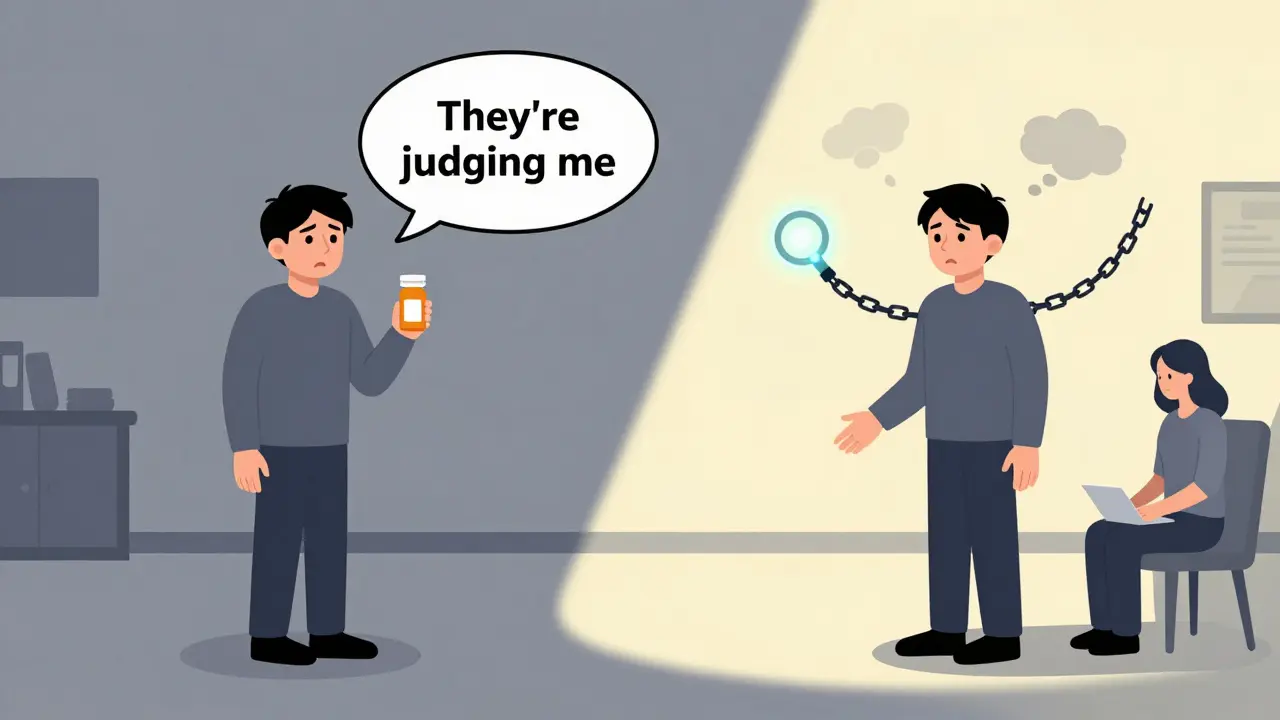
But here’s the catch: it does nothing for your thoughts. You can still feel the same fear. You can still think, “They’re all judging me,” “I’m going to mess up,” or “I look ridiculous.” Beta-blockers don’t touch those thoughts. They only calm the physical reaction. That’s why they’re only useful for predictable, short-term situations-like giving a speech, taking an exam, or performing on stage.
How They Compare to Other Treatments
Most people with social anxiety are told to try SSRIs like sertraline or fluoxetine. Those take 4-6 weeks to work. Beta-blockers? They work in an hour. That’s why some doctors prescribe them as a bridge-while waiting for SSRIs to kick in, or when someone needs immediate help for a one-time event.
Compared to benzodiazepines like Xanax, beta-blockers are safer. Benzodiazepines can be addictive. People build tolerance. Withdrawal is brutal. Beta-blockers? No addiction. No withdrawal. No high. Just a quieting of the body’s physical response.
But here’s the biggest difference: behavioral therapy, especially cognitive behavioral therapy (CBT), actually changes how your brain thinks about social situations. Studies show that after 12-16 weeks of CBT, 50-60% of people with social anxiety disorder go into remission. That means their fear doesn’t come back. Beta-blockers? They offer temporary relief. The fear returns the next time you’re in front of a crowd-unless you’ve done the deeper work.
Who Benefits Most From Beta-Blockers
They’re not for everyone. If you’re constantly anxious in meetings, at parties, or around coworkers, beta-blockers won’t help much. A 2023 meta-analysis found no meaningful difference between propranolol and placebo for generalized social anxiety. It’s not a magic bullet for daily life.
But for performance anxiety? The data is clear. A 2023 survey of 142 users on Reddit found that 78% said propranolol made a big difference in high-pressure situations. One musician reduced hand tremors from obvious shaking to barely noticeable before a TEDx talk. A violinist who failed three auditions finally passed after using 20 mg of propranolol. These aren’t outliers-they’re common.
The pattern is simple: if your anxiety is tied to a specific event you can plan for, beta-blockers are a powerful tool. If your anxiety is constant, they’re a distraction from the real work.
The Hidden Downsides
Beta-blockers aren’t harmless. About 35% of users report fatigue. 28% feel dizzy. 22% get cold hands and feet-problematic for musicians, surgeons, or anyone who needs fine motor control. They can mask low blood sugar in people with diabetes, which is dangerous. And if you have asthma, they can trigger serious breathing problems.
They also require timing. Take them too early, and the effect wears off. Too late, and they don’t kick in. You need to plan ahead. That’s fine for a job interview or a wedding speech. Not so great if you suddenly have to speak up in a meeting you didn’t expect.
And then there’s the cost of dependency-not on the drug, but on the illusion that it’s solving the problem. Some people keep using them for years, thinking they’re treating their anxiety, when all they’re doing is covering it up.
Why Behavioral Therapy Is the Real Solution
Cognitive behavioral therapy doesn’t numb your symptoms. It rewires your brain. In CBT, you learn to spot distorted thoughts like “Everyone will laugh at me” and replace them with reality-based ones: “Most people are focused on themselves, not judging me.” You practice exposure-gradually walking into situations you fear, starting with small steps.
One study found that digital CBT platforms like Woebot Health achieved 52% remission rates in social anxiety disorder. That’s close to in-person therapy. And unlike beta-blockers, the results last. You don’t need to keep taking pills. You’ve changed how you think.
Dr. Ellen Vora, a psychiatrist, puts it best: “Beta-blockers give you the physical stability to attend feared situations. That’s when real change happens-in therapy.”
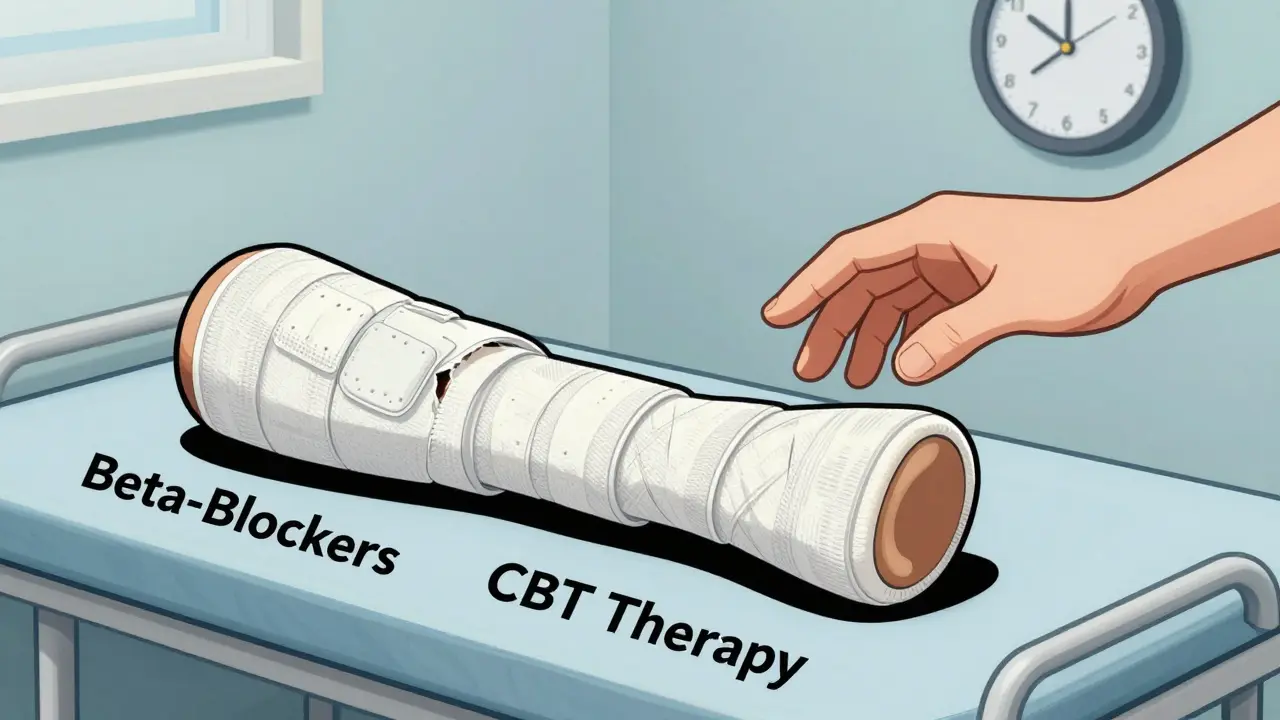
Think of it like this: beta-blockers are like putting a bandage on a broken bone. It stops the pain for a moment. But the bone still needs to heal. CBT is the cast. It lets the structure rebuild.
What Experts Really Say
The American Psychiatric Association’s 2022 guidelines are clear: first-line treatment for social anxiety disorder is SSRIs and CBT. Beta-blockers? Only as an adjunct for specific performance situations.
Dr. Charlotte Archer’s 2023 review of 10 studies found no evidence that beta-blockers help with social phobia overall. Yet prescriptions have risen 47% since 2003. Why? Because therapy is hard to access. Only 43% of U.S. counties have enough mental health providers. And CBT costs $100-$200 per session. Propranolol? Generic versions cost $4-$10 per dose.
The system is broken. People turn to pills because the real solution is out of reach. But that doesn’t make the pill a cure.
How to Use Beta-Blockers Wisely
If you’re considering propranolol, here’s how to do it right:
- Use it only for predictable events: presentations, auditions, interviews, public speaking.
- Take 20-40 mg about 90 minutes before the event. Don’t guess-time it.
- Never use it as your only treatment. Pair it with therapy.
- Don’t take it daily. It’s not meant for ongoing anxiety.
- Get checked for asthma, diabetes, or heart issues first.
- Track how you feel. If it helps with physical symptoms but you still dread the situation, you need therapy.
And if you’re thinking about skipping therapy because the pills help? You’re trading short-term comfort for long-term freedom. The fear will come back. And next time, you won’t have a pill to rely on.
The Future of Treatment
The National Institute of Mental Health is launching a $2.3 million trial in 2024 to finally settle the debate: does propranolol truly help performance anxiety? The results could change prescribing habits.
In the meantime, new treatments are emerging. Digital CBT apps are becoming more effective. And drugs like brexanolone derivatives are in late-stage trials, promising faster relief without the side effects of beta-blockers.
But none of that changes the core truth: social anxiety disorder is a psychological condition. It can’t be fixed with a pill that only quiets the body. Real healing comes from facing the fear-not masking it.
Use beta-blockers if they help you get through a tough moment. But don’t let them keep you from the real work. Because the goal isn’t to stop your heart from racing. It’s to stop fearing the world around you.
12 Comments

amber carrillo
March 7 2026
This post nails it. Beta-blockers are like a seatbelt - they don’t prevent the crash, but they keep you from flying through the windshield. Real healing? That’s the therapy work.

Roland Silber
March 8 2026
As a therapist, I’ve seen too many people rely on beta-blockers as a crutch. They’re useful for performance anxiety, sure. But if someone’s using them weekly for social interactions? That’s a red flag. The fear isn’t being treated - it’s being buried. And buried fears don’t disappear. They grow roots.

Adebayo Muhammad
March 8 2026
Let’s be real: society doesn’t want to fix mental health systems - so they sell pills. Beta-blockers? A Band-Aid on a hemorrhage. Therapy? Too expensive. Too slow. Too inconvenient. The system is designed to keep you medicated, not healed. Wake up.

Ian Kiplagat
March 10 2026
I’m from the UK - here, CBT is free on the NHS. But wait times are 6–12 months. So yeah, people grab propranolol. It’s not laziness. It’s survival. 🤷♂️

Amina Aminkhuslen
March 11 2026
Beta-blockers are the spiritual equivalent of wearing sunglasses indoors - you’re hiding from the light because it hurts. But the sun didn’t change. You just covered your eyes. And now you’ve forgotten what sunlight feels like.

Tim Hnatko
March 12 2026
I’ve been on propranolol for 3 years. I thought it was helping. Then I started CBT. The first session? I cried for 20 minutes. I realized I wasn’t afraid of speaking - I was afraid of being seen. The pill didn’t touch that. Therapy did.

Aaron Pace
March 12 2026
Bro, I took beta-blockers before my job interview and got the offer. Then I told my boss I had anxiety. He said, 'Cool, we have a therapist on campus.' I went. Now I don’t need the pill. 🙌

Patrick Jackson
March 13 2026
There’s a quiet tragedy here: we’ve turned healing into a product. You can buy a pill. You can’t buy time. You can’t buy vulnerability. You can’t buy the courage to sit in silence with your own fear. Therapy isn’t a service - it’s a sacred space. And it’s worth every penny, every tear, every awkward silence.

Pranay Roy
March 14 2026
Propranolol is just another tool of the pharmaceutical-industrial complex. They don’t want you cured. They want you addicted. The real cure? Quit social media. Stop comparing yourself. Live offline. But that’s too radical for the system. So here’s your pill. Again.

Joe Prism
March 14 2026
I used to think beta-blockers were cheating. Then I realized: if you’re too scared to speak, how do you even start therapy? Sometimes you need the calm to find your voice. The pill isn’t the answer - but it can be the bridge.

Bridget Verwey
March 15 2026
So let me get this straight: you’re telling me the best way to treat a fear of judgment... is to pay someone $150/hour to tell you nobody’s judging you? Meanwhile, a $4 pill makes your hands stop shaking. Guess which one the system promotes? 😏
Joey Pearson
March 6 2026
I used propranolol before my wedding speech and it was a game-changer. My hands stopped shaking, my voice stayed steady, and I actually enjoyed the moment. But I still went to therapy afterward - because the pill didn’t fix why I was terrified in the first place.