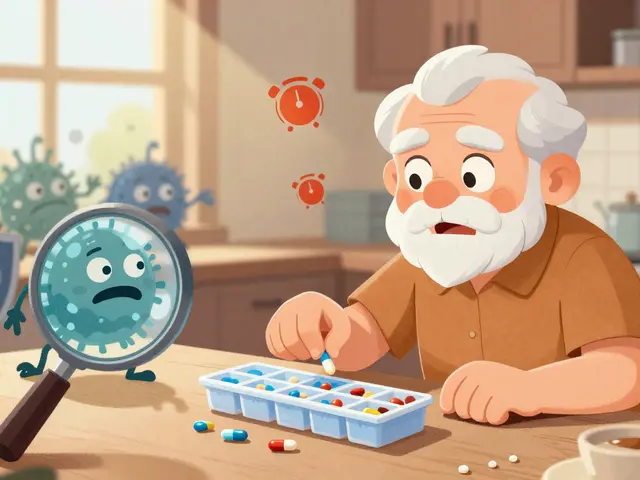
You take a pill for your headache. It works. But what if I told you that the chemical inside the pill might not be the only thing doing the work? In fact, your brain’s belief about that pill can physically change how your body responds to it. This isn’t magic; it is biology. The placebo effect with generic drugs is a powerful phenomenon where your expectations shape your health outcomes. When you doubt a generic medication, your body may actually react worse than if you trusted it. Understanding this link between mind and medicine is crucial for getting the most out of your prescriptions.
The Science Behind Brand vs. Generic Expectations
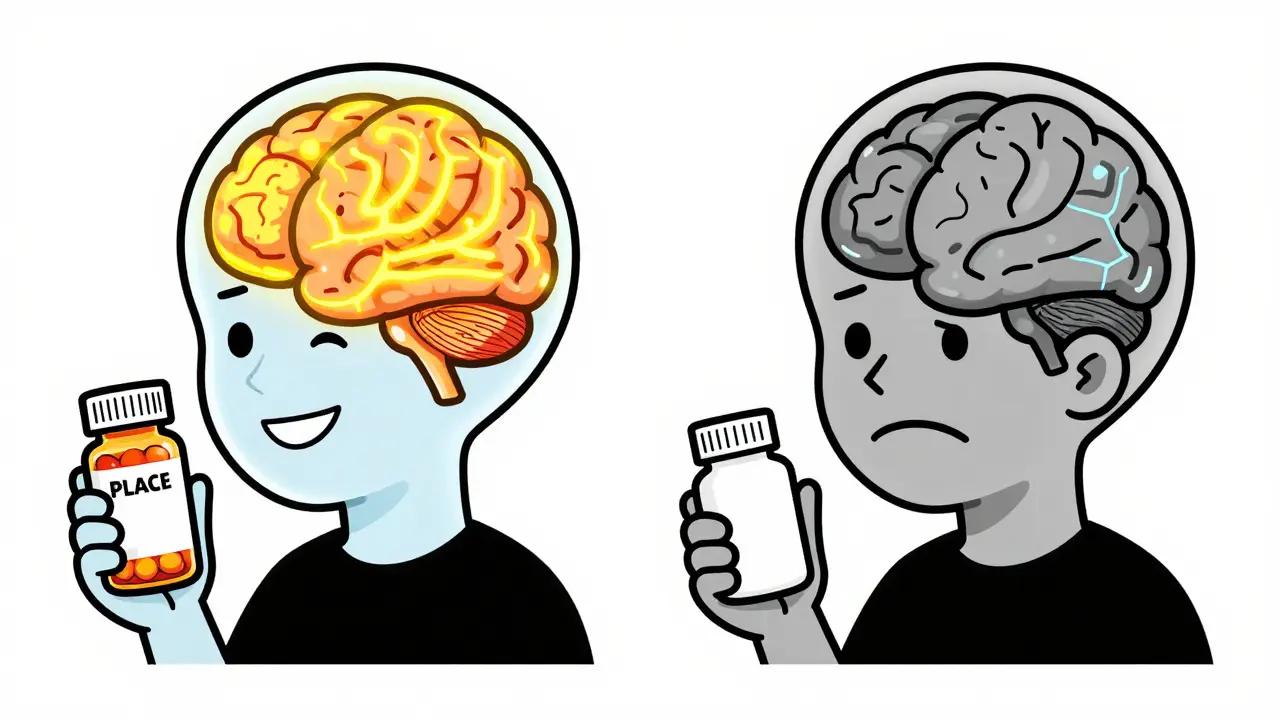
We often assume that if two pills contain the same active ingredient, they will perform identically in our bodies. While pharmacologically true, psychologically, they are worlds apart. Research has consistently shown that branding influences treatment efficacy. A pivotal 2016 study published in Health Psychology by Faasse et al. revealed a striking difference in pain relief based solely on labeling. Participants who received a placebo labeled as 'Nurofen' (a well-known brand) experienced headache relief equivalent to actual ibuprofen. However, those who received the exact same inert pill labeled as 'Generic Ibuprofen' reported significantly less pain reduction.
This isn't just about feeling better because you think you should. Functional MRI scans from a 2015 University of Hamburg study showed that when participants believed they were taking a brand-name aspirin versus a generic version, their brains activated differently. The dorsolateral and dorsomedial prefrontal cortex-areas responsible for processing expectations-lit up more strongly for the branded option. Essentially, your brain prepares your body to respond to the drug based on what you expect it to do. If you expect a generic to be weaker, your brain may dampen the therapeutic response.
| Labeling Type | Pain Reduction Score (1-10) | Brain Activation Level | Reported Side Effects |
|---|---|---|---|
| Brand Name (e.g., Nurofen) | 2.8 points decrease | High (Expectation-driven) | Lower (25-40% fewer) |
| Generic Label | 1.5 points decrease | Moderate | Higher |
| No Label / Plain | Variable | Low | Variable |
The Nocebo Effect: When Doubt Causes Harm
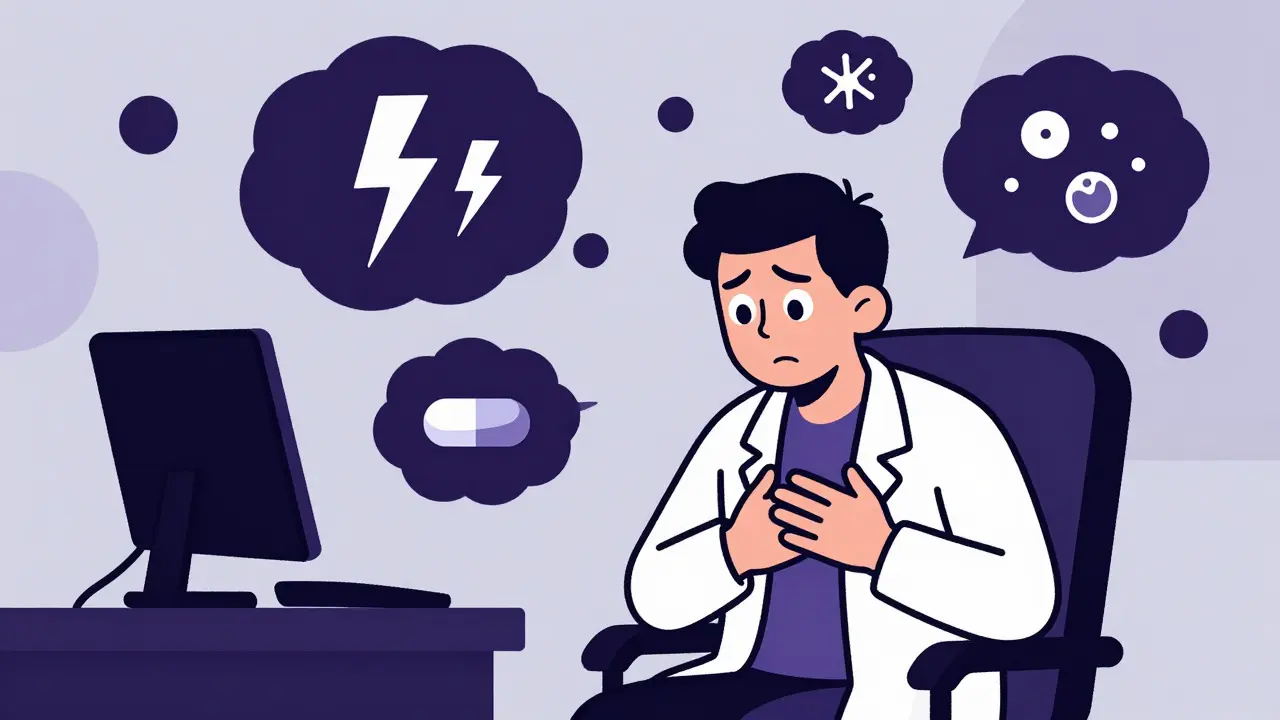
If the placebo effect shows how positive expectations help healing, the nocebo effect demonstrates how negative expectations cause harm. The nocebo effect occurs when a patient anticipates side effects or failure, leading to actual physical symptoms. This is particularly dangerous with generic medications, which are often viewed with skepticism despite being FDA-approved equivalents.
In large clinical trials for statins (cholesterol-lowering drugs), researchers found that 4% to 26% of patients discontinued the placebo group due to perceived side effects like muscle pain. These patients were taking sugar pills, yet they genuinely felt pain. Dr. Ulrike Bingel, an expert in mind-body interactions, explains that anxiety about medication causes patients to hyper-monitor their bodies, amplifying benign sensations into painful ones. For generics, this risk is higher. Studies show that identical placebos presented as expensive medications produced 50-100% more reported side effects than when presented as inexpensive alternatives. The price tag itself becomes a predictor of adverse reactions.
This phenomenon extends beyond pain. In cardiovascular studies, blood pressure and heart rate responses did not differ significantly between branded and generic presentations. However, anxiety levels did. Paradoxically, some research suggests that plain generic packaging can reduce anxiety more than enhanced branding, likely because it removes the pressure of high expectations. But for many, the stigma of "cheap" medication triggers a nocebo response that undermines the drug's effectiveness.
Why Appearance and Price Matter More Than You Think
Your perception of a drug is shaped by its appearance, packaging, and cost. A 2017 study in Science by Tinnermann et al. explored how price perception alters pain sensitivity. Participants applied a cream to their arms and were told it was either expensive or cheap. Those who believed they used the expensive cream rated their pain as twice as intense after a mild burn compared to those who thought it was cheap. Spinal cord recordings confirmed that the "expensive" group had objectively greater pain responses. The brain wasn't just imagining the pain; it was altering neural signals.
For generic drugs, the visual cues matter too. Many generics look different from their brand-name counterparts-different colors, shapes, or sizes. While the active ingredient is the same, the inactive ingredients (binders, fillers) can vary. Some patients interpret these differences as signs of lower quality. A 2022 Consumer Reports survey found that 63% of Americans believe brand-name drugs are superior to generics. This belief gap is costly. Estimates suggest that negative perceptions of generics reduce real-world effectiveness by 8-12% in conditions with high placebo responsiveness, costing healthcare systems billions annually in lost adherence and additional doctor visits.
- Price Perception: Higher cost correlates with higher expectation of efficacy and lower expectation of side effects.
- Packaging Design: Professional, branded packaging increases trust and placebo response.
- Physical Appearance: Unique shapes and colors associated with brand names trigger stronger memory and expectation links.

Bridging the Gap: Strategies for Better Outcomes
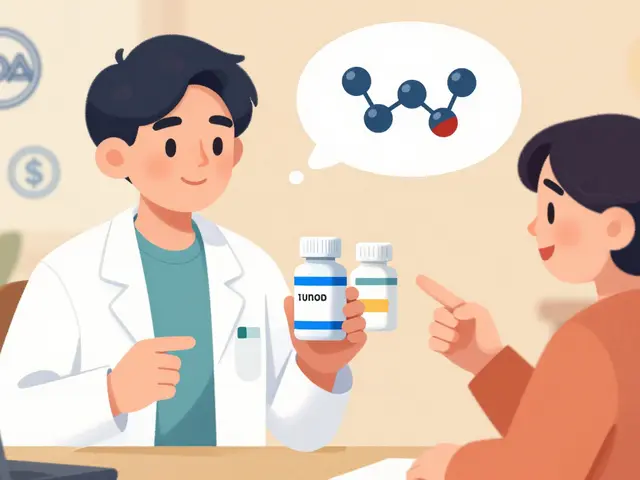
So, how do we fix this? We can't simply make all generics look like brands, nor should we ignore the science. Healthcare providers play a critical role in managing patient expectations. A 2020 study in JAMA Internal Medicine found that spending just 2-3 extra minutes explaining generic equivalence increased patient adherence by 18-22%. Doctors need to explicitly address concerns rather than dismissing them.
Effective communication involves specific language. Instead of saying, "It's just a generic," providers should say, "This medication contains the exact same active ingredient as the brand name and has been tested to meet strict FDA standards." Transparency builds trust. Additionally, avoiding phrases that highlight low cost can prevent triggering nocebo effects. Mentioning that a drug is "cheaper" can inadvertently signal "less effective" to a skeptical patient.
Packaging interventions also show promise. A 2021 BMJ study demonstrated that including a clear statement on the box-such as "FDA-approved equivalent to [Brand Name]"-increased patient confidence by 34%. Pharmaceutical companies are beginning to adapt, with some developing "premium generics" that use enhanced packaging to bridge the perception gap without misleading consumers. The goal is to harness the positive power of expectation while maintaining affordability.
The Future of Perception-Oriented Medicine
As we move forward, the medical field is recognizing that treating the mind is part of treating the body. Recent developments include "expectation priming," where patients watch brief educational videos explaining how their brains interact with medication before starting treatment. A 2023 Oxford University study found this approach increased treatment efficacy by 28% for generic drugs. By demystifying the placebo effect, doctors can turn skepticism into a therapeutic tool.
Regulatory bodies are also stepping in. The FDA has issued draft guidance recommending specific communication strategies for healthcare providers to manage patient expectations for generic medications. The focus is shifting from purely pharmacological metrics to holistic patient experience. As insurance structures evolve, ensuring that generics are positioned as equal partners in care-not second-choice options-will be vital. Addressing these perception gaps could save the US healthcare system $15-20 billion annually by improving adherence rates. Your mind is a powerful organ; when it comes to medication, believing in your treatment is half the battle.
Are generic drugs really as effective as brand-name drugs?
Yes, pharmacologically, generic drugs must contain the same active ingredient in the same quantity as brand-name drugs and meet strict FDA standards for bioequivalence. However, psychological factors like the placebo effect can influence perceived effectiveness. If a patient doubts a generic, they may experience reduced benefits due to negative expectations, even though the chemical composition is identical.
What is the nocebo effect in relation to generic medications?
The nocebo effect is the opposite of the placebo effect. It occurs when negative expectations lead to adverse outcomes. With generics, if a patient believes the drug is inferior or unsafe, they may report more side effects or feel less relief, even if they are taking a placebo or an effective medication. This is driven by anxiety and heightened bodily awareness.
How does the price of a medication affect its performance?
Studies show that higher-priced medications are often perceived as more effective and having fewer side effects. In experiments, identical creams labeled as expensive resulted in greater pain relief and fewer reported side effects compared to those labeled as cheap. This suggests that price acts as a cue for quality, influencing brain activity and physiological responses.
Can doctors help reduce the placebo/nocebo impact on generic drugs?
Yes. Doctors can mitigate negative expectations by spending a few extra minutes explaining the equivalence of generics to brand-name drugs. Using positive, transparent language and avoiding references to low cost can improve patient confidence. Education and clear communication have been shown to increase adherence and treatment outcomes significantly.
Why do some people feel generics don't work as well?
Many patients associate brand names with higher quality and safety due to marketing and familiarity. Differences in appearance, such as color or shape, can reinforce the belief that the generic is different. Psychological conditioning plays a major role; if a patient expects less benefit, their brain may dampen the therapeutic response, leading to a subjective feeling of reduced efficacy.
Popular Posts