Imagine picking up a prescription at the pharmacy. The pharmacist hands you a bottle with a familiar logo, but the price tag is a fraction of what it used to be. This is the power of generic drugs, which are medications that are equivalent to brand-name drugs in dosage form, safety, strength, route of administration, quality, performance characteristics, and intended use. But have you ever wondered if that cheaper pill is just as safe and effective? The short answer is yes, provided it has passed the rigorous scrutiny of the U.S. Food and Drug Administration (FDA). Understanding how these standards work can give you peace of mind every time you take your medication.
The Foundation: Pharmaceutical Equivalence
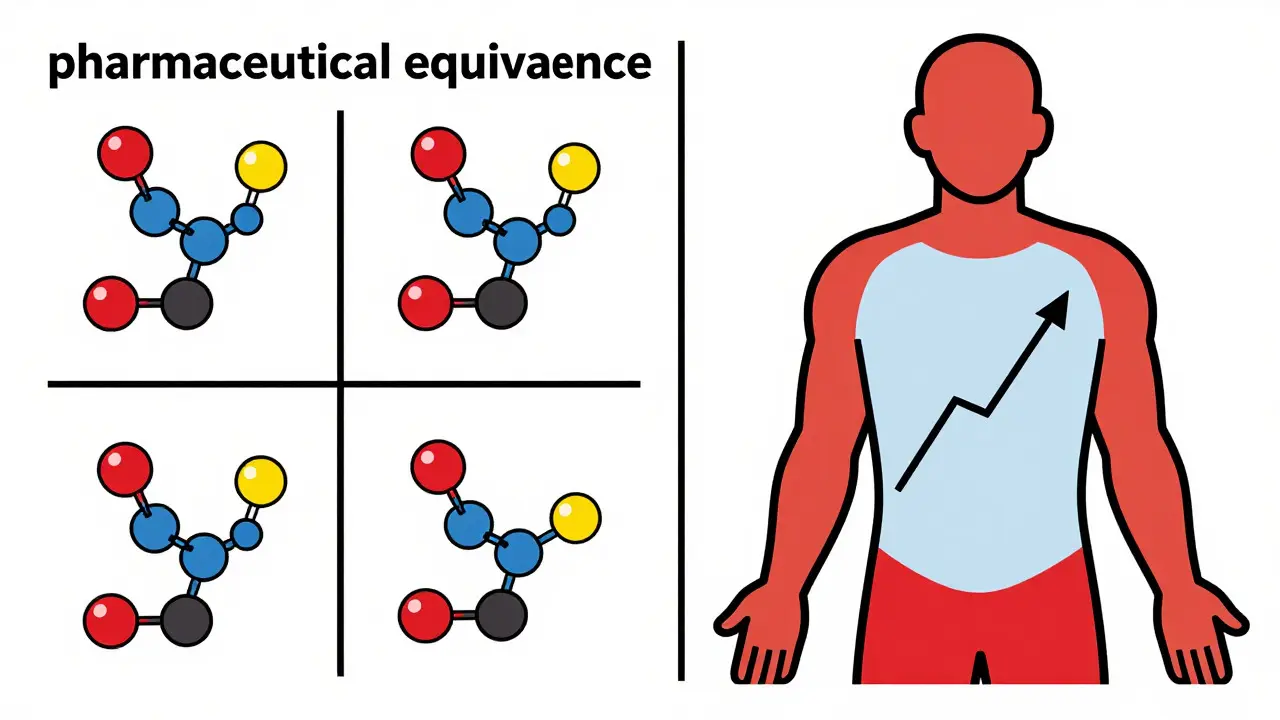
Before a generic drug can even begin the testing phase for how it works in the body, it must prove it is chemically identical to the brand-name version. This concept is known as pharmaceutical equivalence, which requires identical active ingredients, strength, dosage form, route of administration, and conditions of use. According to guidelines from the American Academy of Family Physicians (AAFP), this means the generic must contain the exact same active pharmaceutical ingredient (API) as the reference listed drug (RLD).
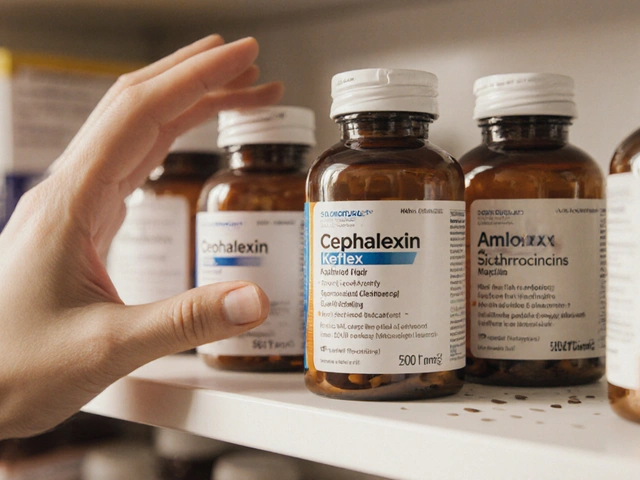
For example, if the brand-name drug is a 500mg tablet taken orally for bacterial infections, the generic must also be a 500mg oral tablet containing the same antibiotic compound. However, there is room for minor differences. You might notice that the generic looks different-it could be a different color, shape, or size. It might even taste different due to variations in inactive ingredients like dyes, binders, or flavorings. These inactive components do not affect the therapeutic action of the drug, but they allow manufacturers to distinguish their products visually. The key requirement remains that the active ingredient, which does the actual healing, is indistinguishable from the original.
Bioequivalence: Proving Performance in the Body
Chemical similarity is only half the battle. The real test lies in how the drug behaves once it enters your system. This is where bioequivalence comes into play. Bioequivalence ensures that there is no significant difference in the rate and extent of absorption between the generic and the brand-name counterpart. In simpler terms, the FDA needs to know that the generic drug reaches your bloodstream at the same speed and in the same amount as the brand-name version.
To demonstrate this, manufacturers conduct pharmacokinetic studies involving healthy volunteers. They measure two critical metrics: Cmax (the maximum concentration of the drug in the blood) and AUC (the area under the curve, representing total exposure to the drug over time). The FDA mandates strict statistical limits for approval. Specifically, the 90% confidence interval for the ratio of geometric means of the generic versus the brand must fall within predefined acceptance limits of 80% to 125%. If a generic drug’s absorption profile falls outside this narrow window, it is rejected. This statistical rigor ensures that any variation is clinically insignificant for the vast majority of patients.
| Requirement | Brand-Name Drug | Generic Drug |
|---|---|---|
| Active Ingredient | Original formulation developed by innovator | Must be identical to brand-name |
| Inactive Ingredients | Proprietary mix determined by manufacturer | Can differ (color, shape, flavor) |
| Clinical Trials | Extensive Phase I-III trials required | Bioequivalence study required (usually) |
| Cost to Develop | High (billions of dollars) | Lower (focused on manufacturing and BE) |
| FDA Review Timeline | Variable, often years | Standard goal of 10 months under GDUFA |
Manufacturing Standards: cGMP Compliance
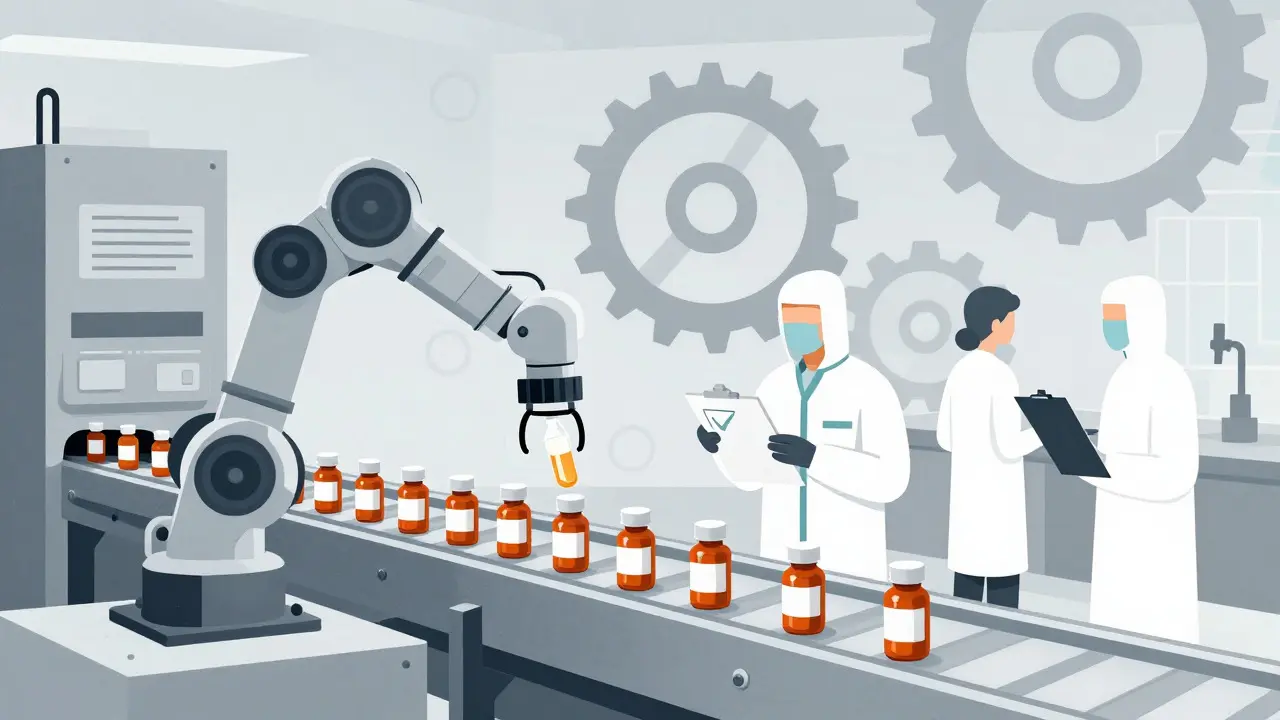
Quality doesn't stop at the lab bench; it extends to the factory floor. Both generic and brand-name manufacturers must adhere to Current Good Manufacturing Practices (cGMP), codified in Title 21 of the Code of Federal Regulations (CFR) Parts 210 & 211. These regulations mandate strict oversight of materials from receipt through storage. Every step of the production process must follow clear written procedures, with critical parameters monitored continuously.
The FDA conducts approximately 3,500 inspections annually across manufacturing facilities globally to ensure compliance. Interestingly, many brand-name pharmaceutical companies manufacture an estimated 50 percent of generic drugs, often using the same facilities and equipment used for their branded products. This overlap reinforces the idea that the quality infrastructure is shared. Under the Generic Drug User Fee Amendments (GDUFA), which were reauthorized in 2022, the FDA has improved review timelines, aiming for a standard review goal of 10 months for complete Abbreviated New Drug Applications (ANDAs). This efficiency helps get affordable medications to market faster without compromising safety checks.
Stability and Batch Testing
A drug must remain effective until its expiration date. To prove this, generic applicants must provide comprehensive stability testing data. This typically involves accelerated stability studies conducted at higher temperatures (40°C) and humidity levels (75% relative humidity) for six months, alongside long-term studies at recommended storage conditions for 12 to 24 months. These tests ensure that the drug maintains its integrity, potency, and purity over its proposed shelf life.
Furthermore, the FDA requires batch testing for every single production lot. Before any pills leave the warehouse, they undergo identity, strength, purity, and quality checks against specific acceptance criteria. These criteria are documented in compendial standards or sponsor-developed methods validated during the application process. This rigorous quality control prevents defective batches from reaching pharmacies, ensuring that every dose you take meets the promised specifications.
Complex Generics: A Higher Bar
Not all drugs are simple tablets. Complex generics, such as inhalers, long-acting injectables, topical creams, and ophthalmic solutions, present unique challenges. For these products, simple blood level measurements may not fully capture how the drug performs. As of May 2023, the FDA had developed 2,143 product-specific guidances across 1,528 unique drug products to address these nuances.
Dr. Charles Ganley, former Director of the Office of Generic Drugs, noted in a 2019 article that demonstrating equivalence for complex products requires more sophisticated testing approaches than standard bioequivalence. The FDA uses a concept called 'Q3 sameness' for some of these products, requiring detailed physicochemical and structural characterization to ensure the generic matches the reference listed drug in every relevant aspect. The agency’s 2023-2027 strategic plan allocates $15.7 million specifically for research and development in this area, highlighting the ongoing commitment to advancing science for harder-to-copy medications.
Economic Impact and Patient Confidence
The impact of these stringent standards extends beyond health outcomes to economic sustainability. Generic drugs saved the U.S. healthcare system approximately $37 billion in 2022 alone. Despite representing over 90% of prescriptions dispensed, generics account for only about 23% of total prescription drug spending. This disparity highlights the value proposition of generics: high-quality care at a lower cost.
Patient satisfaction reflects this value. A 2022 Consumer Reports survey found that 89% of respondents were satisfied with generic medications, with 62% actively choosing them to save money. While some concerns exist regarding narrow therapeutic index drugs like levothyroxine-where a 2021 JAMA study noted fluctuations in thyroid levels for some patients switching between generic versions-the overall consensus among medical professionals supports the safety and efficacy of FDA-approved generics. The American Medical Association has consistently affirmed since 2010 that generic drugs are safe and effective alternatives to brand-name medications.
Frequently Asked Questions
Are generic drugs exactly the same as brand-name drugs?
Generic drugs are therapeutically equivalent to brand-name drugs, meaning they contain the same active ingredients, strength, dosage form, and route of administration. However, they may differ in inactive ingredients, which can affect appearance, color, shape, or taste. These differences do not impact the drug's effectiveness or safety.
How does the FDA ensure generic drugs are safe?
The FDA ensures safety through rigorous bioequivalence studies, Current Good Manufacturing Practices (cGMP) inspections, and stability testing. Manufacturers must prove that the generic drug is absorbed into the bloodstream at the same rate and extent as the brand-name drug, with results falling within strict statistical limits (80-125%).
Why are generic drugs cheaper than brand-name drugs?
Generic drugs are cheaper because manufacturers do not need to repeat the extensive and costly clinical trials required for new brand-name drugs. Instead, they rely on existing data to demonstrate bioequivalence. Additionally, competition among multiple generic manufacturers drives prices down further.
What is bioequivalence?
Bioequivalence is a measure of the rate and extent to which the active ingredient becomes available at the site of drug action. For a generic to be approved, its bioavailability must be statistically similar to that of the brand-name reference drug, ensuring comparable therapeutic effects.
Are there any risks associated with taking generic drugs?
For most patients, generic drugs are just as safe and effective as brand-name versions. However, individuals taking narrow therapeutic index drugs (such as certain seizure medications or thyroid hormones) should monitor their condition closely when switching between manufacturers, as minor variations can sometimes require dose adjustments.
Who manufactures generic drugs?
Generic drugs are manufactured by various pharmaceutical companies, including many of the same large corporations that produce brand-name medications. Approximately 50% of generic drugs are made by brand-name companies, often in the same facilities used for their proprietary products.
What is the Hatch-Waxman Act?
The Hatch-Waxman Act of 1984 established the legal framework for generic drug approval in the United States. It balanced patent protections for innovator drugs with streamlined pathways for generic competition, enabling the widespread availability of affordable generic medications today.