
When you switch from a brand-name pill to a generic version, you expect the same effect at a lower price. That’s straightforward for drugs like metformin or lisinopril. But what happens when the drug isn’t a simple chemical-it’s a living, complex protein made in cells? That’s where biosimilars come in. They’re the closest thing biologics have to generics, but they’re not the same. And understanding that difference matters-for your health, your wallet, and your treatment plan.
What Are Biosimilars, Really?
Biosimilars are highly similar versions of brand-name biologic drugs. They’re not exact copies. You can’t make a perfect replica of a biologic the way you can with a small-molecule drug. Biologics are made from living cells-yeast, bacteria, or animal cells-and even tiny changes in the manufacturing process can alter the final product. That’s why the FDA doesn’t call them generics. Instead, they’re called biosimilars, meaning they’re "highly similar" to the original, with no clinically meaningful differences in safety, purity, or how well they work. The FDA requires manufacturers to prove this similarity through a mountain of data: structural analysis, lab tests, how the drug moves through the body, immune system reactions, and clinical trials. It’s not a shortcut. It’s a deeper, more complex road to approval than what’s needed for traditional generics.Biosimilars vs. Authorized Generics: The Core Difference
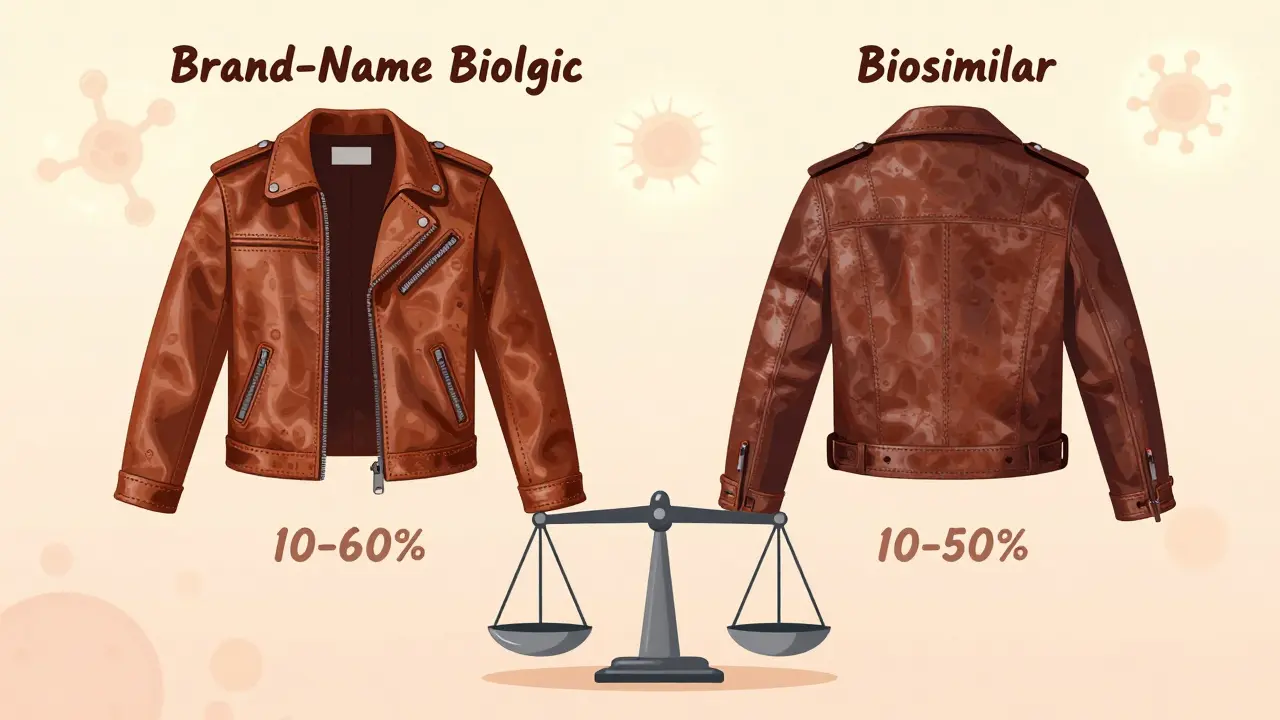
Authorized generics are identical to their brand-name counterparts. They’re made by the same company, often on the same production line, just sold under a different label. If you take a brand-name drug and its authorized generic, you’re getting the exact same molecule, in the exact same form. Biosimilars? Not even close to identical. They’re like two handmade leather jackets from the same designer. They look the same, feel the same, and last the same-but the stitching might be slightly different, the dye a shade off. The result? Still great. Still functional. But not the same. That’s why the approval process is different. Generics use the ANDA pathway (Abbreviated New Drug Application). Biosimilars use the BPCIA pathway (Biologics Price Competition and Innovation Act). The latter demands way more data because you can’t just test bioequivalence-you have to prove similarity across dozens of biological characteristics.Interchangeable Biosimilars: The Real Generic Equivalents
There’s a special subset of biosimilars called "interchangeable." These are the ones that can be swapped at the pharmacy without a doctor’s permission-just like a generic pill. To earn that label, a biosimilar must prove not only that it’s similar to the original, but that switching back and forth between it and the brand-name drug won’t change your outcome. That’s a higher bar. As of late 2023, only a handful of biosimilars in the U.S. have been approved as interchangeable. The first for Humira (adalimumab) came in November 2023. That’s a big deal. Humira is one of the most prescribed biologics in the world. When interchangeable versions hit the market, prices could drop fast.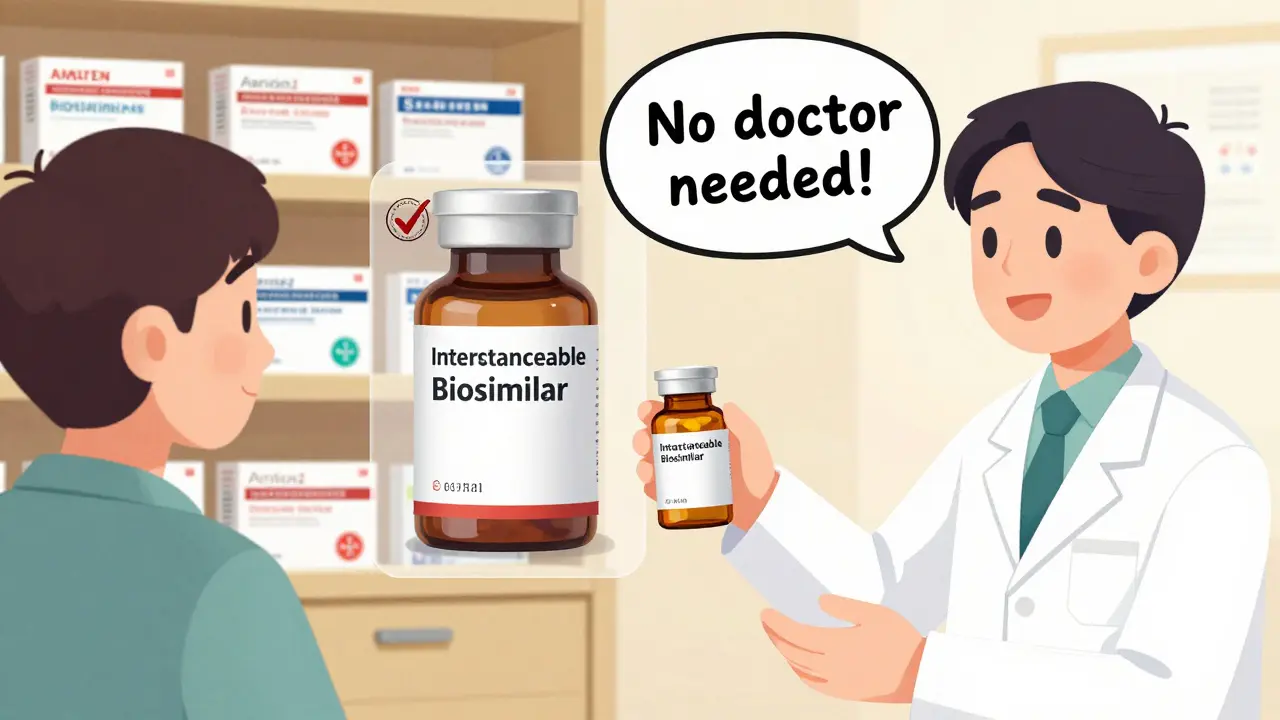
Why Aren’t Biosimilars Used More?
You’d think with 76 FDA-approved biosimilars, they’d be everywhere. But they make up less than 20% of biologic prescriptions. Why? First, cost savings aren’t as big as with generics. Traditional generics can cut prices by 80-85%. Biosimilars? More like 10-50%. That’s still a win, but not the game-changer it is with pills. Second, fear. Some doctors and patients worry that switching from a brand-name biologic to a biosimilar could trigger side effects or reduce effectiveness. Studies show that’s rarely true. In fact, cancer patients on biosimilar versions of Herceptin report the same results and fewer out-of-pocket costs-some dropping from $1,200 to $450 per infusion. Third, insurance rules. Some plans force you to switch to a biosimilar without telling you. A 2022 Arthritis Foundation survey found 37% of patients had their treatment disrupted by an unplanned switch. Only 12% reported worse symptoms, but the anxiety alone made some patients stop treatment.Who’s Making Them and Where Are They Used?
Major pharma companies like Amgen, Sandoz, and Pfizer are leading the way. Amgen has 12 FDA-approved biosimilars. Sandoz has eight. Pfizer has seven. These aren’t small players-they’re giants with the resources to tackle the complex science and regulatory hurdles. Hospitals are the early adopters. 87% of U.S. hospitals have formal biosimilar adoption programs. Why? Because they buy in bulk. Saving 30% on a $10,000 drug adds up fast. Outpatient clinics and pharmacies are catching up, but slower. The market is growing fast. The global biosimilars market was worth $10.1 billion in 2022. By 2030, it’s projected to hit $58.6 billion. In the U.S., biosimilar use jumped from 5% of biologic prescriptions in 2019 to 18% in 2022. That’s a steep climb-and it’s still early.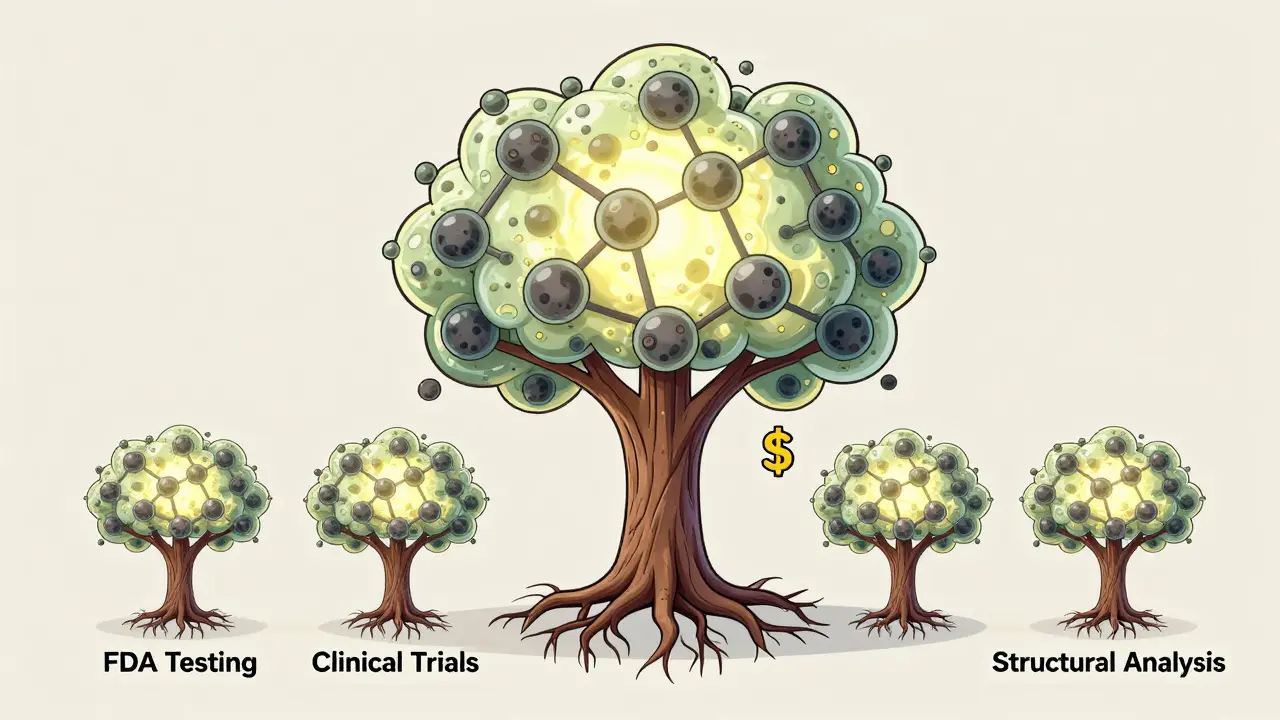
What You Need to Know as a Patient
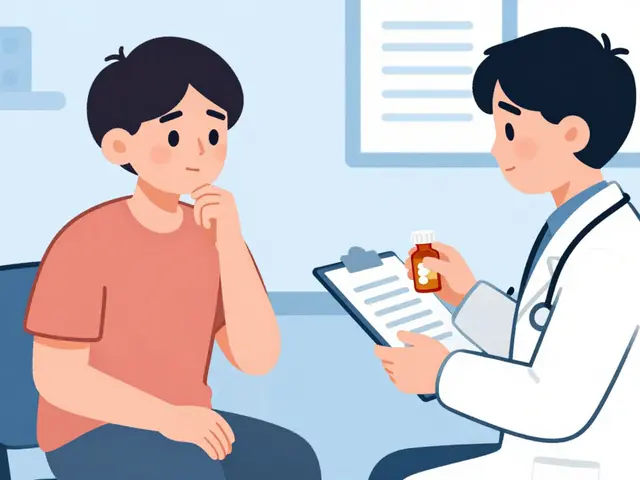
If you’re on a biologic-like Humira, Enbrel, or Rituxan-here’s what to watch for:- Your doctor can prescribe a biosimilar if it’s available and appropriate for your condition.
- If your pharmacy switches your drug without telling you, ask. You have the right to know what you’re getting.
- Interchangeable biosimilars can be swapped at the pharmacy, but only if your state allows it. Forty-nine states have laws about substitution, but only 32 let pharmacists switch without a doctor’s OK.
- Don’t assume all biosimilars are the same. Different ones may have different dosing, storage, or side effect profiles.
- Track how you feel after a switch. If you notice new symptoms, tell your doctor. It’s rare, but not impossible.
The Future Is Here-And It’s Cheaper
Biosimilars aren’t perfect. They’re not generics. But they’re the best alternative we have for complex, life-changing drugs. And they’re getting better. The FDA is working to simplify labeling and approval. Patent lawsuits are slowing things down-on average, 14.7 patent challenges per biosimilar-but the tide is turning. Over $115 billion in global biologic sales will face biosimilar competition by 2028. The Congressional Budget Office estimates biosimilars could save Medicare $53 billion between 2024 and 2033. That’s money that can go toward more patients, better care, or lower premiums. You don’t need to fear biosimilars. You need to understand them. They’re not magic. They’re science. And they’re making treatments more accessible than ever before.Are biosimilars the same as generics?
No. Generics are exact chemical copies of small-molecule drugs. Biosimilars are highly similar but not identical to complex biologic drugs made from living cells. They’re approved under different rules and require more testing because you can’t replicate a living molecule perfectly.
Can pharmacists substitute biosimilars without a doctor’s approval?
Only if the biosimilar is labeled "interchangeable" AND your state allows it. As of 2023, 32 states-including California, New York, and Texas-permit pharmacists to swap interchangeable biosimilars without telling the prescriber. In other states, you must be notified or give consent.
Are biosimilars safe?
Yes. The FDA requires biosimilars to meet the same high standards as the original biologic. They’re tested for safety, purity, and effectiveness across multiple studies. Patients using biosimilars don’t have more side effects than those using the brand-name version. Real-world data from cancer and autoimmune patients supports this.
How much cheaper are biosimilars than brand-name biologics?
Typically 10% to 50% cheaper. That’s less than the 80-85% savings you get with traditional generics, but still significant. For a drug that costs $10,000 a year, even a 20% savings means $2,000 off your bill.
Why aren’t more doctors prescribing biosimilars?
Some doctors are cautious because they’re unfamiliar with the data or worry about patient reactions. Others are influenced by pharmaceutical marketing. Education is improving-6-8 hours of training helps most providers feel confident prescribing them. But change takes time, especially when lives are on the line.
Can I switch from a biosimilar back to the brand-name drug?
Yes. If you or your doctor feel the biosimilar isn’t working as well, you can switch back. There’s no rule against it. But frequent switching between multiple biosimilars isn’t recommended. Some patients report new side effects after multiple switches, though it’s unclear if that’s directly caused by the drugs or other factors.
What’s the difference between a biosimilar and a biologic?
A biologic is the original, brand-name drug made from living cells-like Humira or Enbrel. A biosimilar is a version of that biologic, approved after the original patent expires. They’re not the same product, but they’re designed to work the same way with no meaningful difference in safety or effectiveness.
What’s Next?
If you’re on a biologic and paying a lot for it, ask your doctor: "Is there a biosimilar option?" If you’re already on one, ask: "Is this interchangeable?" And if your pharmacy switches your drug without warning, speak up. You’re not just a patient-you’re your own best advocate. The system isn’t perfect. But biosimilars are changing the game. They’re bringing down costs without cutting corners on safety. And that’s worth knowing about.10 Comments

Philip Leth
January 3 2026
Man, I used to think generics were the end-all-be-all until I saw how biosimilars work. It’s wild how a protein made in yeast can be so finicky.
My cousin’s on a biosimilar for rheumatoid arthritis and it cut her co-pay from $800 to $200 - same results, zero side effects.
It’s not magic, but it’s not a scam either. The science is legit, even if it’s messy.
Stop being scared of complexity. We don’t need perfect copies - we need affordable access. 🙌

Angela Goree
January 5 2026
INTERCHANGEABLE?!!
They’re letting pharmacists SWITCH my life-saving medication without a doctor’s signature?!
Who approved this?!
WHO IS PROFITING FROM THIS?!
Big Pharma is just outsourcing the blame to ‘biosimilars’ while they raise prices on the originals!
It’s a three-card monte scheme with IV bags!
And don’t say ‘studies show it’s safe’ - studies are paid for by the same companies that own the patents!
They want you to think it’s science… it’s a takeover!
They’re coming for your insulin next.
They’re coming for your cancer drugs.
They’re coming for your kids’ vaccines.
Wake up.
They’re not saving you - they’re profiting off your fear.
And you’re letting them.
STOP.
TRUST.
THEY.
DO.
NOT.
WANT.
YOU.
TO.
BE.
HEALTHY.
THEY.
WANT.
YOU.
TO.
NEED.
THEM.

Shanahan Crowell
January 5 2026
Look - I get the fear. I really do. But let’s not let paranoia block progress.
Biosimilars aren’t perfect, but they’re not evil.
They’re the bridge between unaffordable science and real people who need treatment.
My dad’s on one for Crohn’s - saved him $3,000 a year.
He didn’t get sicker. He didn’t get worse.
He just got to keep living.
That’s not a conspiracy.
That’s compassion with a lab coat.
Let’s celebrate the win - not the fear.
We can fix the system without throwing the baby out with the biologic bathwater.
And yes - talk to your doctor. Ask questions. Be an advocate.
But don’t let fear turn you into someone who refuses help because it’s ‘not perfect.’
Perfect is the enemy of good.
And good is what saves lives.
Let’s choose good.
💙

Tiffany Channell
January 7 2026
18% adoption? That’s pathetic.
They’ve had 76 approved biosimilars since 2015.
And yet, the system is still rigged.
Insurance companies don’t push them because they make more money off brand-name drugs.
Doctors don’t prescribe them because they’re scared of lawsuits.
Patients don’t ask because they’re told ‘stick with what you know’ - even when what you know costs $15k a year.
This isn’t science.
This is capitalism with a stethoscope.
And we’re all just collateral damage.
Wake up.
It’s not about safety.
It’s about profit margins.
And the FDA? They’re just the janitor cleaning up the mess after the party.
Pathetic.
Pathetic.
Pathetic.

Joy F
January 7 2026
Let’s deconstruct the epistemology of biosimilarity.
When we say ‘highly similar,’ we’re invoking a Hegelian dialectic of pharmaceutical identity - the thesis being the origin biologic, the antithesis the biosimilar, and the synthesis… well, the synthesis is just cost containment disguised as medical progress.
But here’s the rub: living cells don’t obey Cartesian logic.
They’re chaotic systems. Stochastic. Unpredictable.
So when we claim ‘no clinically meaningful difference,’ we’re performing a semantic sleight-of-hand.
What is ‘meaningful’? A 2% spike in anti-drug antibodies? A 0.3-day delay in peak concentration?
Who defines that? The FDA? Or the shareholders?
And yet - we are still talking about a $10k drug becoming $7k.
Is that not a moral imperative?
Or is the human body just a cost center?
There’s no answer.
Only tension.
And that tension… is where we live now.

Ian Detrick
January 8 2026
I used to think biosimilars were just corporate tricks.
Then I met a nurse who worked in a rural clinic.
She told me about a kid with juvenile arthritis - his family couldn’t afford the brand-name drug.
They switched to a biosimilar.
Three months later, he was back on the soccer field.
Same energy. Same smiles.
Same life.
That’s not a loophole.
That’s justice.
Science doesn’t care about patents.
It just wants to heal.
And sometimes, ‘close enough’ is all we need to make someone whole again.
Let’s not confuse perfection with purpose.

Angela Fisher
January 9 2026
I switched to a biosimilar last year.
First week - felt fine.
Second week - started having panic attacks.
Third week - my hands went numb.
My doctor said ‘it’s anxiety.’
But I knew.
I knew.
I knew.
They swapped my drug without telling me.
It was a biosimilar.
And now I’m scared to take anything.
I’ve been on biologics for 8 years.
I trusted the system.
Now I don’t trust anyone.
They don’t care if you live or die.
They just care if you keep paying.
I’m not just a patient.
I’m a walking liability.
And now I’m scared to even leave the house.
What if they switch my insulin next?
What if they switch my heart meds?
What if they switch my child’s vaccine?
They’re coming.
They’re always coming.
And no one’s stopping them.
Not the FDA.
Not the doctors.
Not even the law.
Just me.
And I’m tired.

Neela Sharma
January 11 2026
India has been making biosimilars for over a decade - safe, affordable, life-changing.
My sister in Mumbai got her rheumatoid arthritis treatment for $20 a month.
She’s not a statistic.
She’s alive.
And happy.
Why are we in the US so scared of progress?
It’s not about origin.
It’s about access.
Let’s stop pretending that expensive = better.
Truth is - the science is the same.
The human need is the same.
Only the price tag changed.
Let’s choose humanity over profit.
Because healing doesn’t have a country code.
It has a heartbeat.
And that heartbeat? It’s the same everywhere.
💙

Shruti Badhwar
January 12 2026
While the regulatory framework for biosimilars under the BPCIA is indeed more rigorous than the ANDA pathway for generics, it is imperative to acknowledge that the clinical equivalence data submitted by manufacturers must meet stringent bioanalytical and pharmacokinetic benchmarks established by the FDA. The assertion that biosimilars are inherently less reliable is empirically unsupported by peer-reviewed longitudinal studies conducted across autoimmune and oncology populations. Furthermore, the economic impact on public health systems is demonstrably positive, with cost savings directly translating into expanded treatment access for underserved populations. It is therefore both scientifically and ethically indefensible to equate biosimilar adoption with compromised patient outcomes. The resistance to biosimilars stems not from clinical uncertainty, but from entrenched market dynamics and institutional inertia. Policy reform must prioritize transparency, patient education, and equitable substitution protocols to realize the full potential of this therapeutic advancement.
Write a comment
Popular Posts
JUNE OHM
January 1 2026
So let me get this straight - the FDA says biosimilars are ‘highly similar’ but not identical… but Big Pharma still owns the patents and controls the supply chain? 🤔
They’re not generics, but they’re cheaper? Yeah right. I’ve seen what happens when ‘similar’ gets swapped in - people get sick, then the company says ‘it’s your immune system, not the drug.’
And now they want us to trust a ‘switchable’ version made by some lab in India or China? 🇺🇸🇺🇸🇺🇸
My uncle got on Humira and his body just… gave up. Now they want me to take a ‘biosimilar’? No thanks. I’ll pay the $12k. At least I know who made it.
And don’t even get me started on pharmacists swapping meds without telling you. That’s not healthcare - that’s corporate roulette. 🎰
They’re selling us snake oil with a FDA stamp. I’m not a guinea pig. 🚫🧪