You pick up a prescription at the pharmacy, and the pharmacist hands you a pill that looks different from what your doctor wrote down. It’s smaller, maybe a different color, or perhaps it has a different imprint code. Your brain immediately hits the panic button: "Is this a fake? Is it just a cheap copy? Will it actually work?"
This is one of the most persistent myths in healthcare. We’ve been sold on the idea that if it doesn’t look like the expensive version, it can’t be as good. But here’s the reality: generic drugs aren't just "copies" in the way a bootleg DVD is a copy of a movie. They are scientifically validated twins of their brand-name counterparts, often produced in the very same factories.
The Short Answer: Yes, But With Nuance
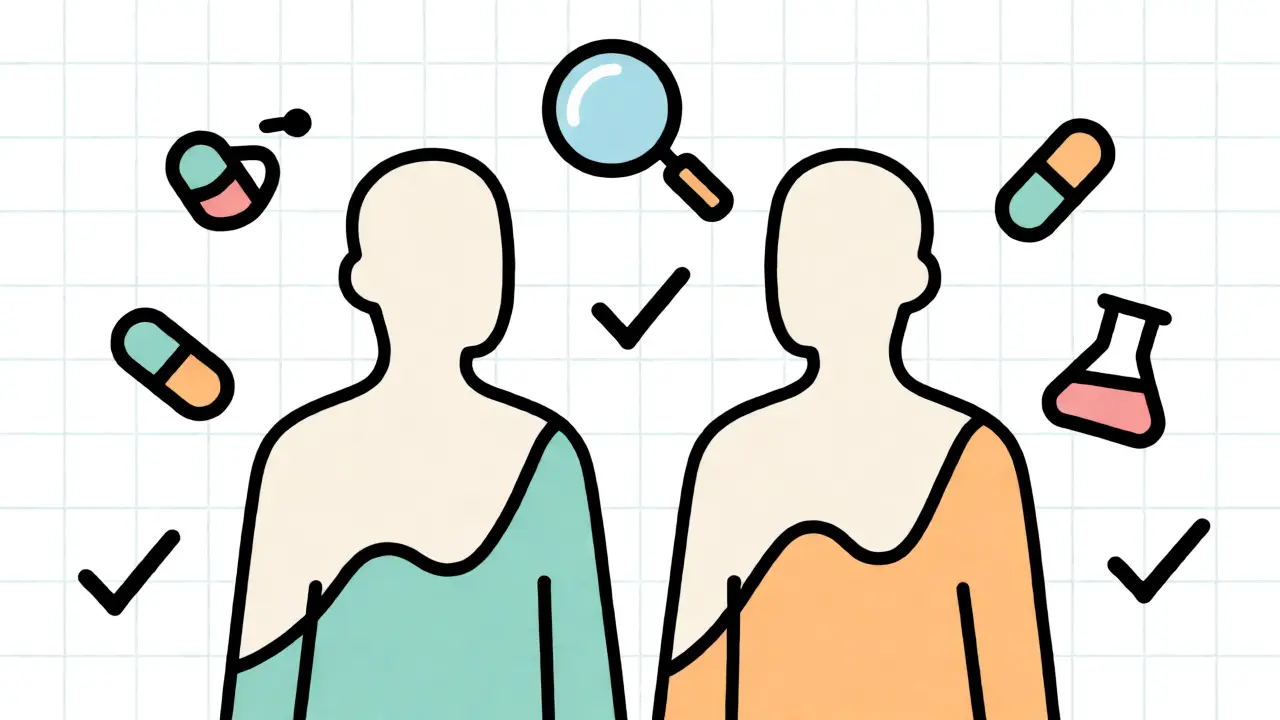
Generic drugs are medications that contain the same active ingredient as the brand-name drug. The U.S. Food and Drug Administration (FDA) defines them as pharmaceutical equivalents that must demonstrate bioequivalence to their brand-name counterparts. This means they deliver the same amount of active ingredient into your bloodstream in the same amount of time. However, they differ in appearance and inactive ingredients due to trademark laws.
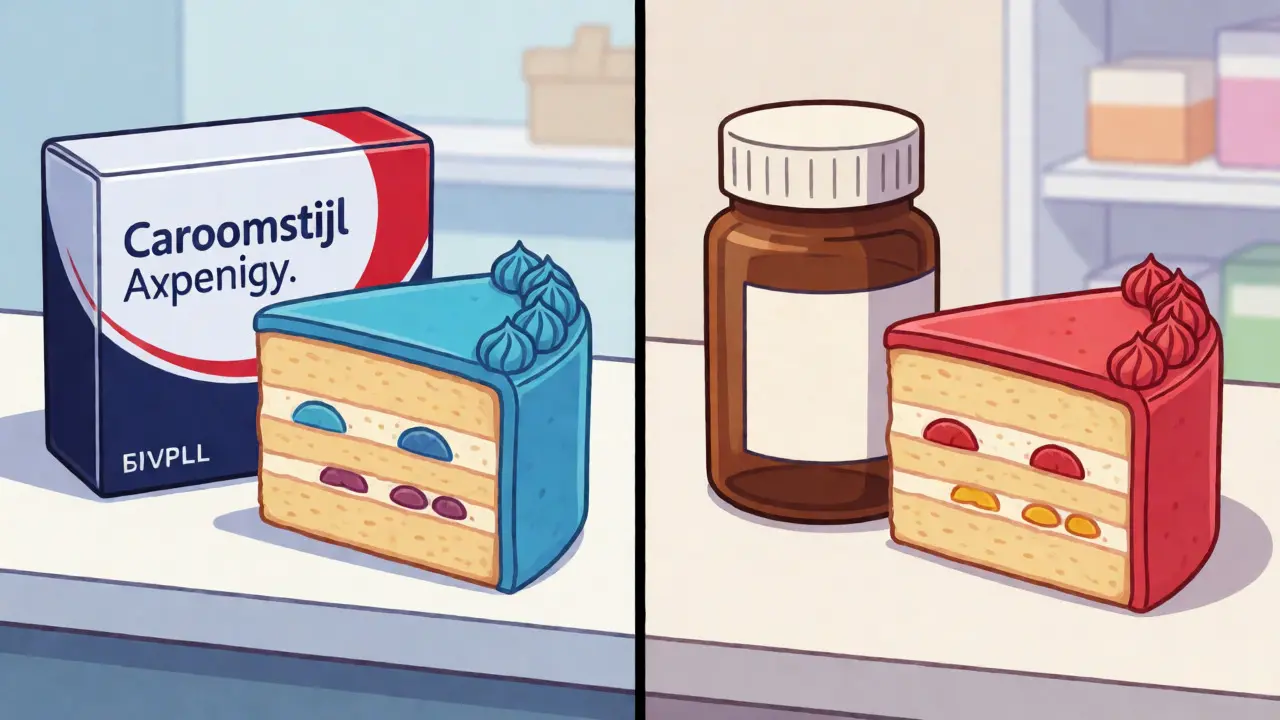
Think of it like making a cake. The recipe (the active ingredient) is identical. You use the same flour, sugar, and eggs. But one baker might use blue frosting and another uses red, or one adds vanilla extract while the other adds almond. The core experience-the taste and effect of the cake-is the same, but the packaging and minor extras vary. That’s a generic drug.
What Exactly Makes a Drug "Generic"?
To understand why generics are trusted, you have to look at how they get approved. When a company invents a new drug, they spend billions on research and clinical trials. Once those patents expire-usually after 20 years-other manufacturers can step in. But they don’t just guess the formula. They have to prove their product works exactly like the original through a process called bioequivalence testing.
The FDA requires generic manufacturers to show that their drug delivers the active ingredient into the body within an 80-125% range of the brand-name drug’s performance. In practice, most generics perform within 99-101% of the brand. That margin of error is incredibly tight. If you took two pills-one brand, one generic-and measured the blood levels every hour, the graphs would overlap almost perfectly.
- Active Ingredient: Must be identical in type, strength, and dosage form (e.g., tablet, capsule).
- Bioequivalence: Must prove the drug is absorbed at the same rate and extent.
- Safety & Quality: Must meet the same strict manufacturing standards as brand drugs.
- Inactive Ingredients: Can differ (fillers, binders, colors), which explains the visual differences.
Why Do They Look Different?
If the medicine is the same, why does the pill look so different? This comes down to trademark law, not science. Brand companies own the rights to the specific shape, color, and size of their pills. A generic manufacturer cannot simply copy the exact look of a Lipitor or a Zoloft because those designs are protected intellectual property.
So, they change the inactive ingredients. These are things like lactose, cornstarch, or artificial dyes. They don’t affect how the drug treats your condition, but they do change how the pill looks and sometimes how it tastes. For people with specific allergies (like gluten or dye sensitivities), these inactive ingredients matter. But for the vast majority of patients, they are irrelevant to the drug’s effectiveness.
| Feature | Brand Name Drug | Generic Drug |
|---|---|---|
| Active Ingredient | Unique patented compound | Identical to brand |
| Appearance | Protected by trademark (shape/color) | Different due to IP laws |
| Cost | High (covers R&D costs) | ~85% cheaper on average |
| Clinical Trials | Full safety & efficacy trials | Bioequivalence studies only |
| Availability | Immediate upon approval | After patent expiration |
The Cost Factor: Why Generics Exist
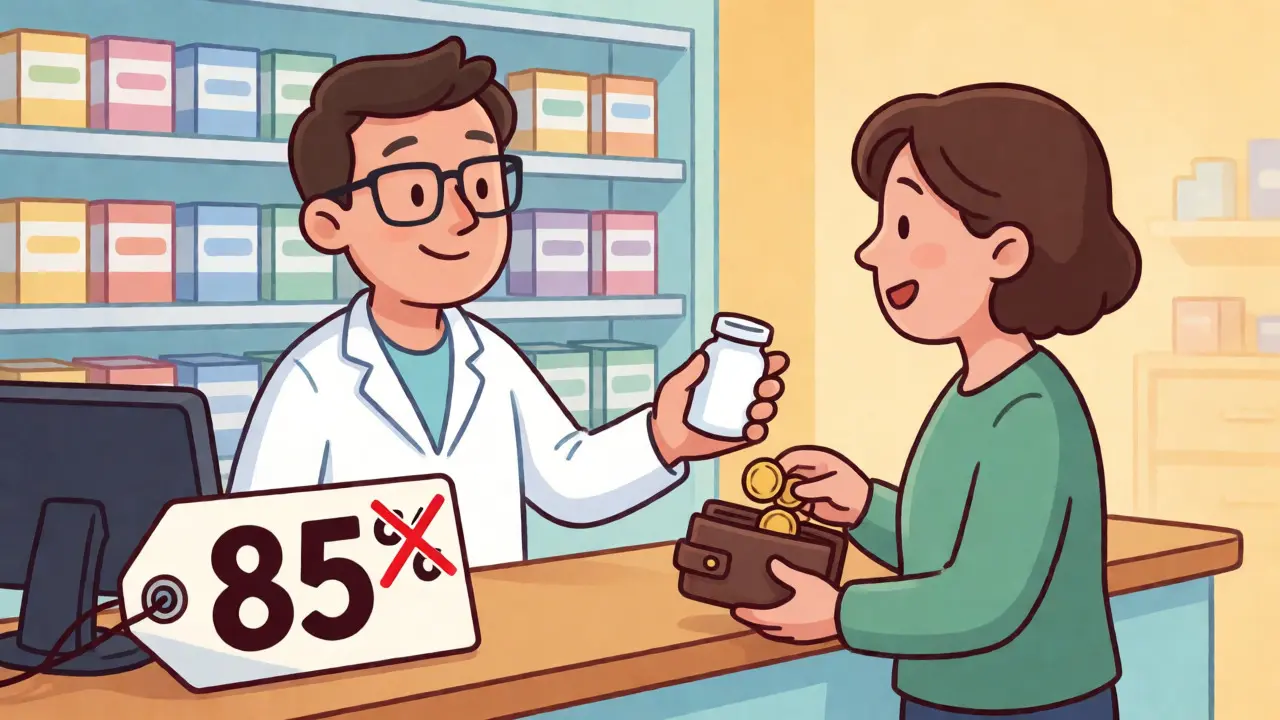
Let’s talk money. It’s the biggest reason generics exist. According to data from GoodRx in 2023, the average cost of a generic prescription was $4.27, compared to $61.85 for its brand-name equivalent. That’s an 85% reduction. Why such a huge gap?
Brand companies charge high prices to recoup the massive investment required to discover and test a new drug. It can take 10-15 years and over $1 billion to bring a single new drug to market. Once the patent expires, generic manufacturers don’t have those upfront R&D costs. They also face competition from other generic makers, which drives prices down further. This isn’t charity; it’s basic economics. More competitors mean lower prices.
This cost difference has real-world health impacts. Studies show that when patients can afford their meds, they take them more consistently. Harvard Medical School researchers found that cost-related non-adherence affects 25% of patients on brand-name drugs versus only 8% for those on generics. So, choosing a generic isn’t just about saving cash; it’s about sticking to your treatment plan.
When Are Generics NOT the Best Choice?
While generics are excellent for 90% of prescriptions, there are exceptions. The main concern arises with Narrow Therapeutic Index (NTI) drugs. These are medications where the difference between a helpful dose and a toxic dose is very small.
Examples include:
- Warfarin: A blood thinner where slight changes in blood levels can lead to bleeding or clots.
- Levothyroxine: Thyroid hormone replacement, where consistency is key.
- Phenytoin: An anti-seizure medication.
For these drugs, even tiny variations in absorption can matter. Some doctors prefer keeping patients on the same brand or the same generic manufacturer to avoid any potential fluctuation. If you’re on an NTI drug, don’t switch brands without talking to your pharmacist or doctor first.
Debunking Common Myths
Let’s tackle the big misconceptions head-on.
Myth 1: Generics are made in less regulated countries.
Reality: Many generic drugs are manufactured in the US, Europe, and India, all under strict FDA oversight. The FDA inspects facilities worldwide, including those in China and India, to ensure they meet current Good Manufacturing Practices (cGMP). If a factory fails inspection, their drugs can’t enter the US market.
Myth 2: Generics have fewer active ingredients.
Reality: A common fear is that generics are "watered down." The FDA requires generics to contain the same amount of active ingredient. Testing shows generics average 99.2% active ingredient concentration. They aren’t diluted; they’re precise.
Myth 3: Doctors prescribe brand names because they’re better.
Reality: Often, doctors prescribe brand names out of habit, patient request, or specific insurance formulary rules. Sometimes, they want to keep a patient on a specific formulation for consistency. It’s rarely because they think the generic is inferior.
How to Navigate the Pharmacy Counter
You have power here. Here’s how to handle the conversation with your pharmacist:
- Ask questions: "Is this generic equivalent to the brand?" Pharmacists love explaining this. They spend minutes per prescription clarifying equivalence.
- Check for allergies: If you’re sensitive to dyes or fillers, ask about inactive ingredients.
- Monitor your response: If you feel a difference after switching, tell your doctor. It might be psychological (nocebo effect) or rare physiological variance, but it’s worth noting.
- Stick with one manufacturer if possible: Especially for NTI drugs, try to get the same generic brand each refill to minimize variability.
The Future of Medication Costs
The landscape is changing. Biosimilars-generics for complex biologic drugs-are entering the market. These are harder to make and test than standard generics, but they promise significant savings in areas like cancer and autoimmune treatments. By 2027, biosimilars are projected to hold 15% of the market share.
Meanwhile, regulatory bodies are tightening standards. The FDA’s recent initiatives aim to reduce approval timelines and increase scrutiny on complex generics like inhalers and topical creams. The goal remains the same: safe, effective, affordable care.
So, next time you see a different-looking pill, don’t panic. It’s likely doing its job exactly as well as the expensive alternative. You’re getting the same medical benefit without the marketing markup.
Do generic drugs have the same side effects as brand-name drugs?
Yes, generally speaking. Since the active ingredient is identical, the primary side effects profile is the same. Differences in inactive ingredients (like dyes or fillers) can occasionally cause mild reactions in sensitive individuals, but the therapeutic side effects remain consistent.
Why are generic drugs so much cheaper?
Generic manufacturers do not bear the initial research and development costs or the extensive clinical trial expenses that brand-name companies incur. Additionally, multiple generic companies compete for market share once a patent expires, driving prices down significantly.
Can I always substitute my brand-name drug with a generic?
In most cases, yes. However, for Narrow Therapeutic Index (NTI) drugs like warfarin or levothyroxine, some doctors may prefer maintaining the same brand or manufacturer to ensure consistent blood levels. Always consult your healthcare provider before switching.
Are generic drugs tested on humans?
Generic drugs undergo bioequivalence studies, which often involve human subjects, to prove they are absorbed into the bloodstream at the same rate and extent as the brand-name drug. They do not repeat full-scale efficacy and safety trials because the active ingredient's effects are already established.
Does the FDA approve generic drugs?
Yes, the FDA rigorously reviews Abbreviated New Drug Applications (ANDAs) for generics. They check for identical active ingredients, proper labeling, and proof of bioequivalence. Only products meeting these strict standards receive approval.
Popular Posts