
Iron Absorption Optimizer
Your Intake Details
Analysis & Recommendations
Enter your details to see how well your body will absorb the iron.
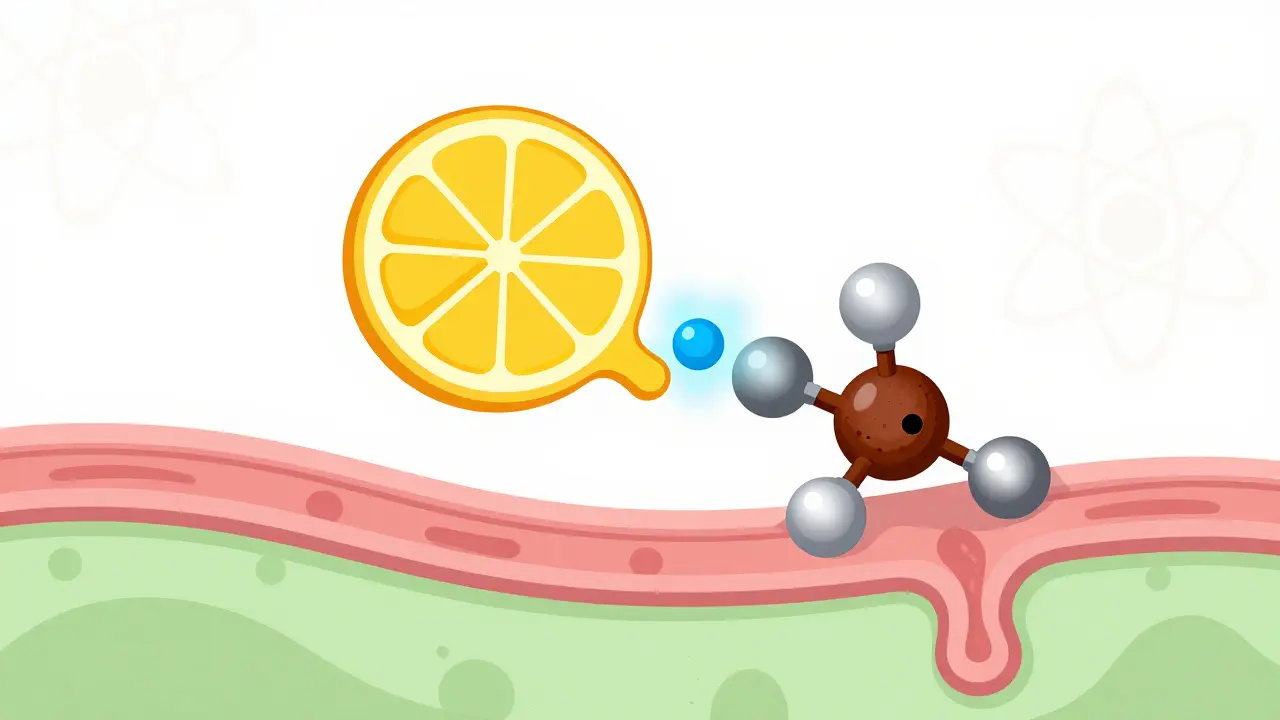
You might be taking an iron supplement or eating more spinach, but if you aren't pairing it with the right partner, your body is flushing most of it away. It’s a frustrating reality for millions of people trying to fix fatigue or anemia. The good news? You don’t need expensive new pills. You just need to understand how ascorbic acid (Vitamin C) acts as a chemical key that unlocks iron absorption in your gut.
This isn't just old wives' tale advice. It is hard biochemistry. When you eat plant-based foods like lentils or fortified cereals, the iron inside them is in a form called ferric iron (Fe³⁺). Your gut struggles to absorb this. But when Vitamin C enters the mix, it donates electrons to convert that stubborn ferric iron into ferrous iron (Fe²⁺), which slides easily into your bloodstream. Research from the SPring-8 synchrotron facility in Japan confirmed this mechanism at a molecular level, showing exactly how Vitamin C binds to enzymes in your duodenum to make this magic happen.
The Science Behind the Synergy
To get the most out of your iron intake, you have to look at the numbers. A landmark study published in the American Journal of Clinical Nutrition by Hallberg et al. in 1989 established that Vitamin C can increase non-heme iron absorption by 2 to 6 times. More recent data from a 2022 meta-analysis in ACS Omega confirms this effect is dose-dependent.
Here is what that means for your daily routine:
- 25mg of Vitamin C: Increases absorption by about 50%.
- 100mg of Vitamin C: Doubles absorption (100% increase).
- 200mg of Vitamin C: Can boost absorption by 150-200%.
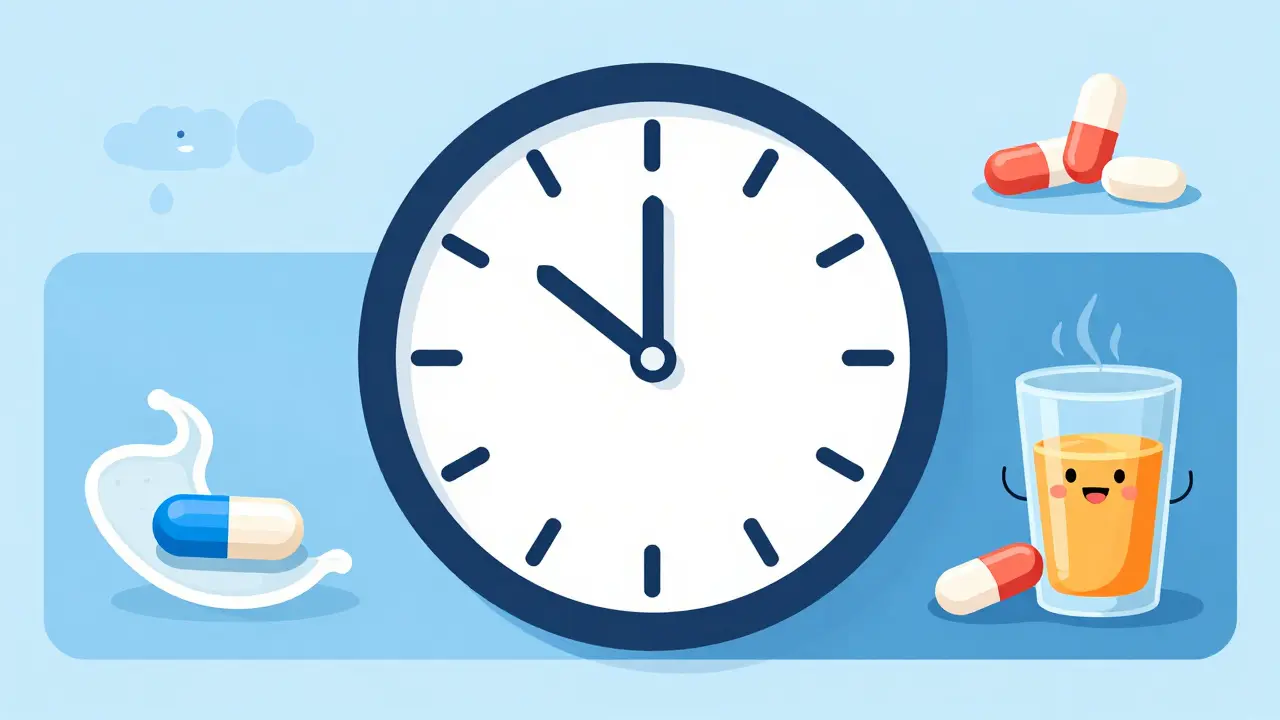
The optimal window for this interaction is tight. You need to consume the Vitamin C simultaneously with the iron. If you take your iron pill at 8:00 AM and drink your orange juice at 9:00 AM, you lose about half the benefit. The NIH Office of Dietary Supplements notes that absorption drops significantly if the two are separated by more than 30 minutes. Think of it like a handshake; both hands need to meet at the same time.
It is also worth noting that this synergy works best on non-heme iron found in plants. Heme iron from meat already has high bioavailability (15-35%), so adding Vitamin C doesn’t help much there. However, for vegetarians, vegans, or anyone relying on fortified grains and legumes, Vitamin C is the single most effective dietary strategy available.
What Counts as Enough Vitamin C?
You do not need to chug a bottle of cheap syrup to hit these numbers. Most whole foods provide plenty. To get the recommended 100-200mg per meal, consider these practical options:
| Food Item | Serving Size | Vitamin C Content (approx.) |
|---|---|---|
| Orange Juice | ½ cup (4 oz) | ~70-90 mg |
| Red Bell Pepper | ½ cup, chopped | ~95 mg |
| Strawberries | 1 cup | ~98 mg |
| Broccoli | 1 cup, cooked | ~80 mg |
| Kiwi Fruit | 1 medium fruit | ~64 mg |
If you are taking a supplement, a standard 500mg tablet is often more than enough, though some users report stomach upset with doses over 500mg. Starting with 100mg is usually sufficient to overcome common dietary inhibitors without causing gastrointestinal distress.
The Villains: What Blocks Iron Absorption?
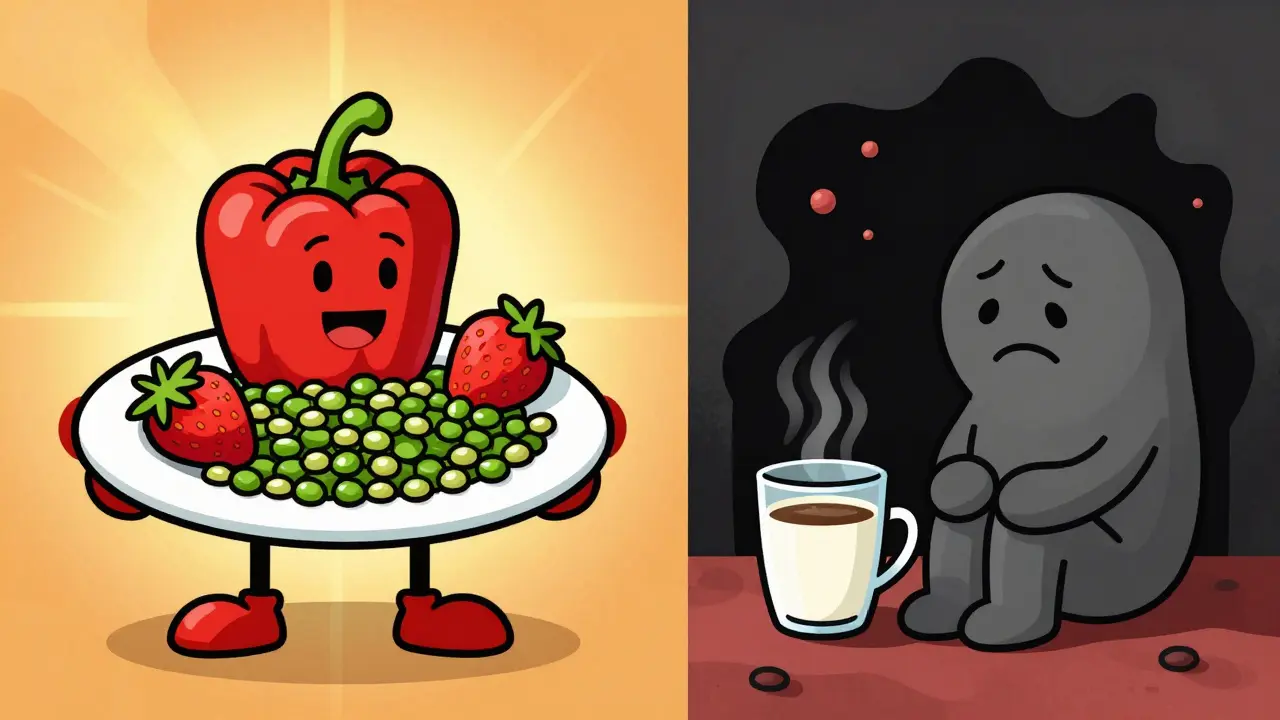
While Vitamin C opens the door, other common substances slam it shut. Understanding these inhibitors is just as important as knowing the enhancers. The biggest culprits are phytates, polyphenols, and calcium.
Polyphenols are found in tea, coffee, and red wine. They bind to iron and prevent it from being absorbed. Studies show that drinking coffee or tea with a meal can reduce iron absorption by up to 60%. The rule of thumb is simple: wait at least two hours after eating an iron-rich meal before enjoying your morning latte or afternoon tea.
Calcium is another major blocker. Unlike polyphenols, calcium blocks both heme and non-heme iron. Taking a calcium supplement or eating a large serving of dairy alongside your iron can cut absorption by 50-60%. This is why you should separate calcium supplements from iron supplements by at least four hours.
Phytates, found in whole grains and legumes, also inhibit absorption. However, Vitamin C is powerful enough to counteract this. Research indicates that 100mg of Vitamin C can overcome the inhibitory effects of 20-50mg of polyphenols or 30-40mg of calcium. This is why pairing lentils (high phytate) with a tomato-based sauce (high Vitamin C) is a nutritional win.
Separating Iron from Other Medications
This is where many people make critical mistakes. Iron is chemically reactive and loves to bind with other things in your digestive tract-including your prescription medications. If they bind together, neither gets absorbed properly. This can lead to treatment failure for chronic conditions.
Here are the specific drugs that require strict timing separation from iron:
- Thyroid Medication (Levothyroxine): Iron can severely reduce the absorption of thyroid hormones. Take your thyroid medication first thing in the morning on an empty stomach, and wait at least 2 to 4 hours before taking any iron or eating an iron-rich breakfast.
- Antibiotics (Tetracyclines and Fluoroquinolones): Iron forms insoluble complexes with these antibiotics, rendering them ineffective. Separate them by at least 2 to 3 hours.
- Antacids and Proton Pump Inhibitors (PPIs): Drugs like omeprazole or Tums raise stomach pH. Iron needs an acidic environment to dissolve and absorb. Antacids can reduce iron absorption by 70-80%. If you must take them, space them out by several hours.
- Bisphosphonates (for Osteoporosis): Similar to antibiotics, iron interferes with their uptake. Maintain a gap of at least 2 hours.
Dr. Michael D. Cappell, Chief of Gastroenterology at Henry Ford Hospital, warns that high-dose Vitamin C combined with iron can cause gastrointestinal distress in 15-20% of patients. If you experience nausea or cramping, try lowering the iron dose or switching to a gentler form like ferrous bisglycinate, while still maintaining the Vitamin C pairing.
Practical Strategies for Daily Life
Knowing the science is one thing; doing it every day is another. Here is how to build these habits without feeling like you’re managing a chemistry lab.
The "Pairing" Habit: Never take an iron pill with water alone. Keep a glass of orange juice, a kiwi, or a bell pepper slice nearby. If you are eating a meal, ensure there is a source of Vitamin C on the plate. A spinach salad with strawberries and balsamic vinegar is better for iron absorption than a plain spinach salad.
The "Buffer" Zone: Create a mental buffer around your iron intake. No coffee, no tea, no milk, no antacids for two hours before and after. Use this time for other activities. If you take thyroid meds in the morning, schedule your iron for lunch or dinner, paired with a Vitamin C-rich side dish.
Listen to Your Body: If you feel bloated or nauseous, you might be taking too much iron or Vitamin C at once. Try splitting the dose. For example, take half your iron with breakfast (and Vitamin C) and the other half with dinner (and Vitamin C). This reduces the load on your gut while maintaining consistent levels.
User experiences from online communities highlight that consistency beats intensity. Many users report that forgetting the Vitamin C pairing is the main reason their iron levels didn't improve. Setting phone reminders or prepping your Vitamin C snacks in advance can bridge this gap.
Who Needs This Strategy Most?
While everyone benefits from optimized nutrient absorption, certain groups rely on this strategy heavily:
- Vegetarians and Vegans: Since they lack heme iron, their entire iron supply depends on non-heme sources, which are poorly absorbed without Vitamin C.
- Pregnant Women: Iron demands skyrocket during pregnancy. The WHO recommends Vitamin C pairing to combat iron deficiency anemia, which affects millions of pregnant women globally.
- Individuals with GI Disorders: Conditions like celiac disease or IBD can impair absorption. Maximizing bioavailability through Vitamin C becomes even more critical.
- Elderly Populations: Acid production in the stomach decreases with age, making it harder to break down iron. Vitamin C helps compensate for this lower acidity.
Recent trends show that 68% of new iron supplement formulations now include Vitamin C, reflecting this growing awareness. However, relying solely on the pill may not be enough if your diet is high in inhibitors. Active management of your meals remains the gold standard.
How much Vitamin C do I need with my iron supplement?
Aim for 100-200mg of Vitamin C per dose of iron. This amount is proven to double or triple iron absorption. You can get this from ½ cup of orange juice, 1 cup of strawberries, or a standard 500mg Vitamin C tablet (though you only need a fraction of the tablet's content).
Can I take iron with coffee or tea?
No. Coffee and tea contain polyphenols that block iron absorption by up to 60%. Wait at least 2 hours after taking iron or eating an iron-rich meal before consuming caffeine from these sources.
Does Vitamin C help with iron from meat?
Not significantly. Meat contains heme iron, which is already highly absorbable (15-35%). Vitamin C primarily boosts non-heme iron from plants and supplements. However, having Vitamin C in your overall diet is still beneficial for general health.
How long should I wait between thyroid medication and iron?
Wait at least 4 hours. Thyroid medication like levothyroxine is very sensitive to interference. Take it on an empty stomach in the morning, and delay your iron supplement until lunch or dinner.
Why does iron make me nauseous?
Iron can irritate the stomach lining, especially on an empty stomach. Taking it with food and Vitamin C can help, but if nausea persists, try splitting the dose or switching to a gentler form like ferrous bisglycinate. Consult your doctor if symptoms are severe.
11 Comments

ANGELA CHINENYE
June 8 2026
I have been following this protocol for six months now, and the difference in my energy levels is undeniable; it is not merely anecdotal evidence but a tangible improvement in my daily functioning that I cannot ignore. The science regarding non-heme iron absorption is well-documented, and ignoring it would be negligent when dealing with diagnosed anemia. Please consult your physician before making drastic changes, but do not dismiss the biochemical reality of ferric versus ferrous iron conversion. It is crucial to separate calcium intake by at least four hours, as many people mistakenly take their multivitamins simultaneously with their iron supplements, thereby nullifying the benefits entirely. Consistency is key, and patience is required because hemoglobin levels do not rise overnight. You must commit to the pairing strategy with every single dose to see significant results in your blood work. Do not underestimate the power of simple dietary adjustments over expensive medical interventions when the root cause is absorption efficiency rather than deficiency alone.

Lenny Cruz
June 10 2026
How quaint. The masses flock to simplistic nutritional hacks while ignoring the systemic failures of modern agriculture that have depleted soil nutrients in the first place. You are treating the symptom with a band-aid made of citrus fruit. True health requires a return to ancestral diets, not a reliance on fortified cereals and synthetic supplements that mimic nature poorly. This article is patronizing in its simplicity, reducing complex metabolic processes to a 'handshake' metaphor. It is insulting to assume that anyone reading this does not already understand the basic chemistry of oxidation states. We are drowning in information yet starving for wisdom. The elite understand that bioavailability is compromised by environmental toxins, not just the timing of your morning coffee. But here we are, discussing bell peppers like they are the elixir of life. How delightful.

Jerry Mathews
June 12 2026
Hey there, thanks for sharing this info. It's super helpful for folks like me who are trying to stay healthy without spending a fortune. I've noticed that splitting my doses helps with the stomach issues too. Just wanted to say keep spreading the good vibes! 🌿

Aishwarya Thankachan
June 12 2026
As a nutritionist, I can confirm that the bioavailability metrics cited here are accurate based on recent meta-analyses. 😊 However, we must consider individual genetic variations in haptoglobin expression which can influence iron metabolism independently of dietary Vitamin C. It is fascinating how the duodenal enterocytes respond to the redox potential changes induced by ascorbate. Many patients overlook the impact of polyphenols in green tea, which is particularly prevalent in Asian diets, leading to chronic subclinical deficiencies despite adequate intake. Let's optimize our nutrient density! 🥗✨

Dave Villeneue
June 13 2026
Your argument lacks rigor. You cite Hallberg 1989 as if it remains the definitive standard in an era of advanced nutrigenomics. It is reductive. Furthermore, the suggestion that 100mg of Vitamin C is universally optimal ignores the saturation kinetics of intestinal transporters. You are presenting correlation as causation without addressing confounding variables such as gastric pH variability among populations. This is amateur analysis. Stop peddling oversimplified advice. It is dangerous. People will self-medicate and miss serious pathologies. Your sources are outdated. Your logic is flawed. Do better.

Roderick Gooden
June 13 2026
I have to agree with the points raised regarding the interaction between thyroid medications and iron supplements, because I personally experienced a significant decline in my TSH levels after failing to adhere to the recommended separation window of at least four hours, which was a costly mistake that took several months of blood tests to correct and resolve properly. It is incredibly frustrating when healthcare providers do not emphasize this specific timing constraint during initial prescriptions, leaving patients to discover these critical interactions through trial and error, often resulting in prolonged symptoms of fatigue and brain fog that could have been avoided with proper education. The mechanism by which iron chelates levothyroxine in the gastrointestinal tract is well established, yet it remains one of the most commonly overlooked drug-nutrient interactions in clinical practice, suggesting a systemic failure in patient communication protocols that needs to be addressed urgently. When I finally started taking my iron with lunch and my thyroid medication strictly on an empty stomach in the morning, the stability in my hormone levels returned almost immediately, validating the scientific literature on this topic beyond any doubt. It is essential that we disseminate this information widely, as the consequences of untreated hypothyroidism due to poor absorption are far more severe than the minor inconvenience of adjusting one's supplement schedule by a few hours each day.

Jennifer Legore
June 13 2026
This is absolutely fantastic information!! :D I am so glad someone wrote this because I have been struggling with low energy for years and never realized my morning tea was blocking my iron absorption. Thank you for being so encouraging and clear! I am going to start adding strawberries to my oatmeal right away. You are doing a wonderful service to the community! Keep up the great work!!! :)

Aswin Narayan J
June 14 2026
In India, we have always known that mixing certain foods is bad, but this western science confirms what our grandmothers said. Don't drink chai with your meal if you want strength. Simple. But why make it complicated with all these chemical names? Just listen to your body. Also, stop buying expensive supplements when you have lemons and limes in your kitchen. It is a scam. Wake up people. The system wants you sick so you buy more pills. Eat local. Eat fresh. Ignore the noise.

Alyssa Zucker
June 15 2026
I read this quietly and it made me think about my own routine. I always take my iron with milk because it tastes better, but now I see why I haven't improved. It makes sense. I will try the orange juice instead. Thanks for sharing this gently.

Francis Saul
June 16 2026
hey everyone, just wanted to say this stuff is really important. i see lots of ppl making mistakes with their meds. please be careful and talk to your doc. dont just guess. its easy to mess up your stomach or waste money on pills that dont work. hope yall feel better soon. no need to fight here. lets just help each other out. simple tips save lives. remember to space out your calcium and iron. it really matters. take care of yourselves.
Write a comment
Popular Posts
Jonathan Paul
June 7 2026
you guys really think you know how your gut works lol its just biochem bs. i eat steak and feel fine so why should i care about this vitamin c crap? seems like another way for big pharma to sell more pills. stop listening to these influencers and start eating real food. also ur spelling is bad.