Reduce Antibiotic Side Effects: What Works and What to Avoid
When you take antibiotics, medications designed to kill harmful bacteria but that also affect the good ones in your body. Also known as antibacterial drugs, they’re lifesavers—but they often come with unwanted side effects like nausea, diarrhea, yeast infections, and fatigue. These aren’t just annoyances. They can make you feel worse than the original infection. The good news? You don’t have to just endure them. There are real, science-backed ways to reduce antibiotic side effects without skipping your dose or quitting early.
One of the biggest culprits is damage to your gut microbiome. Antibiotics don’t pick and choose—they wipe out both bad and good bacteria. That’s why so many people get diarrhea or bloating. Studies show that taking probiotics, live microorganisms that help restore healthy gut bacteria. Also known as beneficial bacteria supplements, they can cut the risk of antibiotic-associated diarrhea by up to 42%. Look for strains like Lactobacillus rhamnosus GG or Saccharomyces boulardii, and start them the same day as your antibiotic. Don’t take them at the same time—space them out by two hours. Your gut will thank you.
Food matters too. grapefruit, a citrus fruit that interferes with how some drugs are broken down in the liver. Also known as citrus fruit interaction, it can raise antibiotic levels dangerously high, increasing side effects like dizziness or heart rhythm issues. Avoid it if you’re on clarithromycin, erythromycin, or certain others. On the flip side, fiber-rich foods like oats, bananas, and asparagus feed the good bacteria left behind, helping your gut bounce back faster. Skip sugary snacks—they feed yeast, which can lead to oral or vaginal thrush.
Some antibiotics mess with your energy. If you’re feeling wiped out on doxycycline or metronidazole, it’s not just in your head. These drugs can disrupt mitochondrial function, the energy powerhouses in your cells. Simple fixes: stay hydrated, get light movement like walking, and avoid alcohol—it makes fatigue worse and can cause dangerous reactions with certain antibiotics. If you’re on long-term treatment, talk to your doctor about checking your vitamin B12 or magnesium levels. Low levels are common and can add to the exhaustion.
Don’t forget about drug interactions. Taking ibuprofen or aspirin with antibiotics like ciprofloxacin can raise your risk of seizures. Mixing antacids with tetracycline? That can make the antibiotic useless. Always check with your pharmacist before adding any new pill—even a cold remedy or herbal supplement. A quick review can prevent a hospital trip.
And here’s something most people miss: finish your full course. Stopping early doesn’t just risk the infection coming back—it lets the toughest bacteria survive and multiply. That’s how superbugs form. If side effects are unbearable, don’t quit. Call your doctor. They might switch you to a gentler option or add a protective med like loperamide for diarrhea or nystatin for yeast.
What you’ll find below are real stories and practical guides from people who’ve been there. From how to pick the right probiotic brand to what foods to eat on day three of amoxicillin, these posts cut through the noise. You’ll see exactly how others managed nausea, fatigue, and gut chaos—without guesswork. No fluff. Just what works.
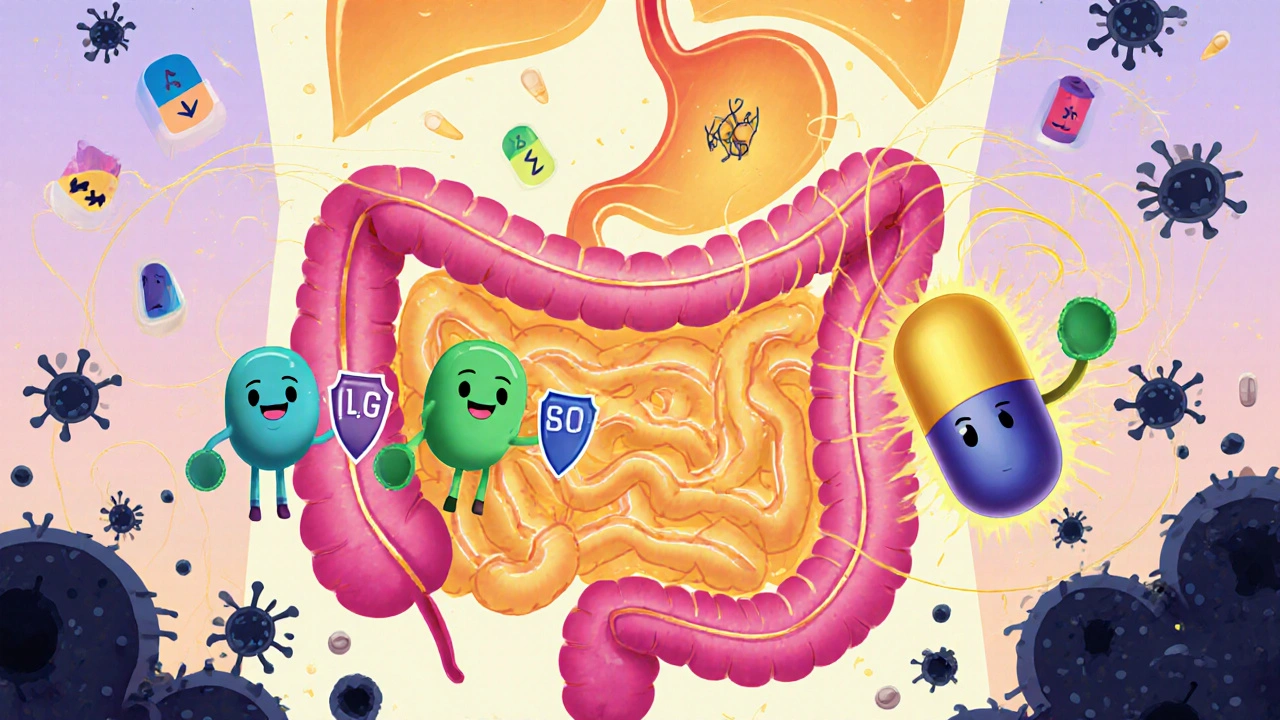
Probiotics During Antibiotic Therapy: How to Reduce GI Side Effects
Probiotics can reduce antibiotic-related diarrhea by up to 70% when taken correctly. Learn which strains work, how to time them, and what to avoid for safer gut health during antibiotic treatment.
View More