
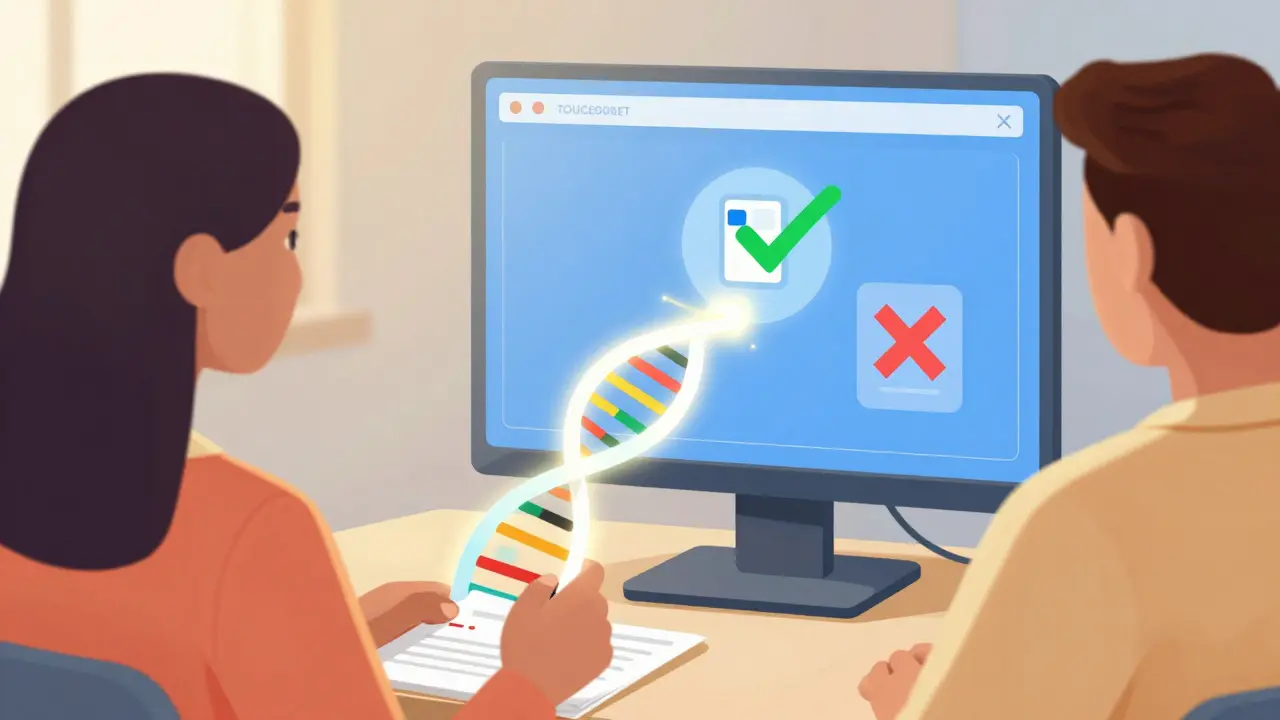
Every year, millions of people experience adverse drug reactions because medications don't work as expected for their unique biology. What if online pharmacies could predict this before you even take a pill? That's where AI pharmacogenomics comes in. This isn't science fiction-it's happening now. Recent studies show AI can analyze genetic data to recommend the safest and most effective medications, even for generic drugs. For online pharmacies, this means smarter, safer prescriptions for customers.
What is pharmacogenomics?
Pharmacogenomics (PGx) studies how your genes affect your response to medications. Your DNA influences how your body processes drugs-whether they work effectively, cause side effects, or need adjusted dosages. For example, some people have genetic variants that make them metabolize drugs too quickly, leading to ineffective treatment. Others process drugs too slowly, risking toxic buildup. Traditional prescribing often relies on trial and error, but PGx provides a personalized roadmap.
How AI enhances pharmacogenomics
A decade ago, PGx was limited to academic labs. Today, AI tools like GPT-4an AI model developed by OpenAI that processes text to generate human-like responses interpret genetic results faster and more accurately. A 2024 study in the Journal of the American Medical Informatics Association (JAMIA)a peer-reviewed journal focusing on medical informatics found GPT-4-based systems achieved 89.7% accuracy in interpreting PGx results-outperforming human experts. These systems combine clinical guidelines like CPIC guidelinesa set of evidence-based recommendations for using genetic information in drug therapy with real-time data to simplify complex genetic reports into actionable advice.
AI in online pharmacies: real-world applications
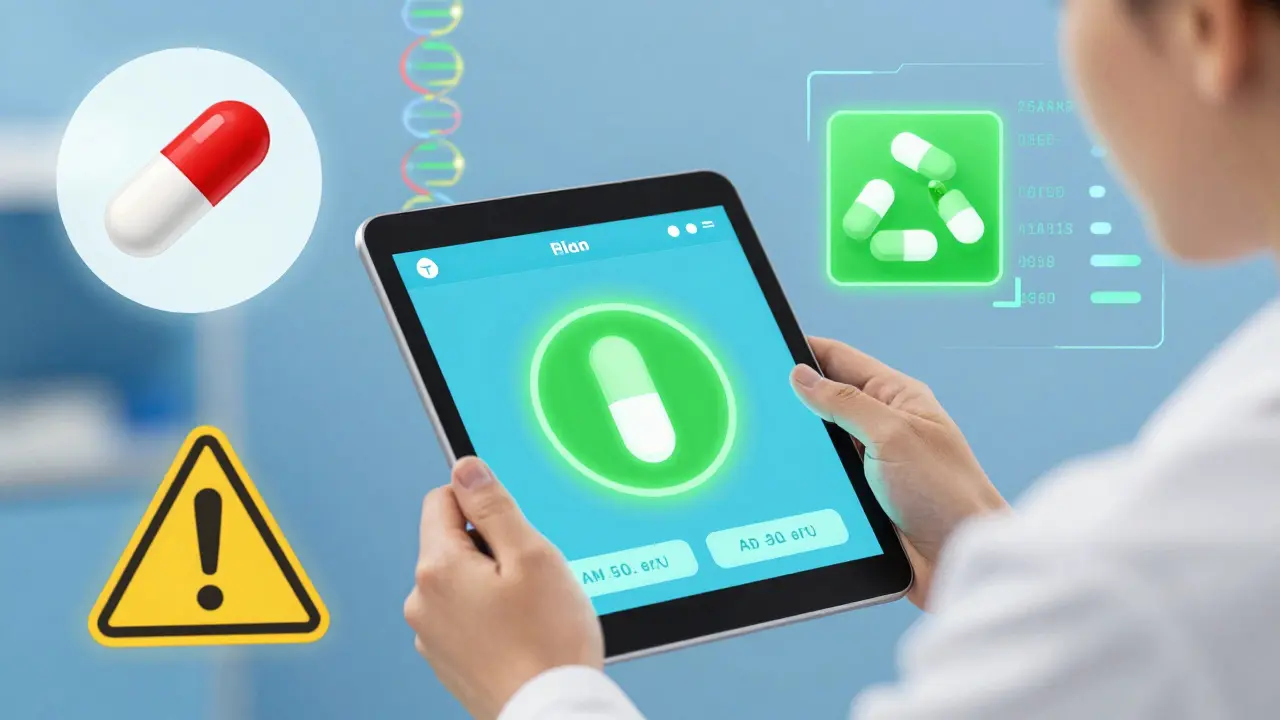
Online pharmacies are integrating this technology to improve patient safety. When you order a prescription online, the system can check your genetic data (if available) against drug interactions. For instance, if you're prescribed clopidogrela blood thinner commonly used to prevent heart attacks, AI might detect a CYP2C19 gene variant that makes the drug ineffective. Instead of risking treatment failure, it recommends an alternative medication like ticagrelor. This real-time analysis prevents dangerous side effects and ensures you get the right drug for your body.
Benefits and challenges
Real-world results speak for themselves. The Mayo Clinic saw a 22% drop in adverse drug events among cardiac patients after implementing AI-guided PGx. For online pharmacies, this means fewer medication errors, reduced returns, and happier customers. A University of Florida Health pilot found doctors saved 12.7 minutes per consultation using AI tools-time they can spend explaining options to patients. Even better, 92% of patients found AI-generated explanations easier to understand than standard clinical reports.
But challenges remain. AI systems require high-quality genetic data, which many online pharmacies don't yet have access to. Privacy concerns also linger-though systems like InterSystemsa healthcare data platform company use encrypted, federated learning to protect patient data. There's also the risk of 'hallucinations': the JAMIA study noted 3.2% of AI responses contained clinically significant errors. That's why pharmacists still oversee final decisions. As Dr. Mary Relling, chair of the Clinical Pharmacogenetics Implementation Consortium, says: 'AI tools must operate within strict guardrails to prevent misinterpretation.'
What's next for AI and pharmacogenomics?
The future looks promising. The NIH recently launched a $125 million initiative to develop transparent AI-PGx models. Companies like Deep Genomicsa startup focused on AI-based drug response prediction are raising funds to expand this field. By 2027, experts predict most medical centers will combine AI-PGx with polygenic risk scores for comprehensive care. For online pharmacies, this could mean fully personalized medication plans based on your DNA-making generic drugs safer and more effective for everyone.
| Feature | AI-PGx Systems | Traditional Systems |
|---|---|---|
| Accuracy | 89.7% | 78% |
| Interpretation Time | Under 2 minutes | 15-20 minutes |
| Patient-Friendly Explanations | 92% find understandable | 45% find understandable |
How does AI use genetic data to recommend medications?
AI analyzes your genetic data to identify variations in genes that affect drug metabolism. For example, CYP450 enzyme variants determine how quickly your body processes certain medications. Systems like GPT-4 cross-reference this with drug databases (e.g., CPIC guidelines) to predict if a drug will be effective or cause side effects. This allows online pharmacies to recommend the safest option tailored to your DNA.
Can online pharmacies access my genetic data without permission?
No. Reputable online pharmacies require explicit consent before accessing genetic data. Systems like InterSystems use secure, encrypted connections and federated learning so data stays on your device or within your healthcare provider's network. You control what information is shared, and it's never stored without your approval. Always check a pharmacy's privacy policy before sharing sensitive data.
Are AI-generated recommendations safer than traditional methods?
Yes, when properly implemented. AI systems like those in the JAMIA study achieve 89.7% accuracy in interpreting genetic data-higher than human experts' 78%. They also reduce interpretation time from 20 minutes to under 2 minutes, minimizing human error. However, AI isn't perfect; 3.2% of responses may contain errors. That's why pharmacists still review final recommendations, combining AI efficiency with human oversight for maximum safety.
What happens if the AI makes a mistake?
All AI-PGx systems include human oversight. Pharmacists or genetic counselors review AI-generated suggestions before finalizing prescriptions. For example, if an AI flags a potential interaction, a professional checks the context. Regulatory frameworks like the FDA's SaMD guidelines require these safeguards. Additionally, systems are continuously updated with new data to reduce errors over time.
How soon will AI-PGx be available at my local pharmacy?
Many large online pharmacies already use AI-PGx tools. For example, Mayo Clinic's system has been operational since 2022. However, widespread adoption in local pharmacies depends on regulatory approvals and integration with existing systems. Experts estimate full rollout across community pharmacies will take 3-5 years as infrastructure improves and data privacy standards mature. Smaller pharmacies may adopt it sooner through partnerships with larger health networks.
11 Comments

Lisa Scott
February 7 2026
The JAMIA study showed a 3.2% error rate. These systems are a ticking time bomb. No oversight means lives at risk.

Pamela Power
February 7 2026
AI-PGx is replacing real doctors with algorithms. It's just a tool for lazy pharmacists. The real experts are being sidelined.

Nancy Maneely
February 9 2026
AI-PGx systems have flawd. My cousin got the wrong med because of it. Its a disaster. The US needs to fix this now.

Joyce cuypers
February 10 2026
This tech personalizes meds. I've seen it help so many people. Even with typoes in the data, it's still better than before. Keep going!

Albert Lua
February 11 2026
AI-PGx works globally. Different countries adapt it. Sharing knowledge helps. I've seen it work in India too.

Arjun Paul
February 11 2026
India lacks infrastructure. This tech is only for developed nations. Don't pretend it's universal.

Phoebe Norman
February 12 2026
Data privacy is handled well. The tech is adaptable. But risks are real. Arjun you're wrong.

Jenna Elliott
February 12 2026
US leads in AI-PGx. Other countries should follow. We have the best systems. This is why America is great.

Cullen Bausman
February 13 2026
The US leads in AI-PGx. Other nations must adopt our standards. Safety requires this. No exceptions.

anjar maike
February 15 2026
Privacy is a big issue. 😊
Carl Crista
February 5 2026
AI-PGx systems harvest genetic data. They're using it to control people. It's all a scam.